Collection: Air Purifiers

Air purifiers for dust mite allergy households in Australia. Our range covers HEPA filtration from compact bedroom units to commercial-grade flagship purifiers, including SmartAir, Ionmax, and Devanti. Every unit is rated by CADR (Clean Air Delivery Rate), HEPA grade, and room coverage so you can compare on the specs that matter. Independent buying guide below — CADR explained, HEPA grades demystified, and what to look for if you're managing dust mite allergy at home.

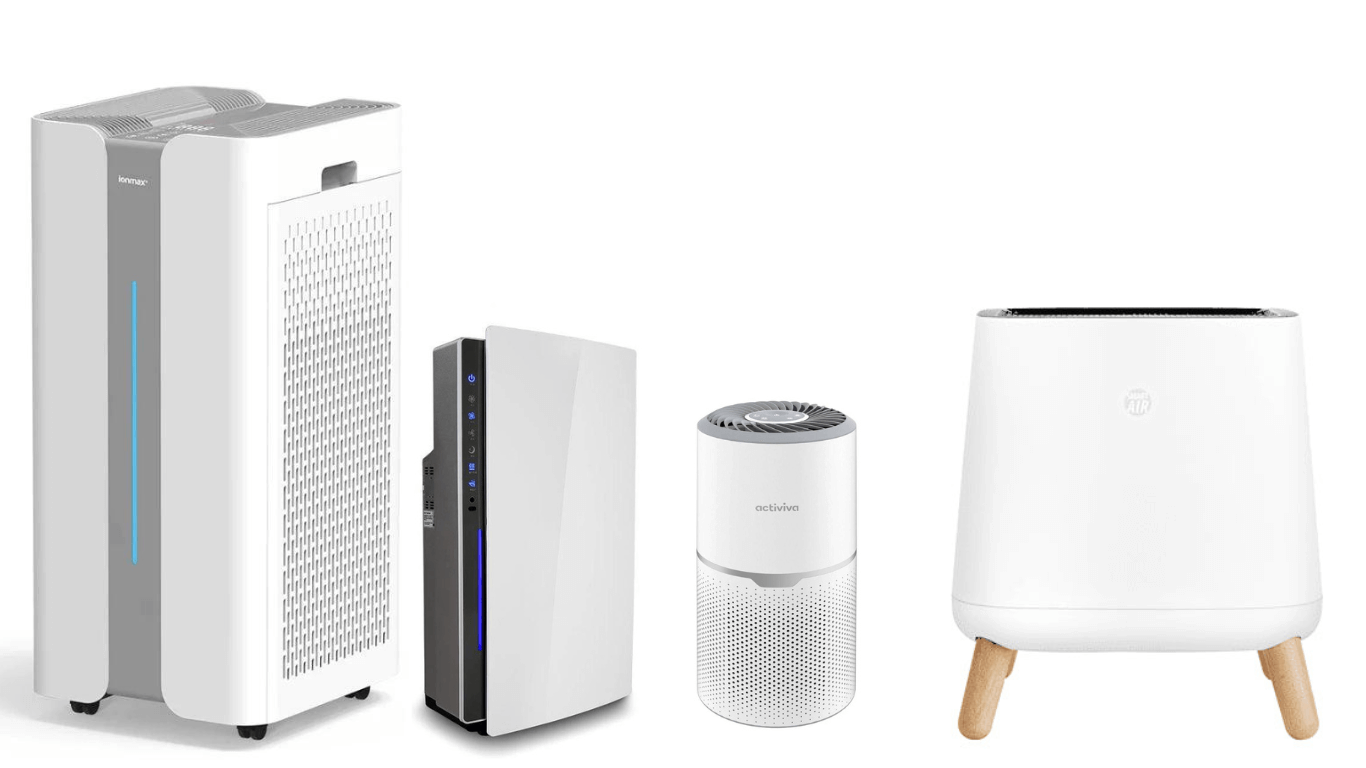
Compare the SmartAir range

Five SmartAir purifiers at a glance — from bedroom-sized to commercial-grade. All ozone-free, no ioniser, no UV-C.

Product Best for HEPA grade CADR Suited to Noise (low)
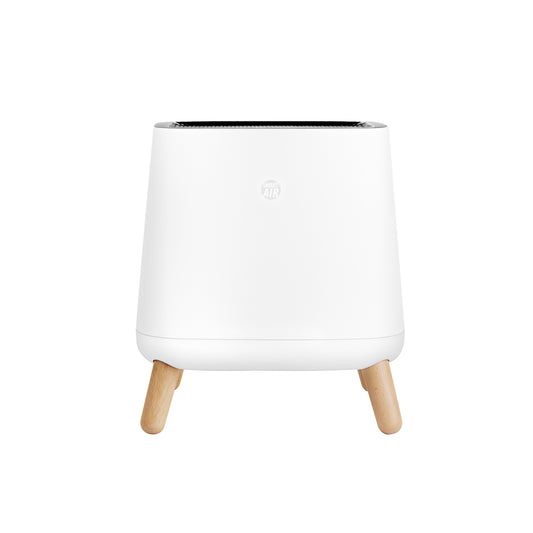
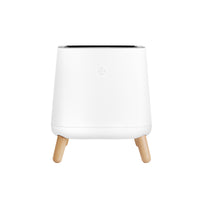
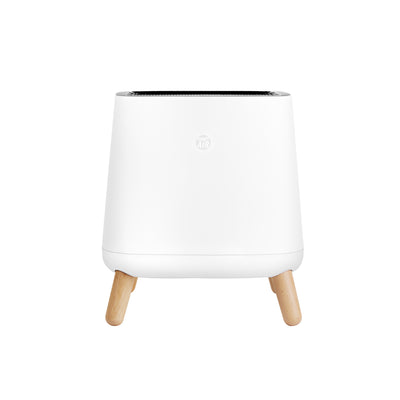
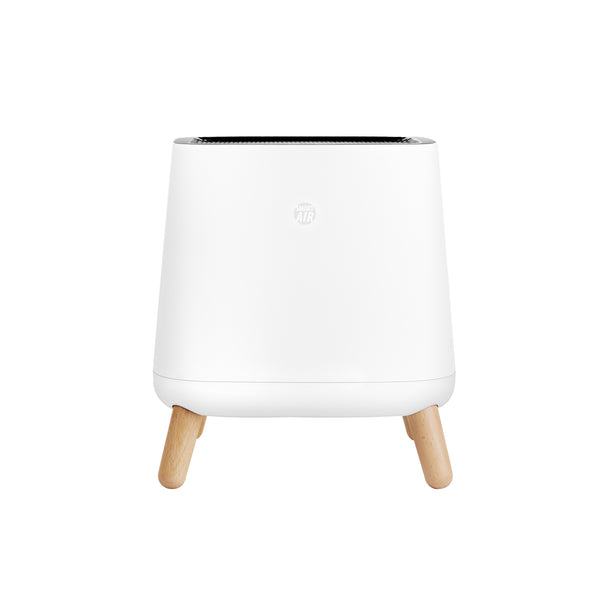
Air purifier for dust mite allergies with HEPA filter. Dust Mite Allergy Solutions Australia. SmartAir Sqair Air Purifier Best for bedrooms H12 300 m³/h Up to 36 m² 23 dB
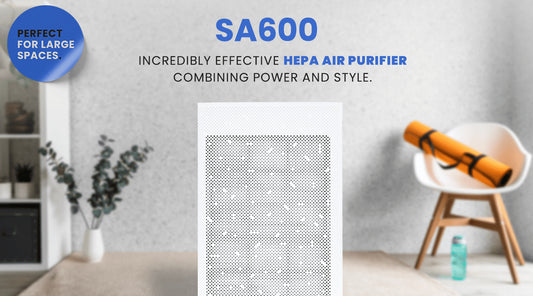
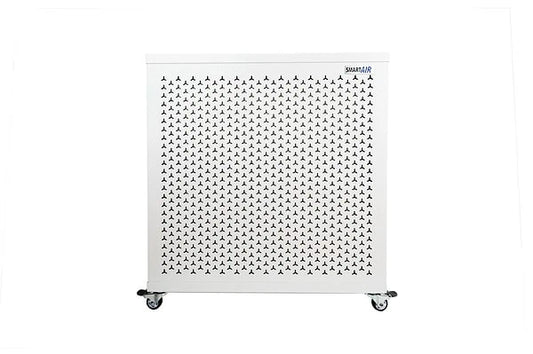
SA-600 Air Purifier SmartAir I Dust Mite Allergy SolutionsSmartAir SA-600 Air Purifier Best all-rounder H13 500 m³/h Up to 60 m² 23 dB
SmarAir Blast Mini Mk II Air Purifier CADR 585 m3/h Dust Mite Allergy SolutionsSmartAir Blast Mini Mk II Air Purifier Large rooms 50–89 m² H13 740 m³/h Up to 89 m² 36 dB
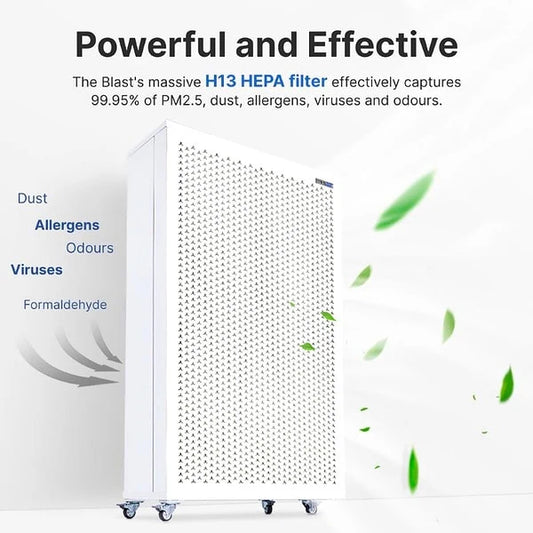
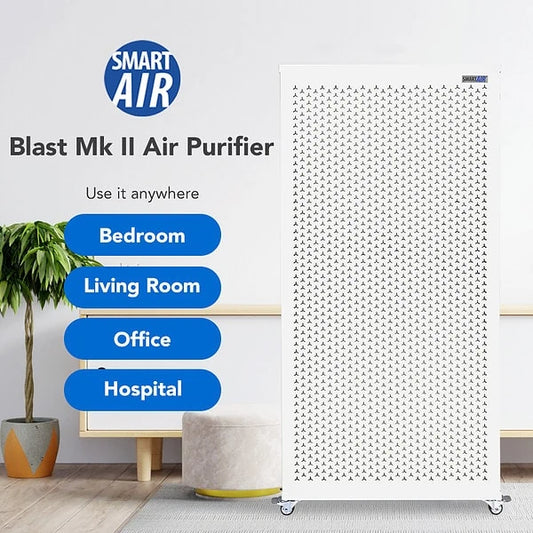
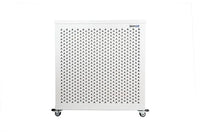
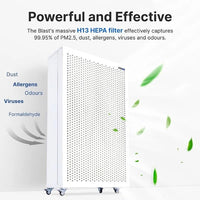
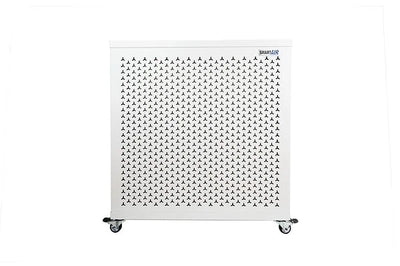
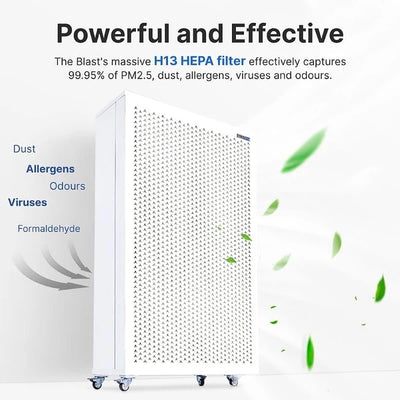
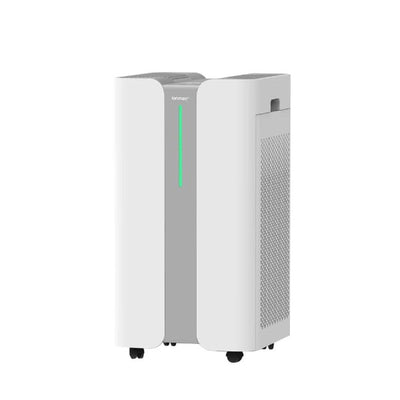
SmartAir Blast Mk II commercial air purifier — H13 HEPA, CADR 950 m³/h flagship unitSmartAir Blast Mk II Commercial Air Purifier Flagship for 80–130 m² H13 950 m³/h Up to 130 m² 29 dB
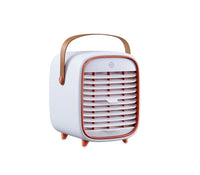
Smart Air QT3 Portable Air Purifier CADR 40. Air purifier for traveling with allergies. Dust Mite Allergy Solutions. SmartAir QT3 Travel Air Purifier Travel and personal space H11 37 m³/h Personal zone ~1.2 m 29 dB

← Scroll horizontally to see all columns →

Find the right air purifier

Three quick questions to narrow down which of our air purifiers fits your situation.

Answer these three questions to narrow down which air purifier suits your situation.

1. What's the space?

  • Bedroom: SmartAir Sqair or SA-600 (quiet, no LED, ozone-free, no ioniser)
  • Living area or open-plan: SmartAir SA-600, Blast Mini Mk II, or Blast Mk II
  • Nursery: SmartAir Sqair or SA-600 (ozone-free, no ioniser)
  • Travel: SmartAir QT3

2. How big is the space?

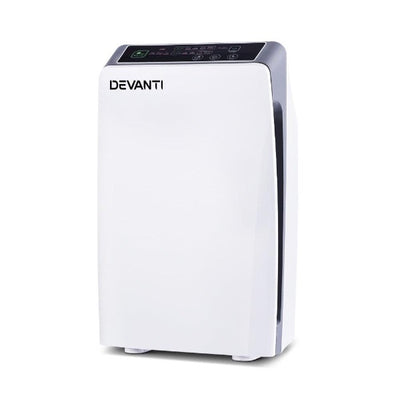
  • Small (under 20m²): SmartAir Sqair or Devanti H11
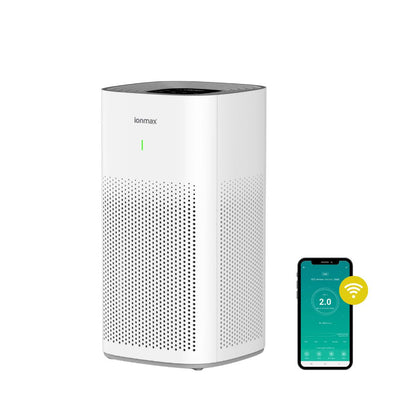
  • Medium (20–40m²): SmartAir Sqair or SA-600; or Ionmax Lavish ION350 if you want smart features
  • Large (40m²+): SmartAir SA-600, Blast Mini Mk II, Blast Mk II, or Ionmax ION900PRO

3. What matters most?

  • Quietest: SmartAir Sqair
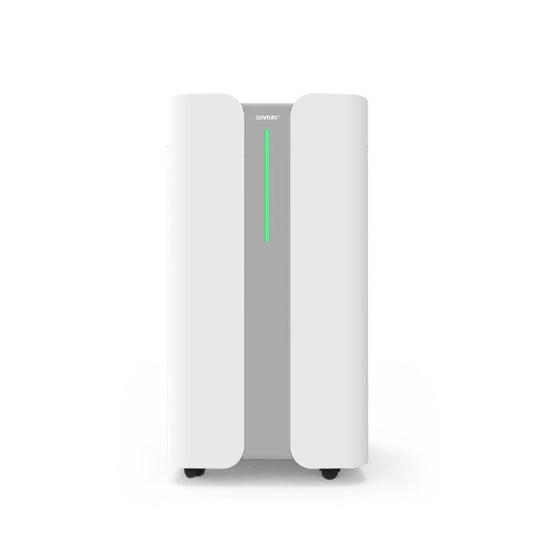
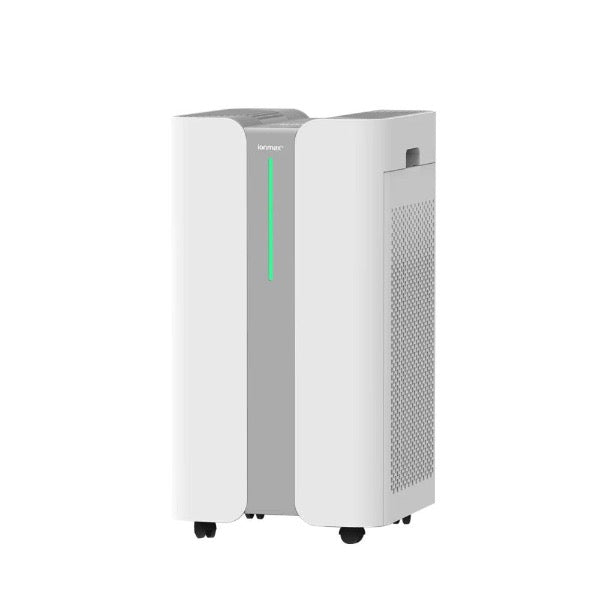
  • Smart features: Ionmax Lavish ION350 or ION900PRO
  • Best value: Devanti H11
  • Editorial pick: SmartAir Sqair (bedrooms), SA-600 (everywhere else)

This quiz suggests products based on your stated preferences. It is not medical advice. For asthma, severe allergies, or other diagnosed conditions, please speak with your GP or specialist about whether air filtration fits into your care plan.

Editor's picks

Three air purifiers we recommend across the bedroom, living-room, and large-space tiers — chosen for verifiable filtration, independent endorsements, and quiet operation.

How to choose an air purifier

A short, honest buyer's guide. The framework below will help you choose, regardless of which brand you end up with.

1

Start with CADR, not room-size claims

CADR (Clean Air Delivery Rate) measures how much filtered air a purifier delivers per hour. It accounts for both airflow and filter efficiency, making it the most reliable cross-brand comparison.

Match CADR (m³/h) to your room:

  • Small bedroom or office (under 15 m²): 100+ m³/h
  • Standard bedroom (15–25 m²): 200+ m³/h
  • Living room or open-plan (25–50 m²): 400+ m³/h
  • Large open-plan or commercial (50 m²+): 700+ m³/h

For allergy households, aim higher — running a larger unit on low is quieter and more effective than a small unit running flat-out.
2

Look for True HEPA — and understand the grades

"HEPA" is a tested filtration standard, but there are grades:

  • H11: ≥95% of particles at 0.3μm captured. Entry-level true HEPA.
  • H12: ≥99.5%. A meaningful step up.
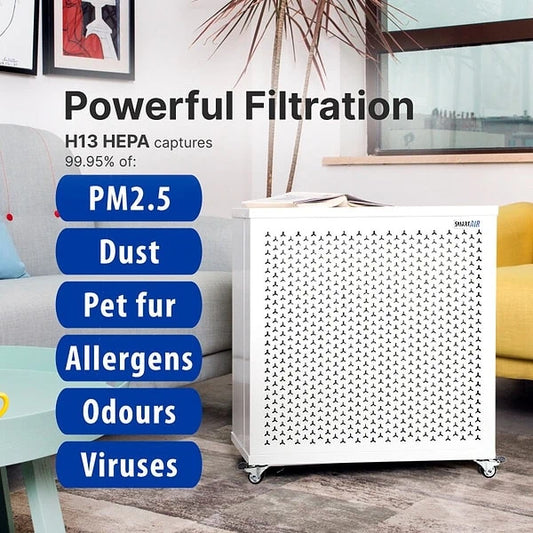
  • H13: ≥99.95%. Often called "medical-grade." Worth considering for asthma and severe allergies.

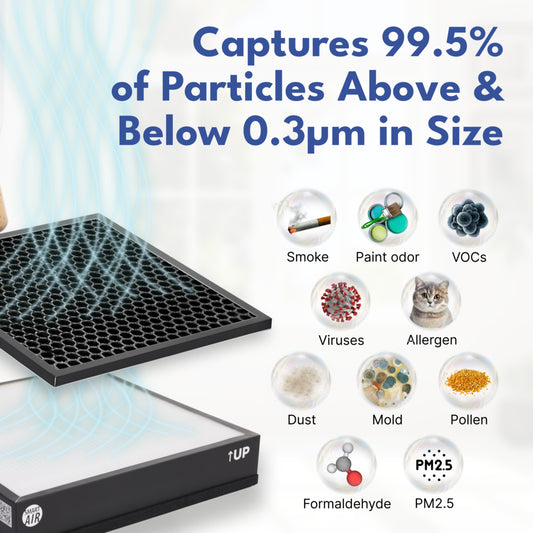
The 0.3μm figure is the worst-case particle size — both smaller and larger particles are captured more efficiently. A H13 filter captures airborne dust mite allergen fragments, pet dander, pollen, mould spores, and fine smoke particulates.

3

Be cautious of ionisers, UV, and "destroying" claims

Many purifiers include extras beyond HEPA — ionisers, UV-C lamps, plasma generators. These add cost and complexity, and the evidence for residential benefit is mixed at best.

Ionisers in particular can produce small amounts of ozone — a known respiratory irritant, which is the opposite of what most allergy households want.

For the most conservative engineering choice, a pure HEPA + activated carbon unit (no ioniser, no UV) is the safer option — especially for nurseries and bedrooms.

4

Think about the total cost of ownership

Filter replacement is the ongoing cost most buyers underestimate. Before you commit, check:

  • How often the filter needs replacing (every 6 months to every 3 years across our range)
  • Cost of a replacement filter in Australia, not the international price
  • Whether filters are stocked locally for fast replacement

A purifier that's $100 cheaper but needs a $150 filter every 6 months is not the bargain it appears to be.

Best Air Purifiers for Dust Mite Allergy in Australia

Frequently asked questions - How to choose the best air purifier for dust mite allergies in Australia

Best air purifiers for dust mite allergy - Dust Mite Allergy Solutions

What's the difference between HEPA grades — H11, H12, H13?

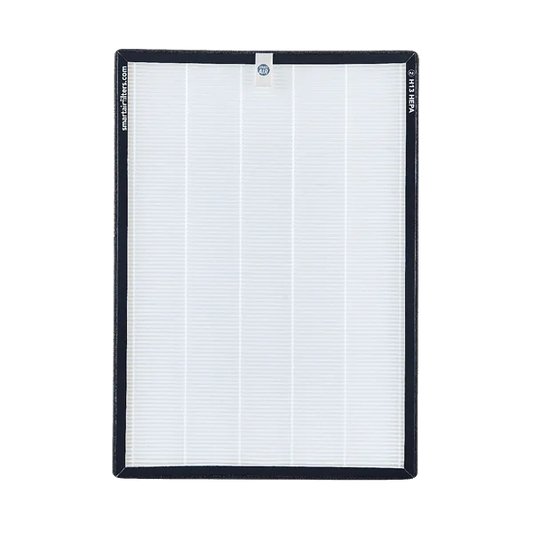
"HEPA" refers to a tested filtration standard under EN 1822, but there are grades within it:

  • H11 — captures at least 95% of particles at 0.3μm. Entry-level true HEPA. Common in small or portable units.
  • H12 — at least 99.5%. Used in our SmartAir Sqair, where lower air resistance allows higher airflow for the same fan.
  • H13 — at least 99.95%. Often called "medical-grade." Standard for clinical and laboratory air filtration.

Higher grade isn't always better in practice. A larger fan pushing air through H12 can deliver more clean air per minute than the same fan struggling through H13. For most allergy households, H12 or H13 are both excellent — match the unit to the room size first, then check the HEPA grade.

How big a room can one air purifier actually handle (CADR)?

The honest answer: less than the manufacturer's claim, in most cases. Use CADR (Clean Air Delivery Rate) as your guide instead of the room-coverage number on the box.

  • Small bedroom or office (under 15 m²): CADR 100+ m³/h
  • Standard bedroom (15–25 m²): CADR 200+ m³/h
  • Living room or open-plan (25–50 m²): CADR 400+ m³/h
  • Large open-plan or commercial (50 m²+): CADR 700+ m³/h

For allergy households we suggest aiming higher — running a larger unit on low is quieter and more effective than a small unit running flat-out.

Should I leave my air purifier running all the time?

Yes, ideally. Air purifiers work best when they run continuously because indoor air is constantly recontaminated by activities like walking on carpet, opening windows, cooking, and pets shedding. A purifier turned off for 12 hours has to start from scratch when it's switched back on.

The good news: HEPA purifiers are surprisingly economical to run. Most units in our range use under 60W on medium — comparable to an incandescent light bulb. The SA-600 uses around 9W on medium. For most Australian households, 24/7 operation adds a few dollars a month to the power bill.

If continuous operation is the goal, prioritise quiet bedroom-safe units (SqairSA-600) and units designed for 24/7 commercial use (Blast Mini Mk IIBlast Mk II).

Will an air purifier help with my dust mite allergy?

HEPA filtration captures airborne dust mite allergen fragments — the proteins shed in dust mite faecal pellets that trigger sneezing, congestion, and asthma flares. Independent research has shown that comprehensive bedroom-environment control is more effective than any single intervention alone.

That said, dust mites themselves live in mattresses, bedding, soft furnishings, and carpet, not in the air. An air purifier reduces airborne allergen concentration but doesn't address the source. The most effective approach combines:

  • Hot-washing bedding weekly (≥55°C kills dust mites)
  • Reducing indoor humidity below 50% (dust mites need humidity to survive)
  • HEPA filtration of bedroom air
  • Anti-allergen mattress, pillow and quilt encasings

For mattress and bedding encasings see our dust mite covers collection; for humidity control see our dehumidifiers. For a deeper look at the research, our blog post on reducing dust mites naturally walks through the methods with the strongest peer-reviewed evidence. We're not a medical service — for diagnosed allergies, speak with your GP or specialist.

Are air purifiers safe for babies and nurseries?

HEPA-only purifiers are well-suited to nurseries. They produce no ozone, no UV exposure, and no chemical by-products — just a fan moving air through a paper filter.

What to look for in a nursery purifier:

  • Ozone-free certification — avoid units with ionisers, which can produce trace ozone (a respiratory irritant)
  • No bright LED display — for undisturbed infant sleep
  • Low minimum noise level — under 30 dB on low
  • Child-lock — once they're crawling

Within our range, the SmartAir Sqair and SA-600 both meet these criteria. We'd suggest avoiding ioniser-equipped units (Ionmax range) in nurseries unless the ioniser stage can be switched off and is left off.

This isn't medical advice — for specific health concerns about your baby, speak with your paediatrician.

What's the difference between ionisers, UV-C, and HEPA filtration?

These work in fundamentally different ways, and the evidence for each varies:

  • HEPA filtration — physically captures particles in a paper filter. Well-established, decades of independent testing, no by-products. The core of every credible air purifier.
  • Ionisers (negative-ion generators) — emit charged particles that make airborne dust clump and settle on surfaces. They don't remove particles from the room; they just move them. Many ionisers produce small amounts of ozone as a by-product — a known respiratory irritant.
  • UV-C lamps — emit ultraviolet light intended to inactivate microbes. Contact time inside a moving air stream is typically too brief for meaningful effect at consumer power levels. Some UV-C wavelengths also produce ozone.

For an allergy household, HEPA filtration is the engineering choice with the strongest evidence base. Ionisers and UV-C are optional features that add cost and complexity for marginal (or contested) additional benefit. If you choose a unit with these features, look for the option to switch them off.

How loud are these in a bedroom?

Quieter than most people expect. Noise levels in our range:

For reference: 30 dB is a quiet bedroom. 40 dB is a refrigerator. 50 dB is a quiet conversation. Most owners run their purifier on low overnight (well under bedroom background noise) and on medium during the day.

Sleep-sensitive shoppers should prioritise units rated under 30 dB on low — the SqairSA-600, and QT3 all meet this.

How often do I need to replace the filter?

Filter replacement intervals vary significantly across our range:

  • Sqair: HEPA every 6–12 months
  • SA-600: HEPA approximately every 9 months at 8 hrs/day
  • Blast Mini Mk II: HEPA approximately every 13 months at typical use
  • Blast Mk II: HEPA approximately every 42 months at 8 hrs/day
  • QT3: every 6 months at 4 hrs/day
  • Ionmax range (ION350ION900PRO): HEPA approximately every 12 months
  • Devanti: HEPA every 6–12 months

Pre-filters on the SmartAir Blast units are washable and don't need replacement — vacuum them monthly to extend HEPA filter life. Don't wash HEPA filters — washing destroys the filter media. Replace rather than wash.

Replacement filters for the full SmartAir range are stocked locally and ship from Australia, so you're not waiting weeks for a filter when yours needs changing.

Will an air purifier remove pet dander and pet odours?

HEPA filtration is very effective at capturing airborne pet dander (the flakes of skin that trigger most pet allergies) and pet hair. Pet odours are different — they're gas-phase compounds, not particles, and need an activated carbon filter to be removed effectively.

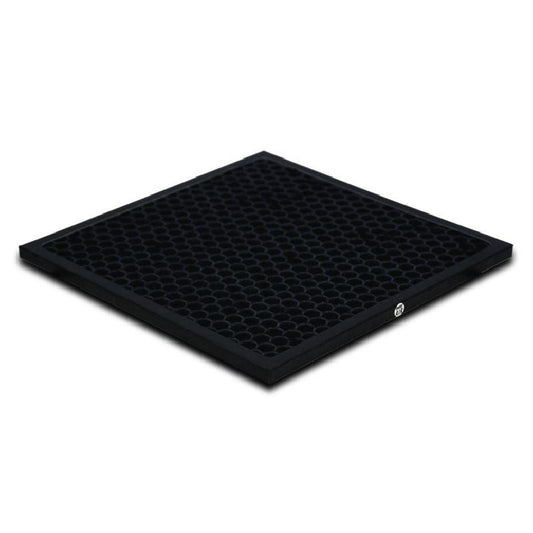
For pet households, look for a unit with both HEPA and carbon filtration. The SmartAir Sqair (with optional carbon filter) and SA-600 (dual carbon filters included) are good choices. The Ionmax ION900PRO and ION350 also include carbon filtration.

One practical note: pet dander settles on soft furnishings and carpet, so the air purifier alone won't keep things dander-free. Regular vacuuming with a HEPA-equipped vacuum cleaner, washing pet bedding weekly, and an air purifier together are far more effective than any one alone. For anti-allergy bedding suited to households with pets, see our guide to anti-allergy bedding.

What about smoke, bushfire, or VOCs?

For smoke (cooking, candles, cigarettes, bushfire) and VOCs (paint, new furniture, cleaning chemicals), you need both HEPA + activated carbon filtration:

  • HEPA captures the fine particulates in smoke (PM2.5 — the most harmful component)
  • Activated carbon adsorbs the gas-phase compounds (smoke odour, VOCs)

HEPA-only units (like the SmartAir QT3) won't remove smoke odour or VOCs effectively. For bushfire-prone households or rooms with strong off-gassing concerns, prioritise units with carbon filtration — the SmartAir Sqair (with optional carbon), SA-600Blast Mini Mk II (with optional carbon), or the Ionmax range (ION350ION900PRO) all qualify.

During bushfire smoke events, close windows and run the highest-CADR purifier in your range on its highest setting. Smoke recirculates faster than most purifiers can clear it, so size up for these scenarios if you're in a bushfire-prone area.

Do I need an air quality monitor as well?

Not necessary, but useful. An air quality monitor tells you what's actually in your air (PM2.5, CO₂, VOC, humidity) so you can see your purifier working and identify pollution sources you might not have noticed — gas stoves, candles, off-gassing furniture, traffic ingress through windows.

If you're going to spend $400+ on an air purifier and run it 24/7, a monitor (typically $150–250) helps you confirm it's making a difference and tune the settings for your actual conditions. See our air quality monitors and hygrometers for options.

An indoor humidity reading is particularly useful for dust mite households — keeping humidity below 50% is one of the most effective dust mite control measures, and you can't manage what you don't measure.

Do air purifiers work for dust mite allergies?

With so many different types of air purifiers on the market, it can be difficult to know which one is right for you. In this guide, we'll provide you with some tips for choosing an air purifier that will meet your needs.

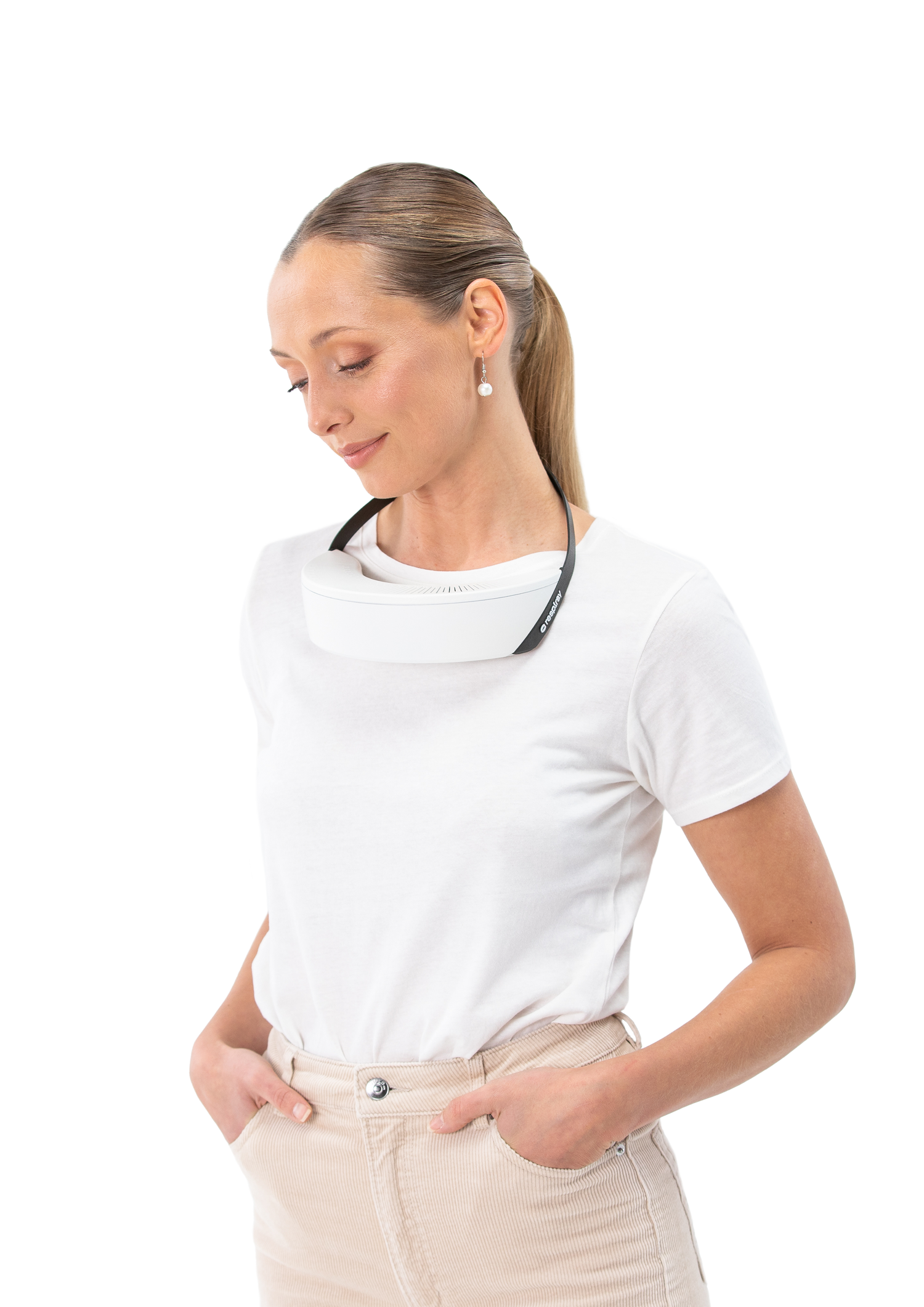
RESPIRAY WEAR A+ Wearable Air Purifier

Respiray Wear A+ is a lightweight wearable air filter designed to clean the air in your immediate breathing zone. Independent testing shows it significantly reduces airborne allergen exposure for the wearer — making it a practical option for outdoor or travel use where a room purifier isn't possible.

Respiray Wear A+