How to choose an air quality monitor
For dust mite allergy households, indoor air monitoring comes down to four things:
humidity, particulate matter, ventilation, and (sometimes) VOCs. Here's what each
metric tells you and what to look for in a monitor.
1. Humidity is the priority for dust mite households
Dust mites thrive at relative humidity above 50%. They can't drink water — they
absorb moisture from the air. Drop the RH below 50% and the population stops
growing; below 40% and it starts to die back. ASCIA and international allergy
bodies consistently recommend keeping bedroom humidity below 50% for dust mite
control. Australia's east-coast climate — Sydney, Brisbane, the Gold Coast —
routinely pushes outdoor RH above 70% in summer, and indoor RH follows unless
you actively manage it.
Target range:
40–50% relative humidity for allergy management. Below 30% feels uncomfortable
and can irritate airways; above 60% supports mould as well as dust mites.
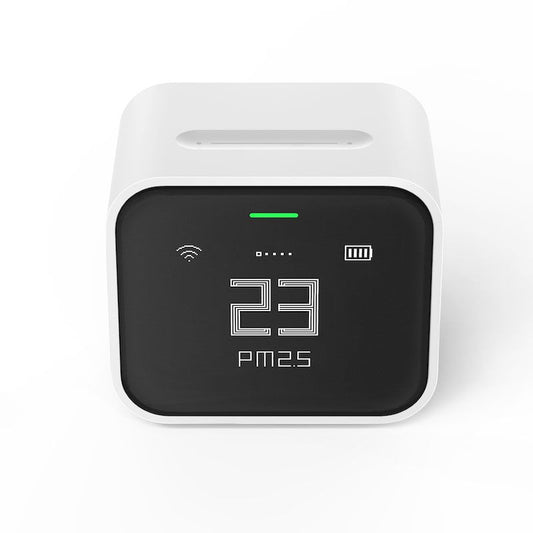
2. PM2.5 and PM10 — what's in the air you breathe
PM2.5 is fine particulate matter — particles 2.5 micrometres
or smaller. Sources include cooking, candles, fireplaces, smoking, and outdoor
pollution infiltrating through windows. The WHO 2021 guideline is 15 µg/m³
averaged over 24 hours.
PM10 covers larger particles up to 10 micrometres — visible
dust, pollen, mould spores. Most monitors capture both PM2.5 and PM10 with the
same laser-scattering sensor.
For allergy households, PM readings also confirm your air purifier is doing its
job — if PM2.5 stays low when the purifier runs and climbs when it's off, that's
your evidence.
3. CO₂ tells you about ventilation
Outdoor CO₂ sits around 420 ppm. When a closed bedroom climbs to 1,500–2,000 ppm
overnight, it's a sign the room isn't exchanging air with outside — and humidity
is usually building up alongside. The fix is ventilation, not filtration: open
a window, run an exhaust fan, improve HVAC airflow.
Look for monitors with an NDIR CO₂ sensor — the industry-standard
method. Avoid monitors that "estimate" CO₂ from VOC readings; those are unreliable.
4. TVOC for chemical sensitivities and new furniture
Total volatile organic compounds include formaldehyde (classified by IARC as a
Group 1 known human carcinogen), benzene, and solvents from new furniture, fresh
paint, cleaning products, and personal care items. VOC spikes are typically
short-lived and respond quickly to ventilation.
For most allergy households, TVOC is a nice-to-have rather than essential. For
parents bringing new cots or mattresses into a nursery, or for chemical-sensitive
households, it's worth the upgrade.
5. Sensor quality matters more than feature count
Two monitors can show wildly different readings of the same air. The reason is
almost always sensor quality. The shortcut: monitors using
Sensirion sensors for CO₂, humidity, and VOCs are
reference-quality. NDIR sensors are the right choice for CO₂.
Laser-scattering is the right choice for PM2.5 and PM10. If a
manufacturer doesn't specify the sensor type or origin, treat that as a warning sign.
6. Where to place it
- Breathing height — 1 to 1.5 m above the floor
- In the room you use most — the bedroom is the priority for dust mite households
- Away from direct airflow — not under an air-con vent or in front of a fan
- Away from heat and cooking surfaces — distorts temperature and PM readings
- Away from windows — outdoor infiltration will dominate the readings
Once you've measured, what next?
Monitoring is step one. Acting on the readings is step two:
- High humidity (>50% RH) → dehumidifier or AC dry mode
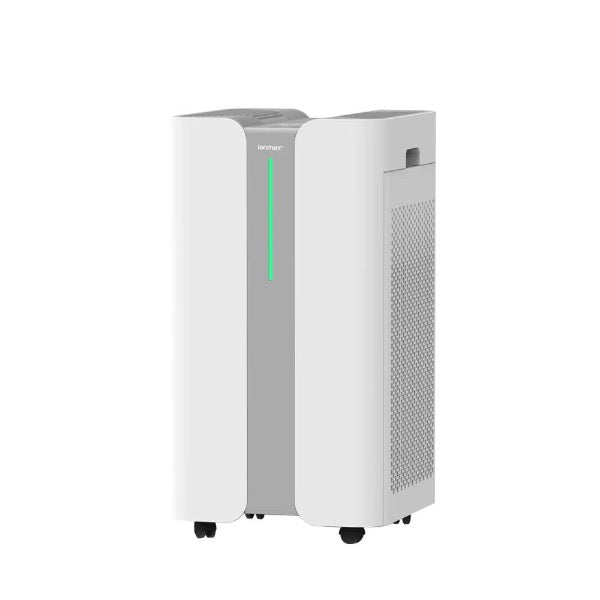
- High PM2.5 → HEPA air purifier sized to the room
- High CO₂ → open a window or improve ventilation. Filtration won't help.
- High TVOC → ventilate; consider a carbon-filter air purifier if chronic
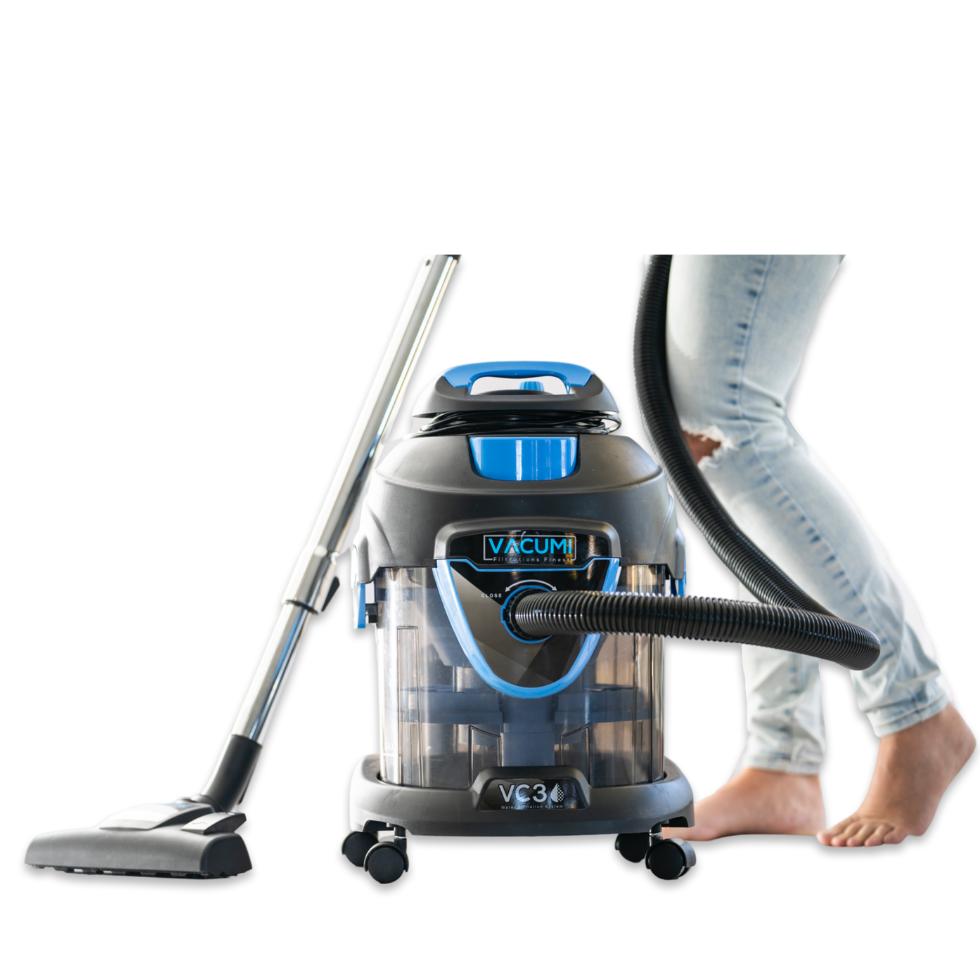
- Persistent dust mite symptoms despite controlled humidity → look at allergen-proof bedding covers and HEPA vacuuming
Read the full buyer's guide →
Air quality monitors are measurement devices, not medical devices. They don't
diagnose or treat anything — the readings help you make informed decisions about
ventilation, filtration, and dehumidification. For diagnosed asthma, allergies, or
chemical sensitivities, please discuss your environment with your GP or specialist.
 Skip to content



 Qingping Lite