Skip to content


Looking for a dust mite mattress protector that actually does something about allergen, not just spills? This guide compares the three protector styles we sell in Australia side by side, so you can pick the right one for your home.
This is general information, not medical advice — for personal allergy or asthma guidance, speak with your GP or allergist.
On This Page
- What Makes a Mattress Protector "Dust Mite Proof"?
- Our Picks at a Glance
- 100% Cotton Encasement — Best for Breathability
- Waterproof Encasement — Best for Spills
- Mattress Mate Slip-On — Best Budget Option
- Mattress Protector vs Mattress Encasement
- Does a Mattress Protector Actually Reduce Dust Mite Allergy Symptoms?
- FAQs
What Makes a Mattress Protector "Dust Mite Proof"?
Not every mattress protector marketed as "hypoallergenic" is actually built to stop dust mite allergen.
The feature that matters is pore size: a genuine dust-mite-barrier fabric is woven or laminated tightly enough to stop both live mites and their allergen-carrying waste particles from passing through, while a standard waterproof or quilted protector is mainly built to stop liquid, not allergen. According to the manufacturer's product specifications, our three picks below are independently, third-party pore-size tested at roughly 2–2.8 microns — well below the size of a dust mite (around 100–300 microns) and its faecal particles (around 10–40 microns).
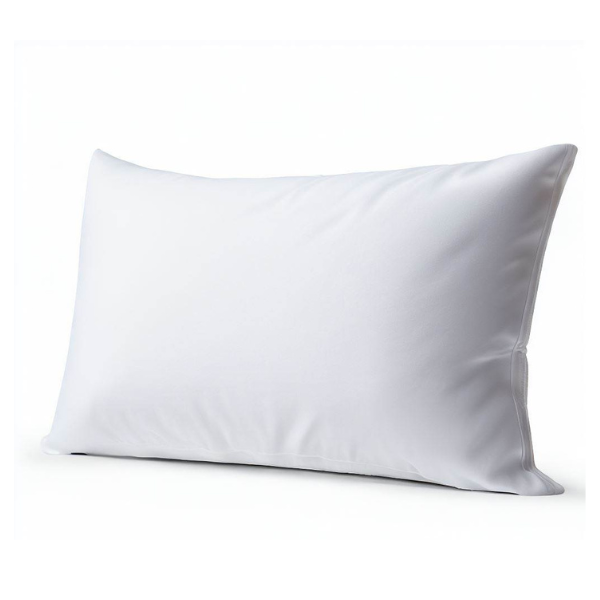
The second feature is coverage: a six-sided, fully zippered encasement with enclosed, sealed binding seams closes off the entire mattress, which is different from a fitted-sheet-style protector that only covers the top and sides and leaves the seams unsealed. All three products below are OEKO-TEX certified, meaning they're independently tested to be free of a defined list of harmful chemicals — worth checking for on any protector, not just ours.
Our Picks at a Glance
| Protector | Best For | From | |
|---|---|---|---|
| 100% Cotton Encasement Editor's Pick | Breathability, hot sleepers | $95 AUD | Shop at Our Store (AU) → |
| Waterproof Encasement | Spills, incontinence, kids | $62 AUD | Shop at Our Store (AU) → |
| Mattress Mate™ Slip-On | Budget, easy on/off | $40 AUD | Shop at Our Store (AU) → |
Prices shown are AUD, correct at time of writing and vary by mattress size/depth — see each product page for current pricing and the full size range.
100% Cotton Encasement — Best for Breathability
A fully zippered, six-sided encasement in 100% cotton, OEKO-TEX certified and independently pore-size tested at approximately 2.8 microns — the manufacturer lists this as the tightest weave of its kind available in Australia. The seams are enclosed and sealed (not just stitched) and the zip closes with a Velcro lock flap, so there's no gap for allergen to bypass the fabric. This is the pick if you run hot at night or share a bed with a partner who does — being fully breathable cotton, it lets moisture escape rather than trapping humidity against the mattress the way a waterproof laminate can. It's backed by a 30-day quality guarantee and a 10-year product warranty, and comes in heights from 25cm up to a 42cm depth version for thicker mattresses, so measure your mattress depth before ordering.
Shop the 100% Cotton Encasement →
Waterproof Encasement — Best for Spills
Same six-sided, zippered, sealed-seam construction as the cotton pick, but built from a polyester knit outer bonded to a thin (0.2mm) TPU waterproof lining, pore-tested to under 2 microns and OEKO-TEX certified. The TPU layer is microporous rather than a solid sheet, so it still breathes — it's designed to block liquids, dust mites and their allergen, dust, and mould spores without turning the mattress into a sweat box. That combination makes it the better choice for kids' beds, incontinence, or anywhere spills are a real risk alongside the allergen concern (it's also rated safe for use with an electric blanket). Also backed by a 30-day guarantee and 10-year warranty, and available in depths from 16cm up to 33cm.
Shop the Waterproof Encasement →
Mattress Mate™ Slip-On — Best Budget Option
A lower-cost, slip-on style rather than a fully zippered encasement — the trade-off for the lower price is that, with wide elastic corner straps instead of a zip, it doesn't seal the mattress on all six sides the way the two encasements above do. It's still built from an OEKO-TEX certified cotton face with a fine, lab-tested pore structure (mean pore diameter around 0.5 microns in the manufacturer's third-party testing) over a waterproof TPU backing and a soft polyester fill, and carries the same 30-day guarantee and 10-year warranty as the encasements. Its real strength is as a companion product: layered over one of the encasements above, it takes the everyday wear and washing, which the supplier notes can stretch an encasement's own wash cycle out to every 3–6 months instead of more often. On its own, it's a reasonable starting point if budget is the main constraint, or as a second protector for a spare bed. Fits mattresses 16–40cm deep.
Shop the Mattress Mate™ Slip-On →
Mattress Protector vs Mattress Encasement: What's the Difference?
"Protector" and "encasement" get used loosely, but they're not the same thing. A standard protector — even a good one — typically only covers the top and sides of the mattress, like a fitted sheet. An encasement fully zips around all six sides, sealing the mattress completely. For dust mite allergen specifically, that distinction matters: allergen inside an existing mattress can still reach you through gaps a fitted-style protector leaves open underneath. We cover this in more depth, including how to check what you currently have, in Dust Mite Mattress Protectors vs Standard Mattress Protectors.
Does a Mattress Protector Actually Reduce Dust Mite Allergy Symptoms?
The short answer: encasements reduce allergen exposure from the mattress itself, and there's real research behind that specific claim — but they work best as one part of a broader routine, not a standalone fix. A randomised trial by Halken et al. found that mite-impermeable mattress and pillow covers reduced mite allergen exposure and improved symptoms in mite-sensitised asthmatic children (Halken et al., 2003). Separately, Schei, Hessen and Lund found allergen-impermeable covers measurably reduced house dust mite allergen levels in used mattresses (Schei, Hessen & Lund, 2002). Neither study found covers alone eliminate dust mite allergy — they're consistently studied and recommended as one component alongside regular hot washing of bedding and humidity control, which we cover in our comprehensive dust mite reduction guide.
FAQs
Do dust mite mattress protectors actually work?
Yes, when it's a genuine six-sided, sealed encasement rather than just a water-resistant sheet — the pore size is what stops mite allergen from passing through. Randomised research has measured a real reduction in allergen exposure and symptoms in mite-sensitised users of a proper encasement (see the research summary above). It isn't a complete fix on its own, though: it addresses the mattress specifically, not the rest of the bedroom.
Which mattress protector is best for dust mites?
A fully zippered, six-sided encasement is the most effective style — a fitted-sheet-style protector doesn't seal the mattress the same way, which matters for allergen specifically (see "Mattress Protector vs Mattress Encasement" above). Beyond that it's mostly preference: cotton breathes better for hot sleepers, waterproof suits kids' beds or spill risk, and a slip-on style is the budget option.
What is the best mattress protector in Australia?
For general comfort or stain protection there are dozens of good options on the market. If dust mite allergen specifically is what you're trying to reduce, look for a six-sided zippered encasement rather than any protector labelled "anti-allergy" — that construction detail is what the research above actually ties to reduced allergen exposure, not the brand name. Our three picks above are all built to that standard.
What kills dust mites on a mattress?
A protector doesn't kill dust mites — it seals them (and their allergen) inside the mattress so they can't reach you, rather than reducing the population itself. If cutting down the number of live mites is also a goal, the methods with real evidence behind them are hot washing (60°C+) anything machine-washable, steam, and keeping humidity below 50%. We cover all of this in detail in What Kills Dust Mites Instantly? What Actually Works.
How can you tell if your mattress has dust mites?
You can't see them — an individual dust mite is far too small for the naked eye, so there's no reliable visual check. The usual indirect signs are morning allergy symptoms (sneezing, itchy or watery eyes, a blocked nose) that ease up when you're away from the bedroom, and simply how old the mattress is and whether it's ever been in a sealed encasement: allergen builds up gradually over years regardless of how clean the mattress looks on the surface. For a definite answer, an allergist can test for dust mite sensitivity directly, and at-home allergen test kits are also available.
How long do dust mites live in a mattress?
A single dust mite typically lives a few months, but that's not really the number that matters for a mattress — in the right conditions (warmth, humidity, and a steady supply of shed skin cells) they breed continuously, so an untreated mattress sustains an ongoing population rather than dying out on its own. That's why encasement, hot washing, and humidity control are ongoing habits rather than a one-off fix — see our comprehensive dust mite reduction guide for the full routine.