 Skip to content



Kids Dust Mite Bedding & Air Purifier Bundle — Single Bed | AU
Kids Dust Mite Bedding & Air Purifier Bundle — Single Bed | AU
Couldn't load pickup availability
If you're reading this, you've probably already tried a lot. New detergents. Washing the sheets twice a week. Cutting out the things you read about online. And still, some mornings your child wakes up stuffy, rubbing their eyes, or scratching at skin that won't settle.
Here's something that often gets overlooked: the bed itself. Dust mites live deep in mattresses, pillows and doonas, and there's no amount of washing the outside of bedding that reaches them. They also become airborne every time your child rolls over or you make the bed. So even a spotless room can still be full of the thing you're trying to get away from.
This bundle is a way to deal with that directly, in one go, without you having to research and piece it together yourself.
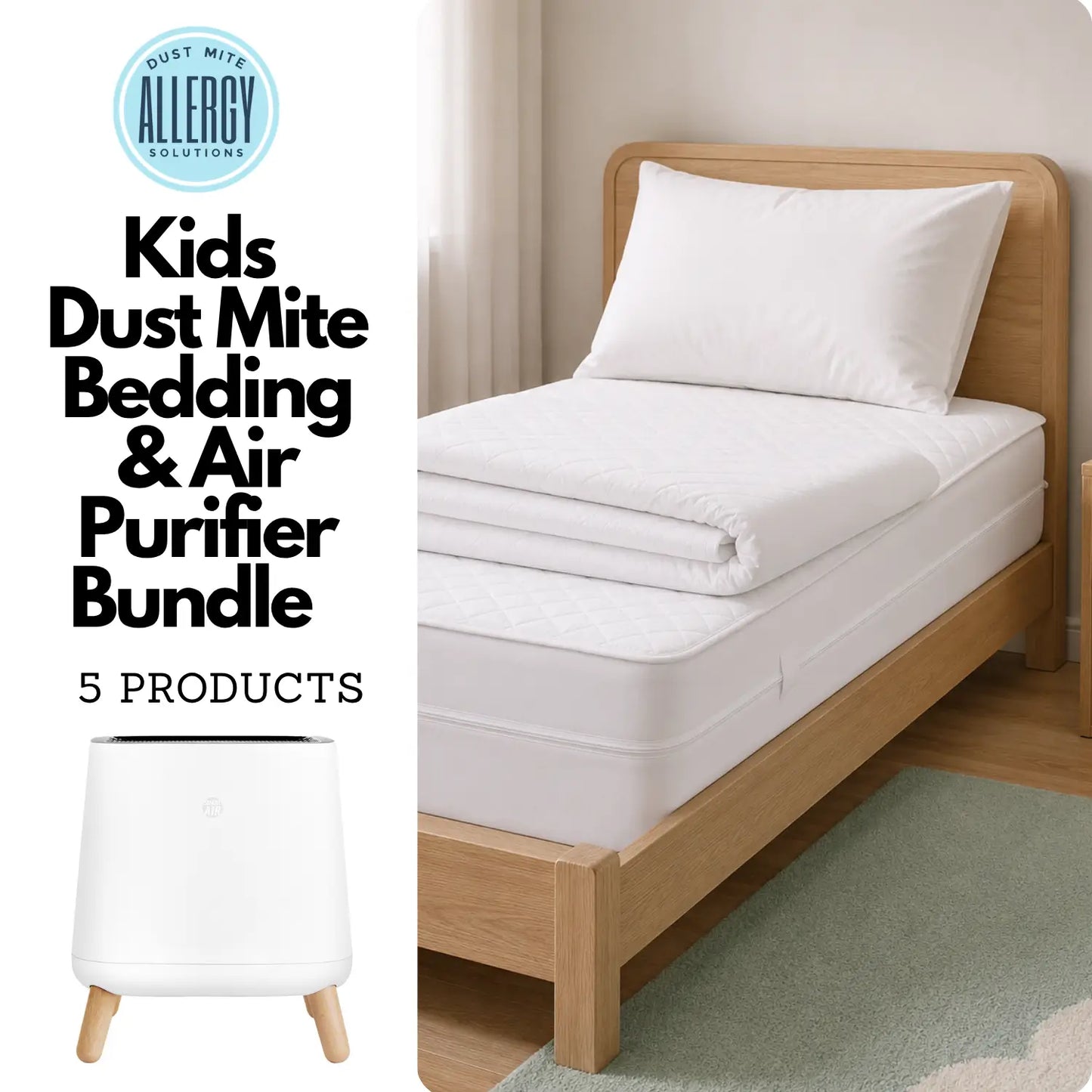
It does two things at once. The four cotton encasements create a barrier with the mattress, pillow and doona inside a soft, tightly woven layer, so dust mite allergens stay locked away from your child. The air purifier then handles what's already floating in the room. Bedding and air — because dealing with only one tends to leave you frustrated that nothing changed.
What's in it — everything sized for a single bed:
- SmartAir Sqair Air Purifier — H12 HEPA, CADR 300 — Filters airborne dust and fine particles from the room. Ozone-free, so it's made to run safely through the night.
- 100% Cotton Dust Mite Mattress Protector & Encasement (25cm) — Zips fully around the mattress. Soft, breathable cotton, none of the plastic crinkle that wakes a light sleeper.
- 100% Cotton Dust Mite Pillow Protector & Encasement (Standard/Queen) — Sits quietly under the pillowcase, right where your child's face rests all night.
- 100% Cotton Dust Mite Quilt Protector & Doona Encasement — Encases the doona, the part of the bed that's hardest to wash properly.
-
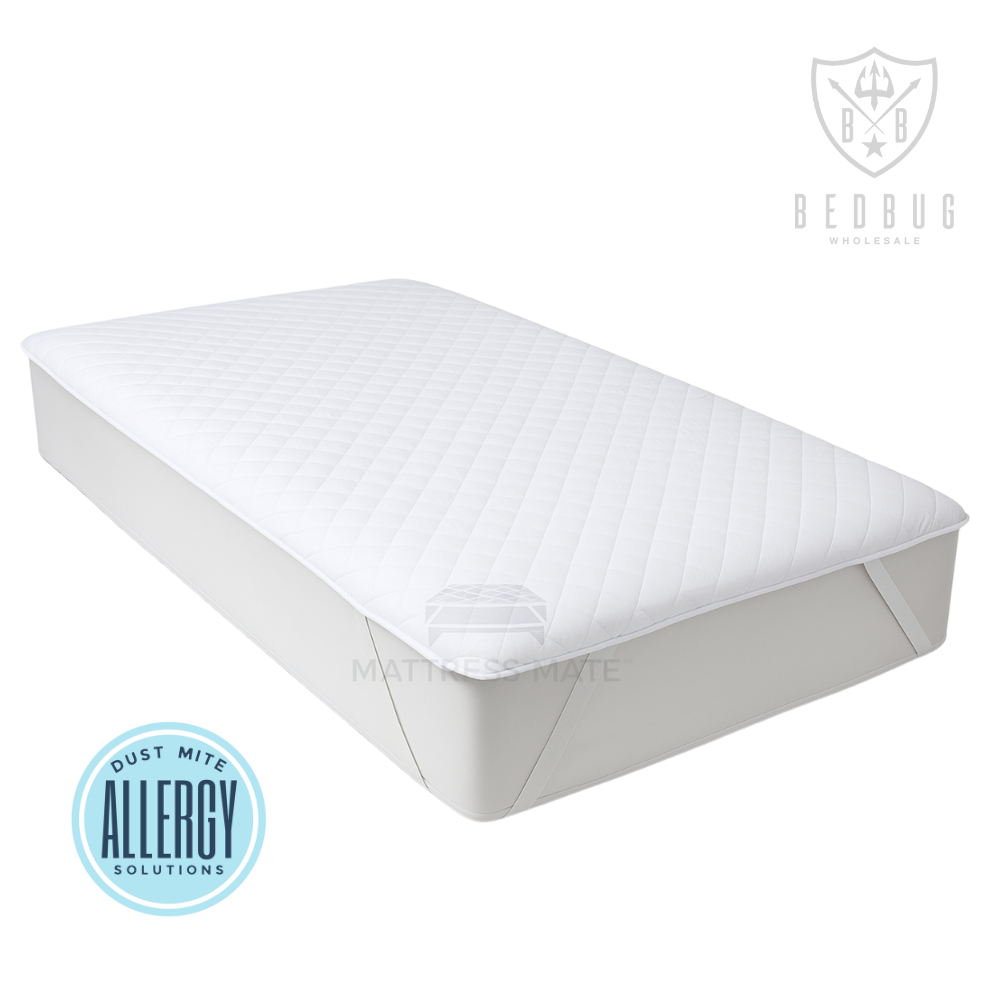
Mattress Mate™ Slip-On Dust Mite Mattress Protector — A slip-on layer on top, for the everyday washes between deeper cleans.
A note on sensitive skin. Every cover here is 100% cotton — no coatings, no chemical treatments, nothing added against your child's skin.
This bundle creates a barrier to the dust mite reservoir in the bed and reduces the particles in the air, which is the part of the picture that washing alone can't reach. For a lot of families, that's the missing piece they hadn't tried yet.
Bought separately, the air purifier and bedding come to $565.50. Together as this bundle, they're $515.50 — a saving of $50.
Not a medical device. Not intended to diagnose, treat, cure or prevent any disease, including eczema, asthma or allergies. Designed to reduce contact with dust mite allergens and to filter airborne particles. Individual results vary.






Benefits of dust mite protectors
-

Exceptionally Tight Weave
These pillow, mattress and quilt protectors come in breathable cotton or waterproof options. Both use a fine, tightly woven fabric that helps stop dust mite allergens from passing through.
-

Enclosed Binding Seams
A barrier is only as good as its weakest point. Enclosed binding seams tuck every stitch line inside a sealed fold, closing the gaps where allergens typically slip through on cheaper covers with exposed seams.
-

Zippered Protection
Zippered protector seals entry points — ensuring dust mite allergens already inside cannot escape, and new ones cannot get in. Unlike a standard cover that only protects the top surface, a zippered cover wraps the entire mattress, pillow or quilt.


Independent Test / Product Data
💧 Waterproof Cover — Knitted Jersey TPU
Sample 00012 · Fifth Ridge Pty Ltd, TA Bed Bug Wholesale- TestPore Distribution vs Diameter (Fitted)
- FluidGalwick · 15.9 Dynes/CM
- Tortuosity Factor0.715
- Smallest Pore (99.21% CFF)0.136 µm
- Diameter at Max Distribution0.1567 µm
- Mean Flow Pore Diameter0.5432 µm
- Largest Detected Pore0.7463 µm
- 90% CFF Occurs at0.1544 µm
Supplier Test Certificate
 click to enlarge
🌿 100% Cotton Cover — Tight Weave OEKO-TEX
Sample 00022 · Fifth Ridge Pty Ltd, TA Bed Bug Wholesale- TestPore Distribution vs Diameter (Fitted)
- FluidGalwick · 15.9 Dynes/CM
- Tortuosity Factor0.715
- Smallest Pore (99.21% CFF)2.7921 µm
- Diameter at Max Distribution2.7 µm
- Mean Flow Pore Diameter5.614 µm
- Largest Detected Pore23.25 µm
- 90% CFF Occurs at2.8 µm
Supplier Test Certificate
 click to enlarge
Test data provided by Fifth Ridge Pty Ltd (TA Bed Bug Wholesale) and reflects fabric pore size measurements only — not a guarantee of allergen reduction or symptom relief. These products are not registered therapeutic goods. Individual results will vary. Always consult a healthcare professional for allergy management. Use as directed.
Bundle and Save
-

Dust Mite Bedding Protection Bundle | 100% Cotton | 35cm Mattress
Cotton Dust Mite Bed Protection Bundle — 5-Piece Set Protect the whole...
-

Dust Mite Bedding Protection Bundle | 100% Cotton | 25cm Mattress
Cotton Dust Mite Bed Protection Bundle — 5-Piece Set Protect the whole...
-

Dust Mite Bedding Protection Bundle | Waterproof | 24-33cm Mattress
Waterproof Dust Mite Bed Protection Bundle — 5-Piece Set Protect the whole...
-

Dust Mite Bedding Protection Bundle | Waterproof | 18-24cm Mattress
Waterproof Dust Mite Bed Protection Bundle — 5-Piece Set Protect the whole...


Let customers speak for us
Fits a standard Koala foam pillow extremely well. Made of a very nice tight weave cotton - no polyester which I detest in bedding. Really happy with my purchase

The cotton covers seem well made and fit as described, shipping is fast

I would suggest this mattress and cover as a perfect solution to dust mite, also with regards to comfort it’s just what you need

I have not been able to sleep under a feather doona until now. The cover is wonderful & delivery was prompt.

Bought to remove neighbours' wood heater smoke from bedroom, works well, haven't checked out cost of replacement filters. Quick delivery, no issues.

Great quality, quick delivery and comfortable
Quick delivery, easy to setup and works great

This mattress encasement is a great solution and alternative to purchasing a new mattress for a child with dust mite allergy. The protected went on easily and provides leave of mind that whatever mites are living inside the mattress are trapped in there. Have purchased all of the products to protect our kids bed and are happy with them. Have been using for over one month now.

The quilt cover encasement feels like it's great quality. Have been using for about one month now and it's providing peace of mind that whatever is inside there can't get out. Washing the quilt weekly was not going to work as the quilt wouldn't have survived such regular washing, so this is an excellent solution.
Great quality cotton material, but it's a bit of a struggle to get onto the mattress.

Great quality cotton material, but it's a bit of a struggle to get onto the mattress.
The product is great quality and was an easy order with very good communication. I have only had one night sleeping with it but was very pleasantly surprised . I must add , I think the cost is great value when compared to getting even a new doona that is adequate for the colder states in Australia . I had my down doona and pillows washed and commercially dried before putting them in the covers and the mattress is all encased now and it is a really big difference . 👍
Efficient postage, easy to put onto the mattress, duvet etc. Daughter finds it comfortable and soft.
Efficient postage, easy to put onto the mattress, duvet etc. Daughter finds it comfortable and soft.
We purchased mattress , pillow and duvet encasement for kids due to their dust mite allergy.
Quality is great and delivery was earlier than expected.
Frequently asked questions
Everything you need to know about dust mite protectors
How does a dust mite encasement actually work?
A dust mite encasement works by sealing the bedding item — mattress, pillow, quilt, or cushion — inside a fabric with a pore structure too small for dust mite allergen particles to pass through. Dust mite allergens are carried by fecal pellets and body fragments that typically measure 10 to 40 microns. The encasement fabric used in these products has pores measured at well below that range, third-party tested by capillary flow porometry using Galwick fluid, and figures supplied by the manufacturer Fifth Ridge Pty Ltd. The encasement does not kill dust mites or remove allergens already in the room — it creates a physical barrier that keeps what is inside the bedding from reaching the person sleeping on or near it.
Do dust mite encasements actually work?
The evidence for mattress and pillow encasements as a dust mite allergen reduction measure is supported by peer-reviewed research. A 2003 randomised controlled trial by Halken et al., published in the Journal of Allergy and Clinical Immunology, found that active encasings produced a significant long-term reduction in dust mite allergen concentrations over 12 months, compared to placebo encasings in children with asthma and dust mite allergy. Individual results vary, and encasements are most effective as part of a broader approach — covering all three layers (mattress, pillow, and quilt) and combining with regular vacuuming and reduced soft furnishings. Encasements alone are not a complete solution.
Why do I need to cover the pillow and quilt as well as the mattress?
Your mattress, pillow, and quilt are all significant dust mite allergen reservoirs. The mattress is the largest, but your pillow sits closest to your face all night — allergens from an uncovered pillow are inhaled directly. Covering only the mattress leaves two other sources exposed at the breathing zone. Covering all three layers is consistent with the approach used in clinical research on encasement bedding, and gives a more meaningful reduction in allergen exposure where it matters most.
Will it feel like plastic or make a crinkling noise?
No. The cotton encasements use 100% natural woven cotton — the surface feels like fabric and is completely silent. The waterproof encasements use a polyester knitted jersey outer with a TPU (thermoplastic polyurethane) membrane laminated behind it. The jersey is the layer that makes contact with your bedding; the TPU sits underneath it. The result is soft and silent — no plastic crinkle — which is a significant difference from older PVC or vinyl-backed waterproof products.
Will it make me sleep hot?
The cotton encasements are 100% natural cotton and breathe the same way as other cotton bedding — they are among the most breathable encasement options available. The waterproof encasements use a microporous TPU membrane, which allows water vapour to pass through, so they breathe more than a solid PVC sheet — but are somewhat less breathable than the cotton version. Both are designed to be used with a normal outer layer (fitted sheet, pillowcase, or quilt cover) on top, which adds further breathability between the encasement and the sleeper.
How often should I wash it, and at what temperature?
Every 3 to 6 months is generally sufficient when normal bedding — a fitted sheet, pillowcase, or quilt cover — sits over the top and is washed regularly with your usual linen. The outer layer absorbs daily contact and extends the time between encasement washes. Wash sooner after a spill, accident, or illness. Use a warm or gentle machine cycle and do not exceed 60°C — repeated high-temperature washing shortens the lifespan of both the cotton weave and the TPU membrane in the waterproof range. Avoid bleach and fabric softeners on all encasements.
How long will it last?
Both the cotton and waterproof encasements carry a 10-year product warranty against manufacturing defects. In practice, barrier effectiveness can be maintained for many years with correct care. The main factors that shorten lifespan are repeated high-temperature washing, use of bleach or fabric softeners, and prolonged direct contact with body oils without an outer layer on top. Using a normal sheet, pillowcase, or quilt cover over the encasement significantly extends its effective life by absorbing daily wear before it reaches the encasement itself.
Will this help with my dust mite allergy?
We describe what the fabric measurably does — create a physical barrier against fine particles in the 10–40 micron range — but we don't make claims about how this will affect any individual's symptoms. Clinical evidence for encasement bedding as part of a dust mite allergen reduction approach exists in peer-reviewed literature (Halken et al., 2003, Journal of Allergy and Clinical Immunology), but individual responses vary and depend on overall allergen load, degree of sensitisation, and what other measures are in place. If you have a diagnosed dust mite allergy, your GP or allergist is the right person to advise on whether encasement bedding is appropriate for your situation.

Dust Mite Covers
Do dust mite covers really work? What are the best dust mite covers? What should I look for when purchasing dust mite encasements? All your questions answered in one place.