 Skip to content



Royal Comfort
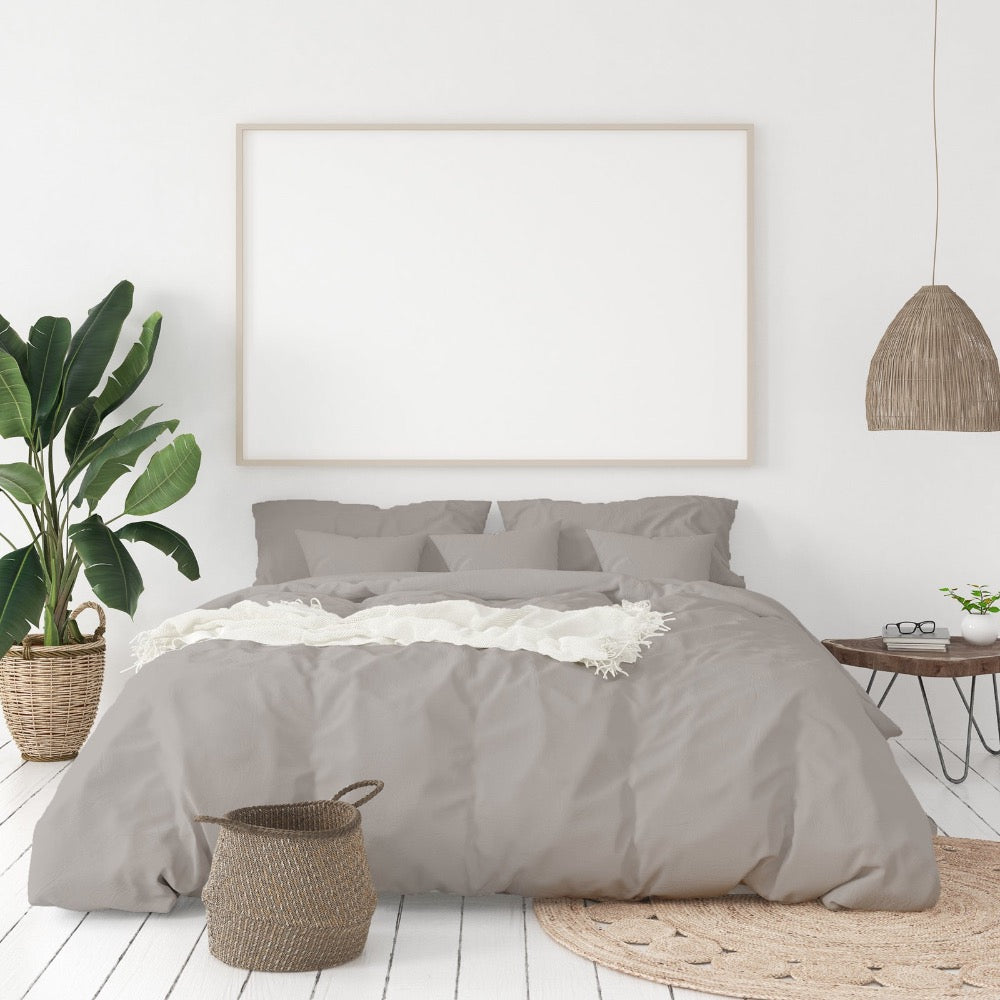
Royal Comfort | Bamboo Cotton Quilt Cover Set | 1000TC | King | Dove
Royal Comfort | Bamboo Cotton Quilt Cover Set | 1000TC | King | Dove
Couldn't load pickup availability
The Royal Comfort Balmain is a King-size quilt cover set in a 50/50 bamboo-cotton blend. The bamboo component gives the fabric its characteristic smooth, slightly lustrous surface and contributes to the breathability and moisture-wicking properties the range is known for. The cotton component adds durability and structure. Both materials are natural-origin fibres, and the combination launders well — it gets softer with repeated washing.
This listing is the Dove colourway. The set includes one quilt cover (245 × 210cm) and two standard pillowcases (48 × 74cm).
Features
- Royal Comfort Balmain Series
- 50% bamboo, 50% cotton
- 1000 thread count
- Smooth, moisture-wicking fabric
- Subtle sheen finish
- Button closure
- Gets softer with washing
Specifications
- Brand: Royal Comfort
- Colourway: Dove
- Size: King
- Set includes: 1 × quilt cover 245 × 210cm, 2 × pillowcases 48 × 74cm
- SKU: V160-204923
Care
- Machine wash warm on gentle cycle (40°C)
- Tumble dry low
- Do not bleach
- Gets softer with every wash
Frequently asked
Is this quilt cover hypoallergenic?
Bamboo-cotton blends are widely described as hypoallergenic — and there's a reasonable basis for that. The smooth fibre surface is gentle against skin, and the breathability and moisture-wicking properties make it a comfortable choice for people with sensitivities. "Hypoallergenic" isn't a regulated term in Australia though, so it doesn't carry a guaranteed standard across products. If you're managing a dust mite allergy specifically, the product designed to block allergen is a tightly-woven quilt encasement — that goes between the quilt and this cover, and does the barrier work.
What does the research say about quilt covers and dust mite allergens?
A few things worth knowing:
- Quilt allergen levels track the bedroom. Allergen accumulation in quilts and quilt covers correlates with overall bedroom allergen levels — the surrounding environment matters more than any single product (Rains et al., 1999, Clinical & Experimental Allergy).
- Comprehensive bedroom control has been associated with improved outcomes; single interventions in isolation are less reliable. A 2024 meta-analysis found that combinations of mattress protectors, pillow protectors, quilt protectors, washing routines, humidity control, and air purification were associated with three times greater odds of patient-reported improvement in mite-sensitive participants (van Boven et al., 2024, World Allergy Organization Journal). An earlier 2008 Cochrane review found weaker evidence for any one measure on its own (Gøtzsche & Johansen, 2008).
- Washing removes allergen even without high heat. Australian research at the University of Sydney found that washing at 55°C or hotter kills 100% of dust mites, and that even a cold wash removes more than 90% of dust mite allergen from bedding (McDonald & Tovey, 1992, Journal of Allergy and Clinical Immunology). This quilt cover is machine washable on a warm gentle cycle (40°C) — below the mite-kill threshold, but consistent with the allergen-removal finding. For mite killing at this temperature, a quilt encasement used over the quilt is the more reliable lever.
Should I use a quilt protector over this?
Yes, if dust mite allergen is a concern. A tightly-woven encasement placed between the quilt and this cover creates a physical barrier that prevents allergen from the quilt reaching you while you sleep. The quilt cover itself is not a barrier product — it's a cover for style and comfort. Browse our dust mite quilt and doona protector range.
How often should I wash a quilt cover if I have dust mite allergies?
Published guidance generally recommends washing bedding every one to two weeks. At 40°C (the recommended temperature for this cover) you're in the allergen-removal range rather than the mite-kill range — but regular washing at this temperature still significantly reduces allergen load (McDonald & Tovey, 1992). If hot-washing your bedding is a priority, look at our encasement range, where you wash the encasement itself at higher temperatures and wash the quilt less frequently.
What's the difference between a quilt cover and a quilt encasement for dust mite allergies?
A quilt cover is a decorative outer layer — it protects the quilt from general soiling and can be removed for washing, but the weave is not designed to block allergen particles. A dust mite quilt encasement has a specifically tight weave designed to create a physical barrier between you and allergen that has accumulated inside the quilt. If you're managing a dust mite sensitivity, the encasement goes on first (directly over the quilt), and the decorative cover goes over the encasement. See our quilt encasement range.
I have a dust mite allergy — what's the most important bedding step?
The setup most supported by published research is comprehensive bedroom control:
- Encase the mattress first — this is where the highest allergen load accumulates
- Encase the pillow — your face is in contact with this for hours each night
- Encase the quilt — the quilt drapes directly over you
- Wash encasements and pillowcases regularly — at 55°C to kill mites, or cold wash to remove allergen if hot isn't possible
- Keep bedroom humidity below ~50% — dust mites struggle in drier air
- Consider air purification
This quilt cover is one component of a comfortable bedroom setup — the encasements and washing routine are doing the allergy management work. For advice specific to your situation, your GP or allergy specialist is the right person to speak to.
General educational content. Not medical advice.


Let customers speak for us
Great quality products, quick, easy delivery

Fits a standard Koala foam pillow extremely well. Made of a very nice tight weave cotton - no polyester which I detest in bedding. Really happy with my purchase

The cotton covers seem well made and fit as described, shipping is fast

I would suggest this mattress and cover as a perfect solution to dust mite, also with regards to comfort it’s just what you need

I have not been able to sleep under a feather doona until now. The cover is wonderful & delivery was prompt.
Bought to remove neighbours' wood heater smoke from bedroom, works well, haven't checked out cost of replacement filters. Quick delivery, no issues.

Great quality, quick delivery and comfortable
Quick delivery, easy to setup and works great

This mattress encasement is a great solution and alternative to purchasing a new mattress for a child with dust mite allergy. The protected went on easily and provides leave of mind that whatever mites are living inside the mattress are trapped in there. Have purchased all of the products to protect our kids bed and are happy with them. Have been using for over one month now.

The quilt cover encasement feels like it's great quality. Have been using for about one month now and it's providing peace of mind that whatever is inside there can't get out. Washing the quilt weekly was not going to work as the quilt wouldn't have survived such regular washing, so this is an excellent solution.
Great quality cotton material, but it's a bit of a struggle to get onto the mattress.

Great quality cotton material, but it's a bit of a struggle to get onto the mattress.
The product is great quality and was an easy order with very good communication. I have only had one night sleeping with it but was very pleasantly surprised . I must add , I think the cost is great value when compared to getting even a new doona that is adequate for the colder states in Australia . I had my down doona and pillows washed and commercially dried before putting them in the covers and the mattress is all encased now and it is a really big difference . 👍
Efficient postage, easy to put onto the mattress, duvet etc. Daughter finds it comfortable and soft.
Efficient postage, easy to put onto the mattress, duvet etc. Daughter finds it comfortable and soft.