Skip to content

Looking for an air purifier that actually helps with dust mite and household allergens, not just marketing claims? We compare four real options from our range — for different room sizes and budgets — and give you the honest picture on what air purifiers do (and don't) do for dust mite allergies specifically.
This is general information, not medical advice — for personal allergy or asthma guidance, speak with your GP or allergist. Air purifiers are not medical devices and don't treat any health condition.
On This Page
- Do Air Purifiers Actually Help With Dust Mite Allergies?
- Our Picks at a Glance
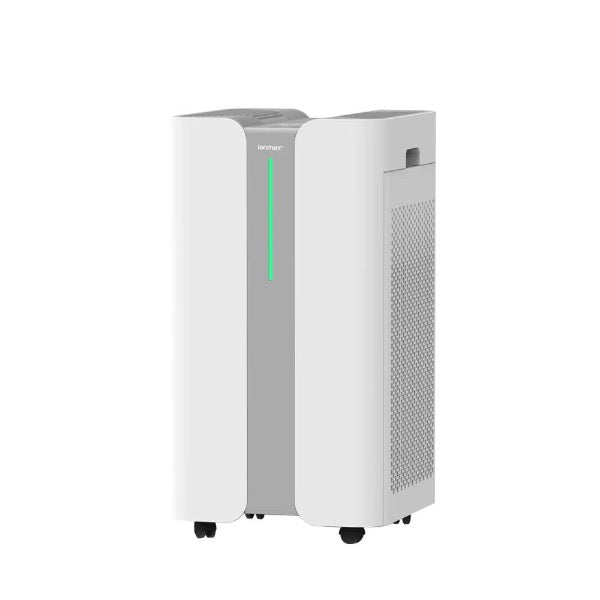
- SmartAir SA-600 — Best Overall for Bedrooms
- SmartAir Blast Mini Mk II — Best for Large Rooms
- Devanti Air Purifier — Best Budget Pick
- SmartAir QT3 Travel — Best for Personal Space & Travel
- How to Choose the Right Air Purifier
- What Else Actually Reduces Dust Mite Allergen
- FAQs
Do Air Purifiers Actually Help With Dust Mite Allergies?
Air purifiers are a genuinely useful part of an allergy-aware home, but it's worth being straight about what they do and don't do for dust mites specifically — a lot of marketing overstates it. The Australasian Society of Clinical Immunology and Allergy (ASCIA) is cautious here: its allergen minimisation guidance notes there isn't enough evidence to prove standalone air filtration is effective for reducing dust mite allergen, and every dust-mite-specific strategy it recommends is physical rather than airborne — washing bedding above 60°C, dust-mite-resistant mattress and pillow covers, hard flooring over carpet, damp dusting, and humidity control (ASCIA, Allergen Minimisation). That's largely because dust mite allergen doesn't stay airborne for long: it's carried mostly in larger particles that settle relatively quickly into soft furnishings, rather than the smaller, longer-floating particles typical of pollen or mould spores — a distinction the 2022 bedroom study below also notes when explaining its own results.
That doesn't mean air filtration does nothing. A 2022 study measured a real reduction in two house dust mite allergen markers (Der f 1 and Der p 1) across 22 real bedrooms fitted with high-efficiency air filters, alongside similar reductions in cat and dog allergen (Healio, 2022). Asthma Australia's own buying guidance is pragmatic rather than sceptical: look for a genuine HEPA filter (removing at least 99.95% of particles), match the unit to your actual room size, and budget for regular filter replacement — while noting a purifier only cleans the enclosed space it's actually running in, not the whole house (Asthma Australia, Air Cleaners).
Put simply: an air purifier is a genuinely useful layer for general air quality, and there's reasonable evidence it can reduce circulating dust mite allergen, pet dander, pollen and mould spores in the room it's running in — but on its own, it won't resolve a dust mite allergy that's centred on your mattress and bedding. Encasements, hot washing and humidity control still do the heavy lifting there. Where a purifier earns its keep is as an addition to that routine, especially in living areas, bedrooms shared with pets, or during high-pollen or bushfire-smoke seasons. See our deeper dive in Do Air Purifiers Work for Dust Mite Particles? for the full picture.
Our Picks at a Glance
| Air Purifier | Best For | HEPA / Room Size | From | |
|---|---|---|---|---|
| SmartAir SA-600 Editor's Pick | Bedrooms & most homes | H13, up to 60m² | $379 AUD | Shop at Our Store (AU) → |
| SmartAir Blast Mini Mk II | Large or open-plan rooms | H13, up to 89m² | $650 AUD | Shop at Our Store (AU) → |
| Devanti Air Purifier | Small bedrooms, budget | H11, ~8–12m² | $139 AUD | Shop at Our Store (AU) → |
| SmartAir QT3 Travel | Personal space & travel | H11, ~1.2m zone | $119 AUD | Shop at Our Store (AU) → |
Prices shown are AUD, correct at time of writing. These are four of the strongest options in our range for different rooms and budgets — see our full range of air purifiers for more.
SmartAir SA-600 — Best Overall for Bedrooms
According to the manufacturer's product specifications, the SA-600 runs dual H13 medical-grade HEPA filters rated to EN 1822 (capturing at least 99.95% of particles at 0.3 microns), each paired with its own activated carbon filter and washable pre-filter. On its highest of five speed settings it's rated to clear a 60m² room in around 16 minutes, with noise ranging from a whisper-quiet 23dB on low up to 52.5dB on high — quiet enough to run overnight in a bedroom on a lower setting. It's ozone-free and ioniser-free by design, includes a child lock and a filter-change indicator, and the HEPA filters are rated for around 12 months of daily use before replacement. This is our overall pick because it balances true H13 filtration, sensible bedroom-to-living-room coverage, and a manageable noise profile at every speed.
SmartAir Blast Mini Mk II — Best for Large Rooms
Built for open-plan living areas rather than a single bedroom, the manufacturer rates the Blast Mini Mk II to cover up to 89m² using its H13 HEPA filter alone (also EN 1822 rated, capturing at least 99.95% of particles at 0.3 microns), with an optional activated carbon stage for VOCs and odours. Noise runs from 36dB on low up to 49dB on high across its three speeds, and the HEPA filter is rated for roughly 13 months of typical household use. It's built with an all-metal cabinet and lockable wheels, which suits moving it between rooms, and — like every air purifier we stock — the supplier is explicit that it's not a medical device and doesn't make claims about treating any health condition; it's a genuinely useful appliance for reducing circulating particles in a larger space, not a therapy.
Shop the SmartAir Blast Mini Mk II →
Devanti Air Purifier — Best Budget Pick
At $139 AUD, the Devanti is the most affordable genuine-HEPA option in our range. Per the manufacturer's product specifications it uses an EN 1822 H11-grade HEPA filter (capturing at least 95% of particles at the most penetrating particle size) with an activated carbon layer and a switchable ioniser, rated to a 180m³/h CADR across roughly 8–12m² of floor area — best suited to a small bedroom or study rather than a living area. It runs four modes including a dedicated Silent setting, and the HEPA/carbon filter is rated for 6–12 months of use depending on air quality. H11 is a lower filtration grade than the H13 units above, so it's the right pick when budget and a small room matter more than maximum filtration — not when you need to cover a larger, open space.
Shop the Devanti Air Purifier →
SmartAir QT3 Travel — Best for Personal Space & Travel
The QT3 is a different category of product to the three above: a 720g, battery-powered personal air purifier rather than a whole-room unit. According to the manufacturer's product specifications it uses an EN 1822 H11 HEPA filter and is designed to clean a personal breathing zone of roughly 1.2 metres — a desk, a car seat, a hotel bed, or a bassinet — rather than a room. It's USB-C rechargeable, running 2–4 hours per charge depending on speed, weighs under a kilogram, and carries a 1-year manufacturer warranty. It won't replace a room-sized purifier, but it's a genuinely useful option for travel, shared workspaces, or anyone who wants filtered air specifically at close range.
Shop the SmartAir QT3 Travel →
How to Choose the Right Air Purifier
Asthma Australia's buying guidance boils down to three things worth checking before price: filter type, room size, and ongoing filter cost (Asthma Australia, Air Cleaners).
Filter grade (HEPA rating): "HEPA" alone isn't a single standard — under the EN 1822 classification used by most of the manufacturers above, H13 ("true" or medical-grade HEPA) captures at least 99.95% of particles at 0.3 microns, while H10–H12 grades capture anywhere from roughly 85% to 99.5%. H13 is the better choice if filtration performance matters most to you; H11 units are still genuinely useful and considerably cheaper, which is a reasonable trade-off for a small room or secondary space.
Room size and CADR: match the unit's rated coverage area (usually quoted in m² or by Clean Air Delivery Rate, CADR, in m³/h) to the actual room you'll run it in — an undersized purifier in a large room will run constantly on its highest, noisiest setting and still underperform. As a rule of thumb, look for a CADR high enough to cycle the room's air several times an hour, not just once.
Ongoing cost: HEPA filters need replacing roughly every 6–13 months depending on the model and air quality, so factor that into the real cost of ownership, not just the sticker price.
What Else Actually Reduces Dust Mite Allergen
Because dust mite allergen mostly settles into soft furnishings rather than staying airborne, the strategies with the strongest evidence behind them for dust mites specifically are all physical, not airborne: a genuine six-sided mattress encasement, washing bedding weekly above 60°C, and keeping indoor humidity under 50%. We cover the full, evidence-based routine — including where an air purifier fits in alongside it — in our comprehensive dust mite reduction guide. If reducing the live mite population (not just filtering the air) is your goal, see What Kills Dust Mites Instantly? What Actually Works.
FAQs
Do air purifiers work for dust mite allergies?
They can help, but they're not a standalone fix. ASCIA notes there isn't enough evidence that air filtration alone is effective for dust mite allergen specifically, mainly because dust mite allergen settles into mattresses, carpet and soft furnishings rather than staying airborne. Independent research has still measured real reductions in airborne dust mite allergen markers from HEPA filtration in bedrooms, so a purifier is a reasonable addition to your routine — just pair it with mattress/pillow encasements, hot washing and humidity control rather than relying on it alone. See our full breakdown in Do Air Purifiers Work for Dust Mite Particles?
What is the best air purifier for dust mites in Australia?
It depends on the room. For a bedroom or general living space, a true H13 HEPA unit like the SmartAir SA-600 is our overall pick. For a large or open-plan room, size up to something like the SmartAir Blast Mini Mk II. For a small bedroom on a budget, an H11 unit like the Devanti is a genuine, affordable option. See the full comparison above.
What kills dust mites in the air?
Strictly speaking, nothing in the air needs "killing" — dust mites live in fabric and soft furnishings, not floating in the air; what an air purifier captures is their allergen, not the mites themselves. To reduce the live mite population, the methods with real evidence behind them are hot washing (60°C+) anything machine-washable and keeping humidity below 50%. We cover this in detail in What Kills Dust Mites Instantly? What Actually Works.
Are air purifiers worth it in Australia?
For general air quality — pet dander, pollen, mould spores, and bushfire smoke — yes, a genuine HEPA unit sized correctly for the room is a worthwhile addition to most homes. If a dust mite allergy is your main concern, prioritise mattress/bedding encasement and humidity control first, and treat a purifier as a helpful addition rather than the primary fix.
What HEPA rating do I need for a dust mite allergy?
H13 ("true" or medical-grade HEPA under the EN 1822 standard, capturing at least 99.95% of particles at 0.3 microns) is the gold standard and what most dedicated allergy-focused purifiers use. H10–H12 grades are common in budget and compact units and still meaningfully reduce particles, just less thoroughly — match the grade to your budget and room size rather than chasing the highest number available.
What is the most effective treatment for dust mite allergy?
There's no cure for a dust mite allergy itself, but ASCIA's allergen-minimisation guidance is the closest thing to an evidence-based routine: wash bedding weekly above 60°C, use dust-mite-resistant mattress and pillow encasements, replace carpet with hard flooring where practical, keep indoor humidity under 50%, and damp-dust rather than dry-dust. An air purifier can be a useful addition to that routine but isn't a substitute for it. For a personal treatment plan (antihistamines, immunotherapy, and similar), speak with your GP or an allergist — that's outside what this article can advise on.