Skip to content


On this page:
The short answer: you probably can't eliminate dust mites entirely, but you can reduce their numbers significantly. Dust Mite Allergy Solutions stocks a range of products designed to support this — but the biggest gains come from consistent habits across a few key areas. By focusing on bedding, humidity, and cleaning routines, most households can meaningfully lower dust mite populations and the allergens associated with them. For a deeper look at the cleaning side, see our deep cleaning guide; for the humidity and air quality side, the air quality guide covers this in more detail.
What helps reduce dust mites at home (quick summary)
If you are looking for a simple place to start, most people find the biggest difference comes from focusing on a few consistent changes rather than trying to do everything at once.
- Use protective dust mite covers on mattresses and pillows
- Wash bedding regularly and keep it fully dry
- Reduce indoor humidity where possible
- Vacuum and clean dust-prone areas consistently
- Limit excess fabrics and clutter, especially in bedrooms
How to reduce dust mites in your home — a room-by-room guide
Dust mites can live in many places around the home, especially where it is dusty or where there are furnishings and fabrics. By using several methods together, most households can meaningfully reduce the number of dust mites and the conditions they prefer.
Where do dust mites live?
Dust mites thrive in environments that are warm and humid. Research by Arlian and Dippold (1996) in the Journal of Medical Entomology found that dust mites grow and reproduce most readily at temperatures between approximately 23°C and 30°C, with much faster population growth at the warmer end of this range. Earlier work by Arlian (1992) established that dust mites need ambient humidity above approximately 65-70% to maintain water balance, since they absorb moisture from the air rather than drinking water.
Dust mites feed on flakes of shed human and pet skin, along with other organic matter found in household dust, which is why they tend to build up in upholstered furniture, bedding, carpets, and curtains — places that combine warmth, humidity, and a steady food source.

Usual places where dust mites live
- Bedding: mattresses, pillows, sheets, and blankets
- Carpets and rugs, especially if not regularly cleaned
- Upholstered furniture such as sofas, couches, and cushions
- Stuffed toys, particularly if left unwashed
- Curtains and drapes, especially if infrequently cleaned
- Clothing, sometimes if not disturbed for a long time
- Pet bedding where pet dander accumulates
Dust mites are less likely to be found in
- Outdoor environments, as they are primarily indoor organisms
- Extremely dry climates or areas with low humidity
- High altitudes where the air is thinner and drier
- Well-ventilated spaces that reduce humidity levels
- Regularly cleaned and vacuumed homes with minimal dust accumulation
- Synthetic and leather materials, as they tend to prefer natural fibres
Can you completely get rid of dust mites?
The short answer is no — it is not usually possible to completely get rid of dust mites from your home. However, there is strong evidence that their numbers can be reduced substantially with consistent management. A study published in the Journal of Allergy and Clinical Immunology (Arlian et al., 2001) found that homes maintaining indoor relative humidity below 51% over 17 months saw dust mite populations decline by approximately 98%, with allergen levels more than 10 times lower than in homes with higher humidity.
Read on for practical, room-by-room suggestions.
If you're not sure where to start
If everything feels overwhelming, it can help to focus on just a few high-impact areas first.
- Start with your bed. Mattress and pillow protection usually makes the biggest difference
- Wash your sheets and pillowcases regularly
- Keep your bedroom as dry and well ventilated as possible
Once these are in place, you can build on them with cleaning routines and other adjustments throughout your home.
Why a combination approach tends to work better
Dust mites are not usually controlled by a single action. They are influenced by multiple factors, including moisture, fabrics, skin flakes, dust levels, and how often soft furnishings are cleaned. This is why combining several small changes — managing bedding, humidity, and cleaning — often leads to more noticeable and consistent results over time. The peer-reviewed research consistently supports this multi-step approach: humidity control (Arlian et al., 2001), regular hot water washing (McDonald and Tovey, 1992), and the use of mattress and pillow encasings (Halken et al., 2003) all show measurable benefits in real homes. For more on building a low-allergen bedroom environment, see the low allergen bedroom guide.

Top 3 tips
- Use dust mite mattress protectors and pillow protectors — these create a physical barrier between you and the highest-density mite reservoirs in the home.
- Wash sheets and pillowcases weekly at 60°C or above where care labels allow — this reduces both live mites and allergen residue.
- Keep bedroom humidity below 50% using a dehumidifier — Arlian et al. (2001) found homes maintaining humidity below 51% saw mite populations decline by approximately 98% over 17 months.
Common myth
"Cold washing is pointless — you need hot water to make a difference."
Hot water (55°C+) does reduce live mite populations, but cold washing still matters. Research found that even a cold-cycle wash removed more than 90% of allergen from bedding — the physical action of washing and rinsing dislodges allergen particles regardless of temperature. Individual results will vary.
McDonald & Tovey, Journal of Allergy and Clinical Immunology, 1992
Clean your mattress
- Read our guide: how to clean a mattress if you are sensitive to dust
- Vacuum your mattress with a HEPA-filtered mattress vacuum. Research published in the Journal of Asthma (Wu et al., 2012) found that daily mattress vacuuming over 8 weeks was associated with approximately 85% reductions in total dust mite allergens
- Consider steam cleaning for deeper cleaning where suitable
- Keep the mattress dry to help prevent moisture build-up
- Maintain overall cleanliness in the bedroom
- Professional mattress cleaning services can be an option for deeper cleaning
"Daily mattress vacuuming over 8 weeks was associated with approximately 85% reductions in total dust mite allergens."
— Wu et al., 2012, Journal of Asthma
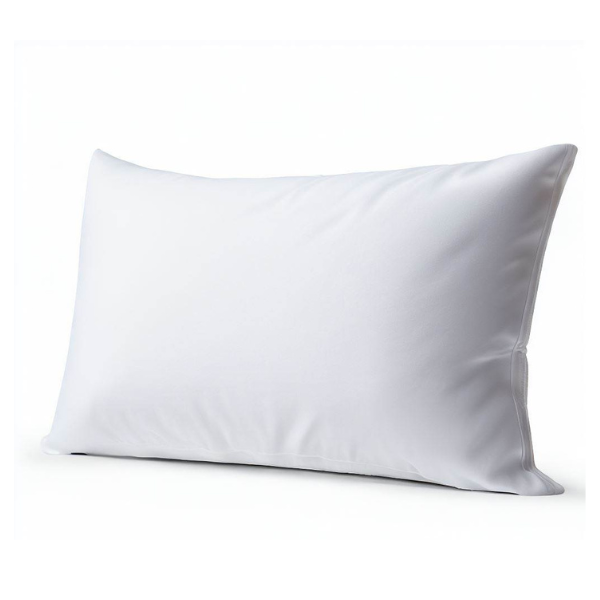
Use dust mite mattress, pillow, and duvet protectors
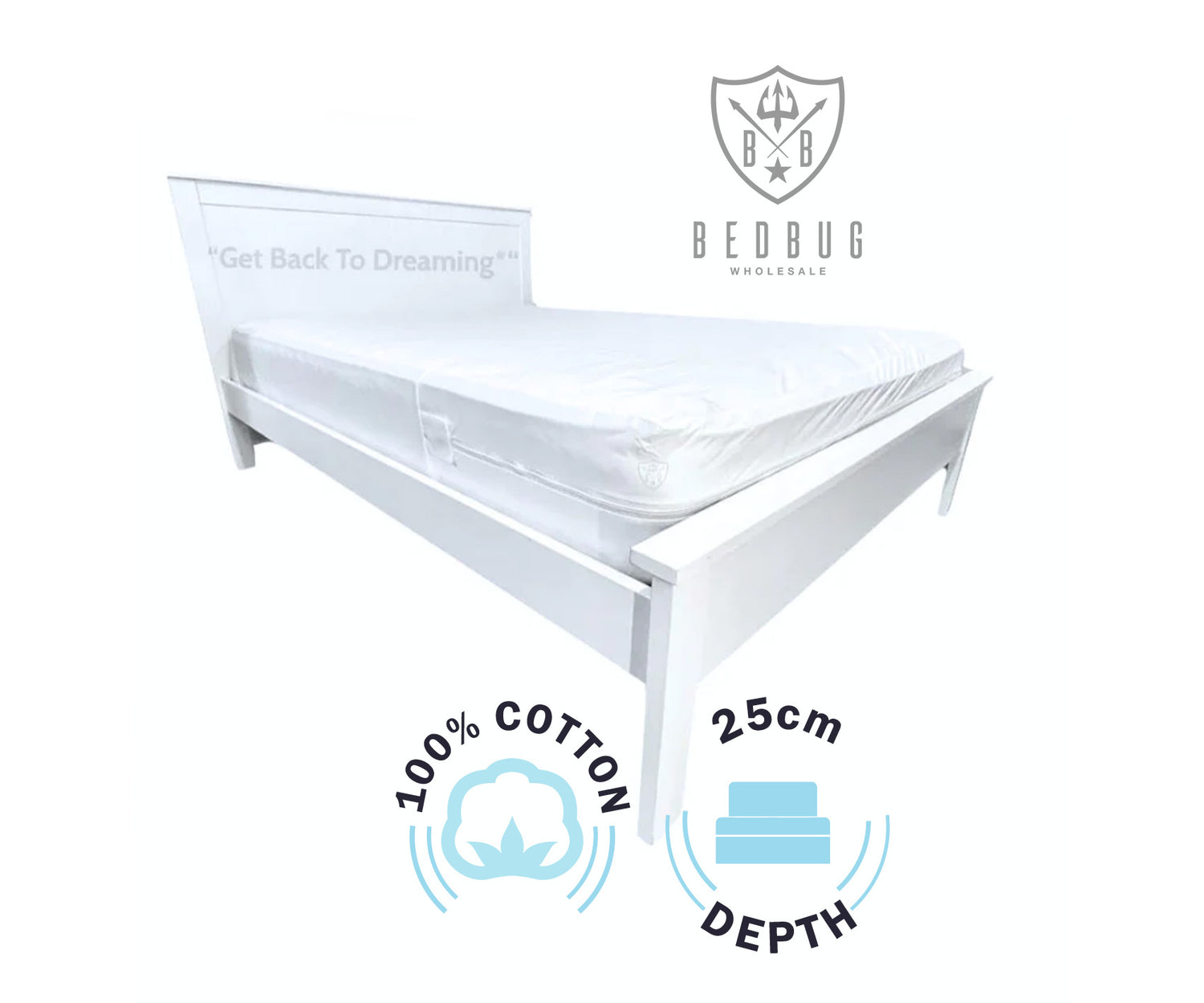
- Dust mite mattress protectors can help create a barrier between you and the mattress surface
- They provide a physical layer that may help reduce direct exposure to dust mite allergens during sleep
- A 2003 randomised controlled trial published in the Journal of Allergy and Clinical Immunology (Halken et al.) found that mattress and pillow encasings were associated with significant long-term reductions in dust mite allergen concentrations in mattresses over 12 months
- These protectors are often chosen by people looking to make the bed easier to manage as part of a broader dust mite reduction routine
Wash bedding regularly in hot water
- Wash sheets, pillowcases, and blankets weekly in hot water (60°C or above) where care labels allow. Research published in the Journal of Allergy and Clinical Immunology (McDonald and Tovey, 1992) found that water temperatures of 55°C or above are associated with reductions in dust mite populations in bedding
- Useful nuance: the same study found that even cold-cycle washing reduced allergen levels by more than 90%, even though it doesn't kill mites — so washing has practical value at any temperature you can manage
- If an item can't be washed in hot water, putting it in the dryer on high heat for at least 15 minutes is a commonly recommended alternative
Clean curtains and drapes
- Vacuum curtains on both sides with a HEPA-filtered vacuum, focusing on folds and seams
- For washable curtains, follow care label instructions
- Air dry or tumble dry curtains on low heat
- For non-washable or delicate curtains, opt for professional cleaning
- Alternatively, use a steamer to freshen non-washable curtains where appropriate
Replace carpet with hard flooring
- Replace wall-to-wall carpeting with hardwood or laminate flooring if feasible
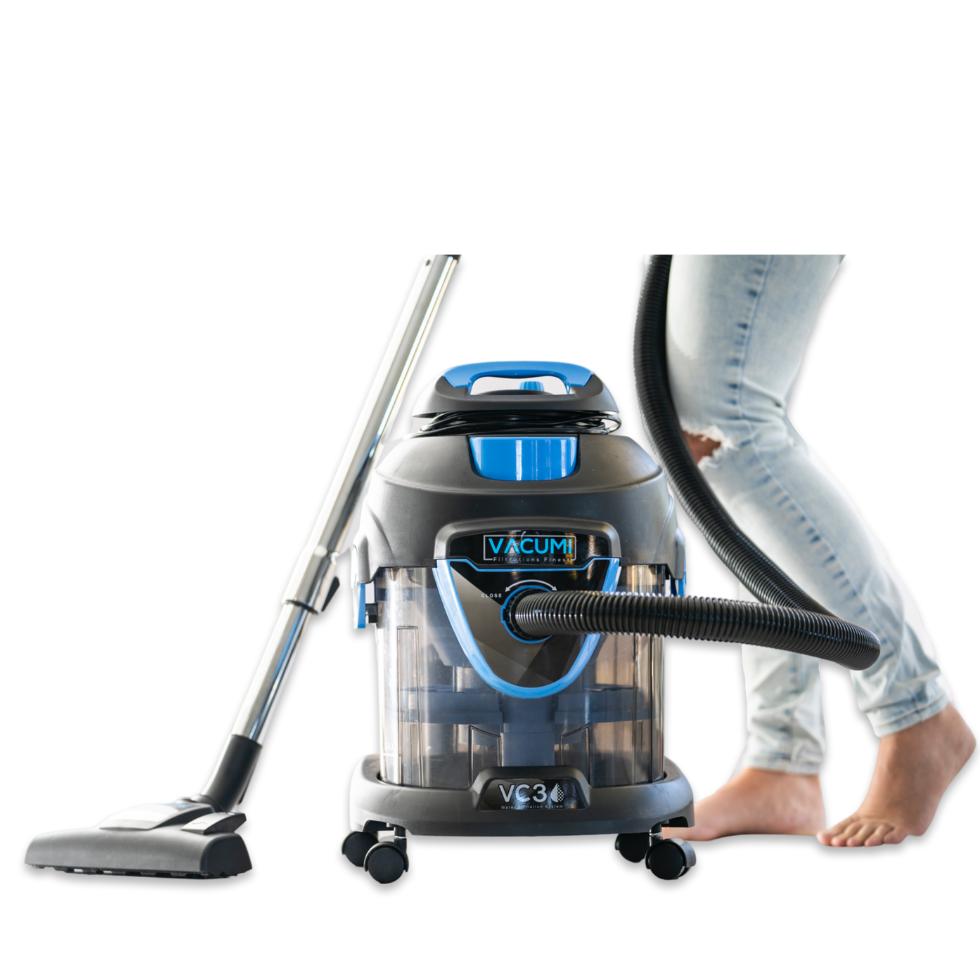
- Regularly vacuum carpets with a HEPA-filtered vacuum, focusing on high-traffic areas and corners
- Perform steam cleaning every few months where suitable for the flooring type
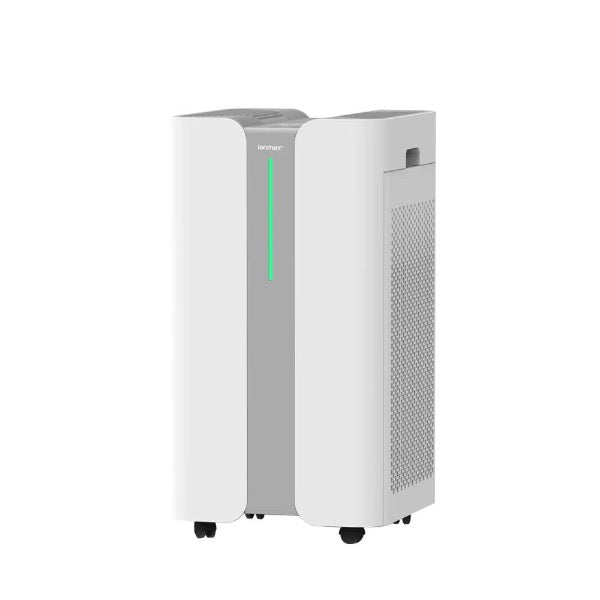
Use an air purifier with a HEPA filter
- Choose an air purifier with a HEPA filter to help capture fine airborne particles
- Ensure it has a coverage area appropriate for your room size
Reduce humidity
- Keep bedroom humidity below 50% where possible using a dehumidifier. Arlian et al. (2001) found that maintaining indoor humidity below 51% was associated with significant reductions in dust mite populations in homes over 17 months
- Encourage good ventilation and air circulation to reduce moisture build-up
Other useful reading
- How to reduce dust mites in your mattress — a step-by-step guide
- How can a dust mite mattress protector help with allergies?
Products for the bedroom


Top 3 tips
- Vacuum upholstered furniture weekly with a HEPA-filtered vacuum, paying close attention to seams and crevices where skin flakes accumulate.
- Wash removable cushion covers regularly in hot water — sofas are one of the most significant dust mite reservoirs outside the bedroom.
- Control humidity in the living room as well as the bedroom — dust mites don't stay in one room, and humidity affects the whole-home environment.
Common myth
"An air purifier will take care of dust mite allergens in the living room."
HEPA air purifiers can capture fine airborne particles, but most dust mite allergen (Der p 1) is found in settled dust and soft furnishings — not floating in the air. Purifiers are associated with reductions in airborne allergen but don't address the reservoir. They work best as part of a broader routine that includes vacuuming and humidity control. Individual results will vary.
Platts-Mills et al., Journal of Allergy and Clinical Immunology, 1992
Reduce clutter
- Minimise clutter in your home, as it provides more surfaces for dust to accumulate
Sofa and upholstered furniture
- Vacuum upholstered furniture thoroughly, focusing on seams and crevices
- Regularly wash removable cushion covers in hot water where fabric care instructions allow
- Steam cleaning fabric furniture may help freshen surfaces and support a deeper cleaning routine
Sofas, carpets and curtains are common dust mite reservoirs — combining vacuuming with humidity control addresses both the existing allergen and the conditions that let mites thrive.
Cushions and pillows
- Wash removable cushion and pillow covers in hot water regularly where suitable
- Ensure covers are completely dry before reusing
- If you use decorative cushions, consider dust mite pillow protectors
- Regularly air out cushions and pillows
- Vacuum cushions and pillows thoroughly using a HEPA-filtered vacuum, focusing on seams and folds
- Where suitable, use a steam cleaner for additional cleaning
Use an air purifier with a HEPA filter
- Choose an air purifier with a HEPA filter to help capture fine airborne particles
- Ensure it has a coverage area appropriate for your room size
Reduce humidity
- Keep living room humidity below 50% where possible using a dehumidifier
- Ensure good ventilation and air circulation to reduce moisture build-up
Replace carpet with hard flooring
- Replace wall-to-wall carpeting with hardwood or laminate flooring if feasible
- Regularly vacuum carpets with a HEPA-filtered vacuum, focusing on high-traffic areas and corners
- Perform steam cleaning every few months where suitable
Dusting and cleaning with dust mite sensitivities
- Wear a good-quality face mask if you are dusting and sensitive to dust
- If you have significant allergy symptoms while cleaning, consider having someone else handle dust-disturbing tasks or speak with an allergist
- Start dusting from the top of the room — ceiling fans, high shelves — and work your way down to lower surfaces and floors
- Dust at least once a week to help keep allergen levels lower
- Dry dusting can send particles into the air — use a damp or microfibre cloth where possible
- Regularly clean air vents and replace filters in heating and cooling systems
- Once dusting is done, vacuum the room with a HEPA-filtered vacuum to pick up settled particles
Other useful reading
Products for the living room


Children's rooms tend to collect dust mites quickly because of soft toys, carpets, and the fact that kids spend long hours sleeping and playing on soft surfaces. A consistent routine tends to work better than a single deep-clean.

Top 3 tips
- Use dust mite protectors on kids' mattresses and pillows — children spend more time in contact with soft surfaces than adults, making this one of the highest-impact changes.
- Keep the number of soft toys on the bed to a minimum and rotate others into closed storage — open shelves and pile-ups create additional mite habitat.
- Wash soft toys regularly in hot water where care labels allow — for toys that can't be washed hot, place in the freezer for at least 24 hours, then wash at a cooler temperature to remove allergen residue.
Common myth
"Freezing soft toys is enough — you don't need to wash them afterwards."
Freezing at household freezer temperatures can reduce live mite populations, but it does not remove allergen. The allergenic proteins remain in the toy after freezing. Washing after freezing is necessary to physically remove the residue — without it, allergen exposure continues even if fewer live mites are present. Individual results will vary.
Kuehr et al., Pediatric Allergy and Immunology, 1996
Stuffed toys
- Wash stuffed toys regularly in hot water where fabric care labels allow
- For toys that can't be washed hot, some households place them in the freezer overnight (at least 24 hours) as part of their cleaning routine, then wash at a cooler temperature afterwards
- Keep the number of stuffed toys on the bed to a minimum where practical — rotating toys through storage can help
- Store toys in closed containers rather than open shelves when not in use
For washable soft toys, regular hot washing produces meaningful allergen reduction. Vacuuming alone is less effective.
— Kuehr et al., 1996
Bedding and mattress
- Use dust mite mattress protectors and pillow protectors as you would in an adult bedroom
- Wash sheets, pillowcases, and light blankets weekly in hot water where suitable
- Choose washable, low-tog bedding where possible to make regular hot washing easier
Clean curtains and drapes
- Vacuum curtains on both sides with a HEPA-filtered vacuum, focusing on folds and seams
- For washable curtains, follow care label instructions and air dry or tumble dry on low heat
- For non-washable curtains, a steamer may help freshen them between deeper cleans
Use an air purifier with a HEPA filter
- Choose an air purifier with a HEPA filter suited to the room size
- Place it where air can circulate freely, ideally away from curtains and bedding
Reduce humidity
- Keep humidity below 50% where possible using a dehumidifier
- Ensure good ventilation and air circulation to reduce moisture build-up
Replace carpet with hard flooring
- Where practical, replace wall-to-wall carpet with hardwood or laminate flooring — this is one of the higher-impact changes for kids' rooms
- Regularly vacuum any remaining carpet with a HEPA-filtered vacuum
Products for kids' rooms

Top 3 tips
- Wash dishcloths and tea towels frequently in hot water — fabric items that stay damp provide conditions that suit dust mite survival.
- Store food in airtight containers to reduce organic matter available as a food source in the surrounding environment.
- Use exhaust fans or ventilation when cooking to manage humidity — kitchens produce significant moisture that can raise whole-home humidity levels and support mite populations throughout the house.
Common myth
"The kitchen doesn't need to be part of a dust mite reduction routine."
Kitchens are typically hard-surfaced and easier to clean than bedrooms, but high humidity from cooking creates conditions that suit mite survival throughout the home. Research consistently links elevated indoor humidity — wherever it occurs — to higher mite populations. Damp dishcloths and fabric storage areas can also harbour mites directly.
Arlian et al., Journal of Allergy and Clinical Immunology, 2001
- Dust and wipe all surfaces — countertops, shelves, and appliances — using a damp or microfibre cloth
- Focus on areas prone to food particles and crumb accumulation
- Store food in airtight containers
- Ensure good ventilation and manage humidity in the kitchen to create a less favourable environment for dust mites
Dishcloths and towels
- Wash dishcloths, towels, and oven mitts regularly in hot water
Products for the kitchen


Top 3 tips
- Run exhaust fans during and after showers — bathrooms are one of the biggest sources of indoor humidity spikes, which affect conditions throughout the home.
- Wash bath mats and towels regularly in hot water — fabric items in humid rooms accumulate both mould and dust mite allergen over time.
- Address mould promptly — mould and dust mites share the same conditions, so a bathroom mould problem is often a sign that humidity is high enough to support mite populations elsewhere in the house.
Common myth
"Mould and dust mites are the same problem — treating one treats the other."
Mould and dust mites both thrive in humid conditions, but they are distinct allergen sources. Mould releases spores that trigger their own allergic responses, separate from dust mite proteins (Der p 1 and Der p 2). Controlling humidity addresses both, but if mould is already established it requires its own targeted treatment — reducing humidity alone may not clear an existing mould colony.
Jaakkola & Jaakkola, Indoor Air, 2004
- Mould in bathrooms can support conditions that also suit dust mites, because both thrive in similar environments
- Mould releases spores, which may contribute to indoor allergen load
- Keep humidity low in bathrooms using exhaust fans, dehumidifiers, or ventilation
- Lower humidity helps discourage mould and creates a less suitable environment for dust mites
Mould and dust mites thrive in similar conditions — control humidity and you address both.
Shower curtain
- Use a washable shower curtain and clean it regularly to help prevent mould and moisture build-up
Products for the bathroom

While it is not possible to completely get rid of dust mites in the home, by following these strategies most households can meaningfully reduce their numbers and make the home feel more manageable. Consistent, ongoing effort tends to make the biggest difference, so it helps to make these changes part of your regular routine.
Frequently asked questions
What is the fastest way to reduce dust mites?
Focusing on bedding first — including mattress and pillow protection and regular hot washing — tends to have the biggest immediate impact.
Do air purifiers help with dust mites?
Air purifiers with HEPA filters may help capture airborne particles and are associated with reductions in airborne allergen, but they are most effective when combined with cleaning and humidity control. Individual results will vary.
How often should you wash bedding?
Many households aim to wash sheets and pillowcases weekly. Hot water (60°C or above) is generally recommended where fabric care labels allow. Research by McDonald and Tovey (1992) found that water temperatures above 55°C are associated with reductions in dust mite populations in bedding, while even cold-cycle washing reduces allergen levels by more than 90%.
Does humidity affect dust mites?
Yes. Dust mites need humidity to survive — research by Arlian (1992) found that they need ambient humidity above approximately 65-70% to maintain their water balance. A 2001 follow-up study found that maintaining indoor humidity below 51% over 17 months was associated with significant reductions in dust mite populations. Aim to keep indoor humidity below 50% as a practical target.
Can you completely eliminate dust mites?
Dust mites are a normal part of most indoor environments. Complete elimination is generally not realistic, but their numbers can often be reduced significantly with consistent management.
Does freezing stuffed toys kill dust mites?
Freezing at household freezer temperatures for at least 24 hours can reduce live mite populations. It is usually followed by washing at a cooler temperature to remove allergen residue — freezing alone does not remove the allergenic proteins.
Do I need to replace all my carpet?
No. Replacing carpet with hard flooring in the bedroom is one of the higher-impact changes, but it is not essential. Regular vacuuming with a HEPA-filtered vacuum, combined with humidity control, can make a meaningful difference even with carpet in place.
Not sure where to start?
Take the quick quiz to find the most suitable products for your household and allergy situation.
Take the quiz →Shop by category
References
Authority guidance
- Mayo Clinic — Dust mite allergy: diagnosis and treatment
- Asthma and Allergy Foundation of America — Dust mite allergy
- National Asthma Council Australia — Dust mites trigger my asthma
Peer-reviewed research
- Arlian LG. (1992). Water balance and humidity requirements of house dust mites. Experimental and Applied Acarology, 16(1-2):15–35. PubMed
- McDonald LG, Tovey E. (1992). The role of water temperature and laundry procedures in reducing house dust mite populations and allergen content of bedding. Journal of Allergy and Clinical Immunology, 90(4):599–608. PubMed
- Arlian LG, Dippold JS. (1996). Development and fecundity of Dermatophagoides farinae. Journal of Medical Entomology, 33(2):257–260. PubMed
- Kuehr J, Frischer T, Karmaus W, et al. (1996). Mite allergen exposure and mite-specific sensitization in soft toys. Pediatric Allergy and Immunology, 7(2):106–110. PubMed
- Arlian LG, Neal JS, Morgan MS, et al. (2001). Reducing relative humidity is a practical way to control dust mites and their allergens in homes in temperate climates. Journal of Allergy and Clinical Immunology, 107(1):99–104. PubMed
- Halken S, Høst A, Niklassen U, et al. (2003). Effect of mattress and pillow encasings on children with asthma and house dust mite allergy. Journal of Allergy and Clinical Immunology, 111(1):169–176. PubMed
- Wu FF, Wu MW, Pierse N, Crane J, Siebers R. (2012). Daily vacuuming of mattresses significantly reduces house dust mite allergens, bacterial endotoxin, and fungal β-glucan. Journal of Asthma, 49(2):139–143. PubMed
- Jaakkola MS, Jaakkola JJK. (2004). Interior surface materials and asthma in adults. Indoor Air, 14(Suppl 7):48–55.
Related guides
How to reduce dust mites in your mattress
A step-by-step guide
How to Reduce Dust Mites in Your Bedroom
Focused bedroom guide
Do air purifiers work for dust mite allergies?
What the evidence shows
Humidity, mould and dust mites
How they're connected
Is dust mite spray effective?
What the research says
How often to wash bedding to reduce dust mites
Frequency and temperature guide
Dust mite covers — FAQs answered
Everything you need to know
What Reduces Dust Mites Quickly? Evidence-Based Methods
Fast-acting approaches