Skip to content


Could sunlight play a role in reducing dust mites in your home? Some research suggests it can. This guide from Dust Mite Allergy Solutions walks through what the evidence actually shows, how sunlight is thought to work against dust mites, and its practical limitations.
A study by Tovey and Woolcock published in the Journal of Allergy and Clinical Immunology in 1994, titled "Direct exposure of carpets to sunlight can kill all mites," investigated whether direct sunlight could reduce dust mite populations in wool carpets. The study found that exposing wool carpets to direct sunlight created surface conditions hostile enough to dust mites to substantially reduce their numbers.
By contrast, indoor carpets that weren't exposed to sunlight remained at humidity and temperature levels suitable for dust mite build-up. Below, we walk through how this natural approach is thought to work, and its practical limitations.
How Long Does Sunlight Exposure Need to Be?
The Tovey and Woolcock (1994) study found that direct sunlight exposure for several hours was associated with significant reductions in dust mite populations on wool carpets. Individual results will vary. The exact duration of exposure needed depends on conditions — strong, direct sunlight on a clear day produces faster effects than weaker sunlight on a partly cloudy day.
For practical purposes, most secondary sources suggest several hours of direct sunlight in the middle of the day is needed to see meaningful effects. As a general principle, longer exposure under stronger conditions produces better results.
How Sunlight Affects Dust Mites
Sunlight is thought to affect dust mites through two main mechanisms: heat and reduced humidity.
The biology behind this is well-established. Research by Arlian (1992) in Experimental and Applied Acarology established that dust mites need ambient humidity above approximately 65–70% to maintain their water balance, and active dust mites do not survive longer than 6–11 days at humidity levels at or below 50%.
Direct sunlight on fabrics raises surface temperatures and lowers humidity at the same time — both of which work against dust mite survival. The combination of heat and dryness is what does most of the work, rather than ultraviolet (UV) light alone.
Limitations of Sunlight as a Dust Mite Method
While sunlight exposure can be useful as part of a broader approach, it has practical limitations.
Particle residue remains
Sunlight exposure may reduce dust mite populations, but it doesn't remove the particle residue (waste and body fragments) that dust mites have left behind. These particles can remain in carpets, bedding, and fabrics, so additional cleaning is generally needed to address them.
Time and conditions matter
Meaningful results require sustained sunlight exposure under suitable conditions. Cloudy days, shaded outdoor areas, and seasonal variations in sunlight intensity all affect what you can practically achieve. Sunlight intensity varies considerably across Australia by region and season.
Limited penetration
Sunlight may not penetrate deeply into thicker fabrics, mattresses, or upholstered furniture. Dust mites embedded within these items may not be affected by surface-level sun exposure, which is why sunlight tends to work best as one part of a broader cleaning approach rather than a standalone method.
Fabric damage risk
Prolonged sun exposure can cause some fabrics to fade or weaken over time. Coloured bedding, dyed fabrics, and delicate materials may be affected more than plain or sturdy fabrics. Always check care labels and avoid overexposing items that are prone to fading or damage.
How to Use Sunlight Effectively
To make the most of sunlight as part of an allergy-aware cleaning routine, here are some practical steps:
Choose the right time
Sunny days with strong direct sunlight are best — typically mid-morning to early afternoon in most parts of Australia. Cloudy or rainy days won't provide the conditions needed.
Prepare your items
Shake and fluff bedding or fabrics to help loosen surface dust before sun exposure. Washing items first can also help remove particle residue and is a sensible part of a combined approach.
Position items for even exposure
Lay items out evenly on a clean surface such as a clothesline or drying rack. Flip them partway through so both sides get sun exposure.
Allow enough time
Aim for several hours of direct sunlight where practical. Be mindful that some fabrics, dyed materials, and delicate items may be affected by prolonged sun exposure — check care labels and avoid overexposing items prone to fading.
Check the coverage
Make sure all parts of the items are getting direct sunlight. Adjust positioning as needed.
Following Up With Cleaning
Sun exposure is most effective when combined with regular cleaning, since it doesn't address particle residue on its own. The peer-reviewed research consistently supports a multi-step approach for managing dust mites in the home. For a full room-by-room walkthrough, see the deep cleaning for dust mite allergies guide.
To support a cleaner sleep environment:
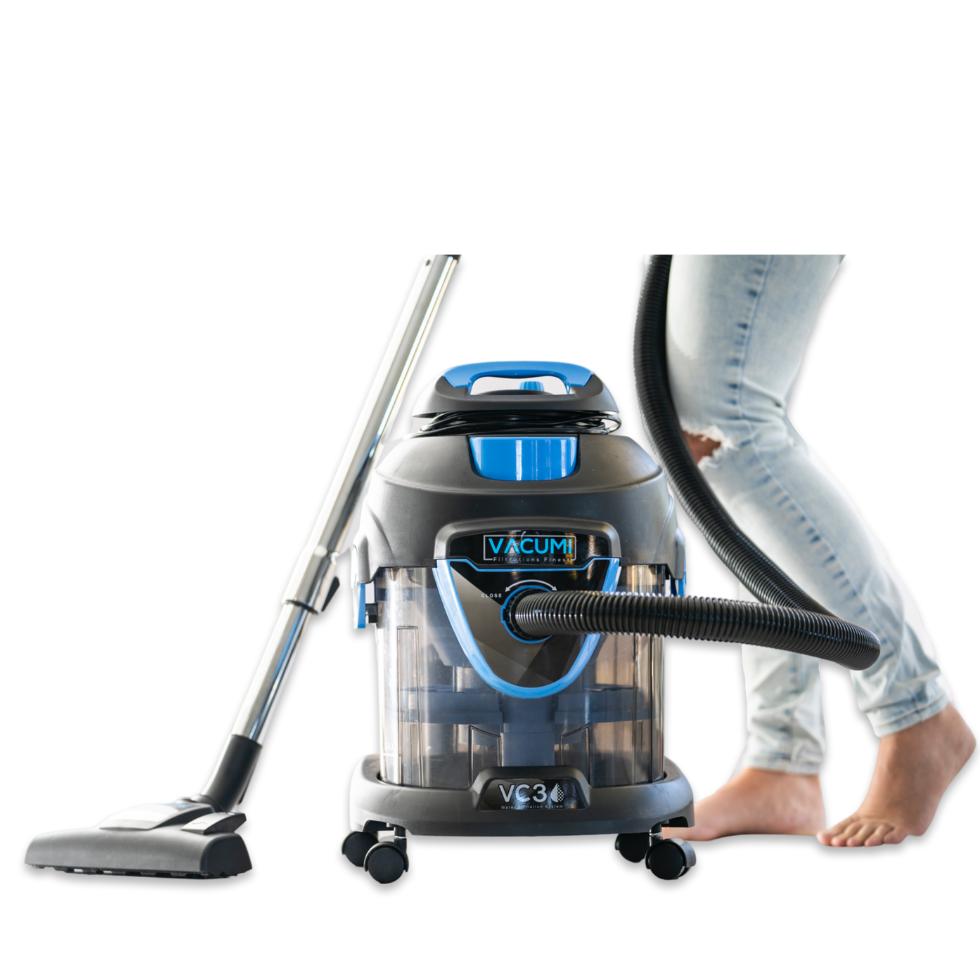
- Use a vacuum with a HEPA filter to help capture fine particles from carpets, mattresses, and upholstery. Research published in the Journal of Asthma (Wu et al., 2012) found that daily mattress vacuuming over 8 weeks was associated with approximately 85% reductions in total dust mite allergens. Individual results will vary.
- Wipe and dust surfaces with a microfibre or damp cloth, which lifts particles rather than dispersing them.
- Wash bedding regularly in hot water where care labels allow. Research by McDonald and Tovey (1992) found that water temperatures of 55°C or above are associated with reductions in dust mite populations in bedding. Most Australian guidance recommends 60°C, which provides a margin above this threshold. Individual results will vary.
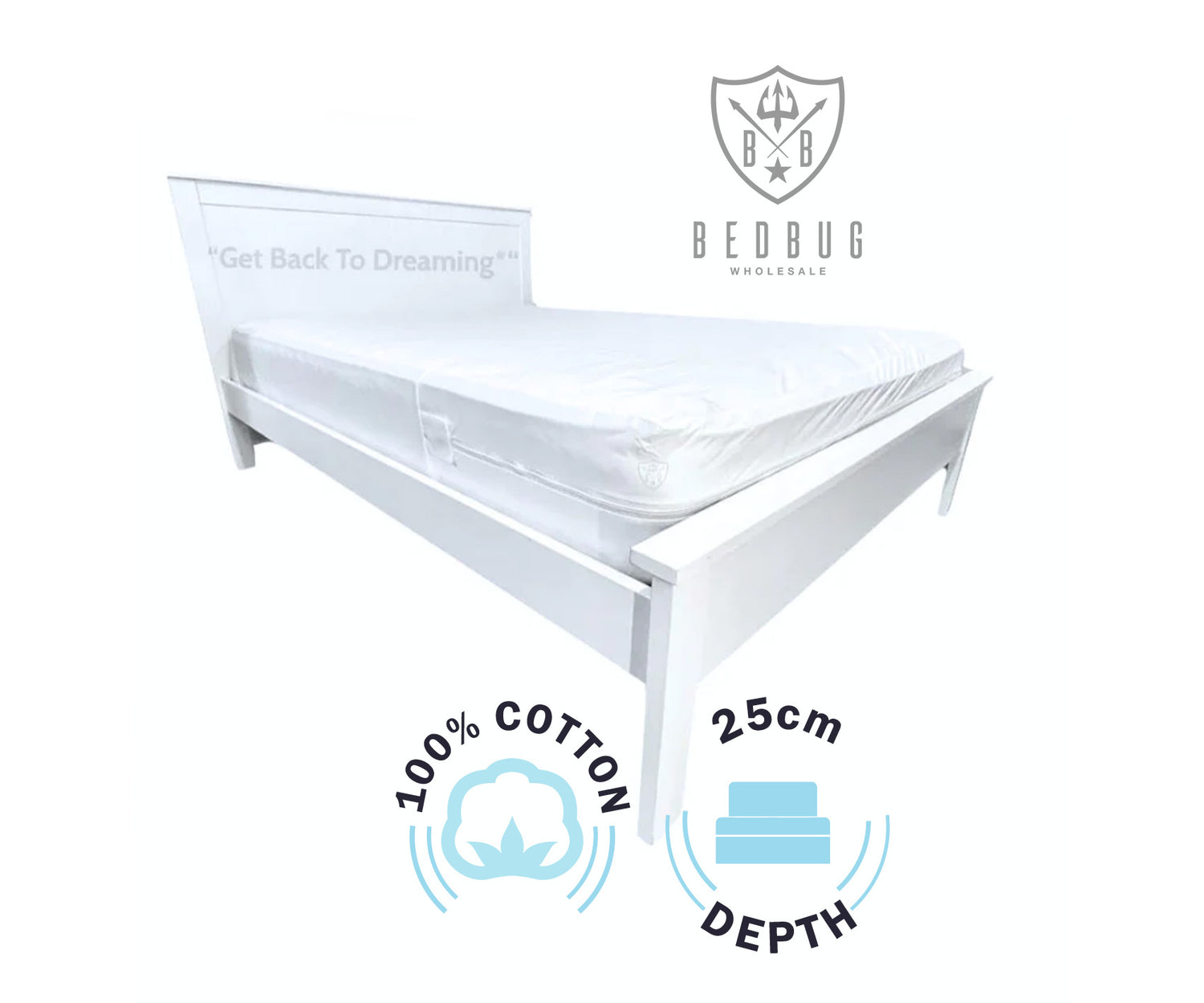
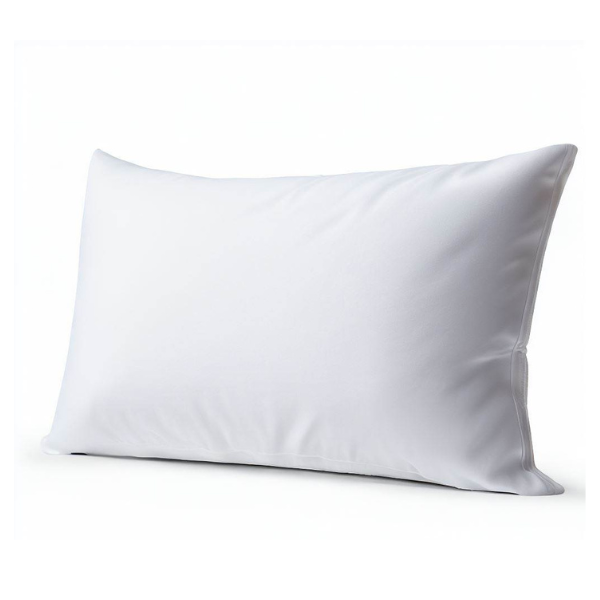
- Consider mattress, pillow, and quilt covers as part of an allergy-aware bedding setup. A 2003 randomised controlled trial published in the Journal of Allergy and Clinical Immunology (Halken et al., 2003) found that mattress and pillow encasings were associated with significant long-term reductions in dust mite allergen concentrations over 12 months. Individual results will vary.
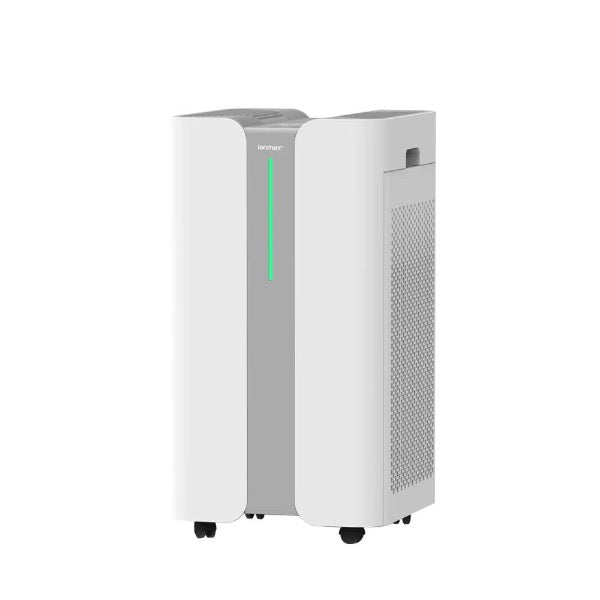
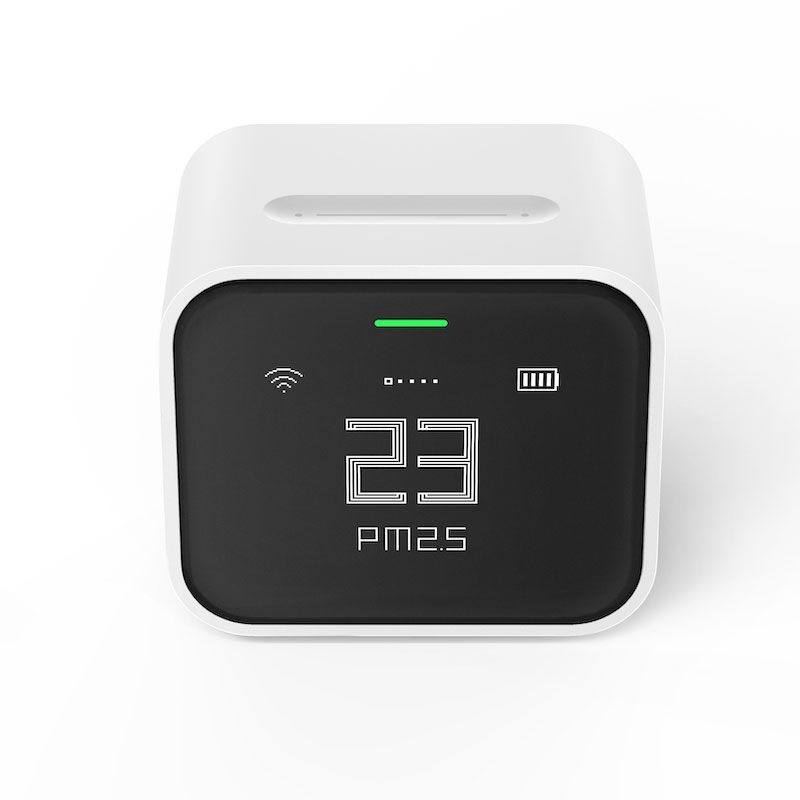
- Manage indoor humidity. Research by Arlian and colleagues (2001) found that maintaining indoor humidity below 51% over 17 months was associated with significant reductions in dust mite populations in homes. An air quality monitor or hygrometer lets you track humidity levels in different rooms.
- For bedroom-wide strategies, see the low allergen bedroom guide.
Not sure where to start with dust mite management?
Take the quick quiz to find the most suitable products for your household and allergy situation.
Take the quiz →Shop Dust Mite Covers & Monitors
Tightly-woven encasements for mattresses, pillows, and quilts — plus hygrometers to track the indoor humidity that dust mites need to survive.


Related Guides
How to Reduce Dust Mites Naturally
Evidence-based natural methods for dust mite management.
How Often to Wash Bedding to Reduce Dust Mites
Washing frequency, temperatures, and what the evidence says.
How to Reduce Dust Mites in Your Mattress – Step-by-Step Guide
Vacuuming, encasements, washing, and more.
Humidity, Mould and Dust Mites
How humidity affects dust mite build-up and what to do about it.
What are the Benefits of Mattress Protectors?
How allergy-aware protectors work and what the research shows.
How to Reduce Dust Mites in Your Bedroom
Whole-room strategies for a lower-allergen sleep environment.
What Reduces Dust Mites Quickly? Evidence-Based Methods
Evidence-based methods and what the research actually supports.
How to Reduce Dust Mites in Your Home – Comprehensive Guide
Room-by-room strategies for the whole household.