Skip to content

Dust mites are a common indoor particle source, and their waste particles can become airborne when disturbed in soft furnishings. For households focused on indoor air quality, air purifiers are one practical option to consider as part of a broader cleaning routine. At Dust Mite Allergy Solutions, we've put together this guide to help you understand how they work, what the research shows, and how they fit into an allergy-aware home. For a broader overview of managing indoor air quality, see the air quality and dust mites guide.
Air purifiers can help reduce fine airborne particles in your home. Choosing the right one depends on your needs, the size of your space, and how it fits into your overall approach to bedroom and home cleanliness.
How Do Air Purifiers Work?
Air purifiers work by drawing air into the unit, passing it through one or more filters that capture fine particles, and then circulating the filtered air back into the room.

How Effective Are Air Purifiers?
Air purifier effectiveness depends on what you're using them for.
For capturing fine airborne particles, smoke, or dust, a purifier with a HEPA filter is designed to help capture these particles in the air that passes through the unit. A review published in the Journal of Allergy and Clinical Immunology (Sublett, 2011) found that HEPA filtration can help reduce airborne particle concentrations relevant to allergic respiratory disease, particularly when used as part of a broader management approach rather than in isolation.
For odours and gases, look for a model with activated carbon filters.
The effectiveness also depends on the size of the room and the purifier's CADR (Clean Air Delivery Rate) rating. Choose a unit with a CADR rating that suits the size of your space.
Regular maintenance — particularly changing filters as recommended by the manufacturer — is essential to keep the unit working properly.
Air purifiers work best as part of a broader approach that includes regular cleaning and good ventilation, rather than as a standalone solution.
How to Choose an Air Purifier
With many options available, here are practical features to consider:
- HEPA filtration: Look for a true HEPA filter, which is designed to capture very fine particles. True HEPA filters meet a defined particle-capture standard.
- Room size: Consider where you'll use the purifier. Smaller rooms need less coverage; larger living areas need higher capacity. Some households prefer a unit they can move between rooms.
- Noise level: If you'll use it in a bedroom overnight, lower noise ratings matter more.
- Smart features: Some models include Wi-Fi connectivity and smartphone control, which can be useful for remote operation.
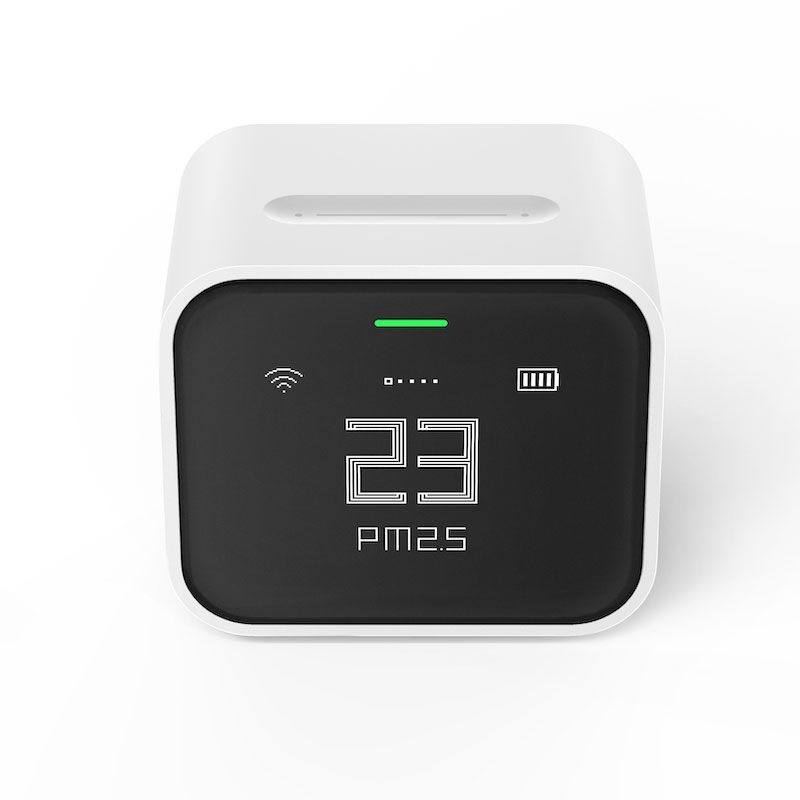
- Air quality monitors: More advanced models include sensors that track air quality in real time and adjust the fan speed automatically.
- Filter replacement schedule: Check how often filters need replacing and what they cost. Some units include washable pre-filters that can extend the life of the main filter.
A note on ionizers: Some air purifiers use ionising technology to attract and capture particles. Ionizers can produce ozone as a by-product, which is generally not recommended for people with respiratory sensitivities. If you're considering an ionizer model, check whether it's certified ozone-free and consult product specifications carefully and discuss this with your GP.
A note on UV-C lights: Some purifiers include UV-C light features. The real-world effectiveness of UV-C in domestic air purifiers depends on exposure time, intensity, and how air flows through the unit. UV-C is best understood as one feature among others rather than a primary purchase reason.
Features for Allergy-Aware Households

If you're choosing an air purifier specifically for allergy-aware households, these features are worth prioritising:
- True HEPA filter: Designed to capture very fine particles, including dust mite debris.
- CADR rating: The Clean Air Delivery Rate measures the unit's airflow with particles like pollen, dust, and smoke. Higher CADR generally means more effective coverage for the room size it's rated for.
- Coverage area: Make sure the purifier is rated for the size of the room. Coverage area indicates how much square metreage it can effectively process.
- Multi-stage filtration: Look for units with a pre-filter (for larger particles), a HEPA filter (for fine particles), and an activated carbon filter (for odours).
- Noise level: Particularly important for bedroom use overnight.
Types of Air Purifiers Available
The air purifier market has expanded considerably in recent years. Here are the main types available:
Free-standing air purifiers
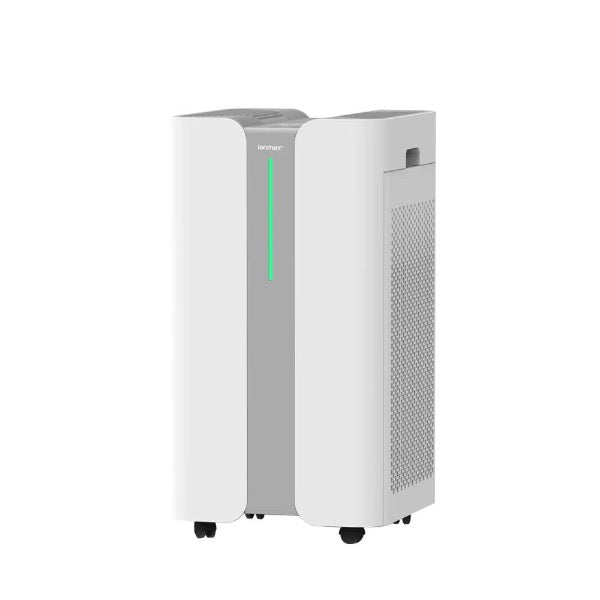
Free-standing air purifiers are the most common type — standalone units designed to clean the air in a specific room. They generally don't require installation and can be moved between rooms.
These units typically combine multiple filtration stages — HEPA for fine particles and activated carbon for odours and gases. They're available in various sizes for personal spaces, small rooms, or larger living areas.

Wearable air purifiers
Wearable air purifiers are compact devices designed to be worn around the neck or attached to clothing. They use small fans to filter the air around the wearer, helping to reduce particles in the wearer's immediate breathing zone.
These personal units offer convenience and portability, particularly for use in crowded indoor spaces.

Built-in air purifiers
Built-in air purifiers are integrated directly into a home's HVAC (heating, ventilation, and air conditioning) system or part of a structured air-handling unit.
These systems process air as it circulates throughout the building, providing whole-house coverage. They typically combine HEPA filtration with activated carbon for odours and gases.

Air Purifiers and Dust Mites
An air purifier can help reduce airborne dust mite particles in indoor air, but it isn't a complete solution on its own. Air purifiers process airborne particles passing through the unit, but dust mites themselves live within mattresses, bedding, and soft furnishings — places the purifier can't reach. As a comprehensive review by Wilson and Platts-Mills (2018) in the Journal of Allergy and Clinical Immunology notes, dust mite allergen is primarily reservoir-bound in soft furnishings, which is why surface and bedding interventions tend to have a more direct effect than air filtration alone.
Air purifiers with HEPA filters can help capture airborne dust mite debris, but they don't address the source — the mites living inside soft furnishings. To support a cleaner environment, consider combining an air purifier with:
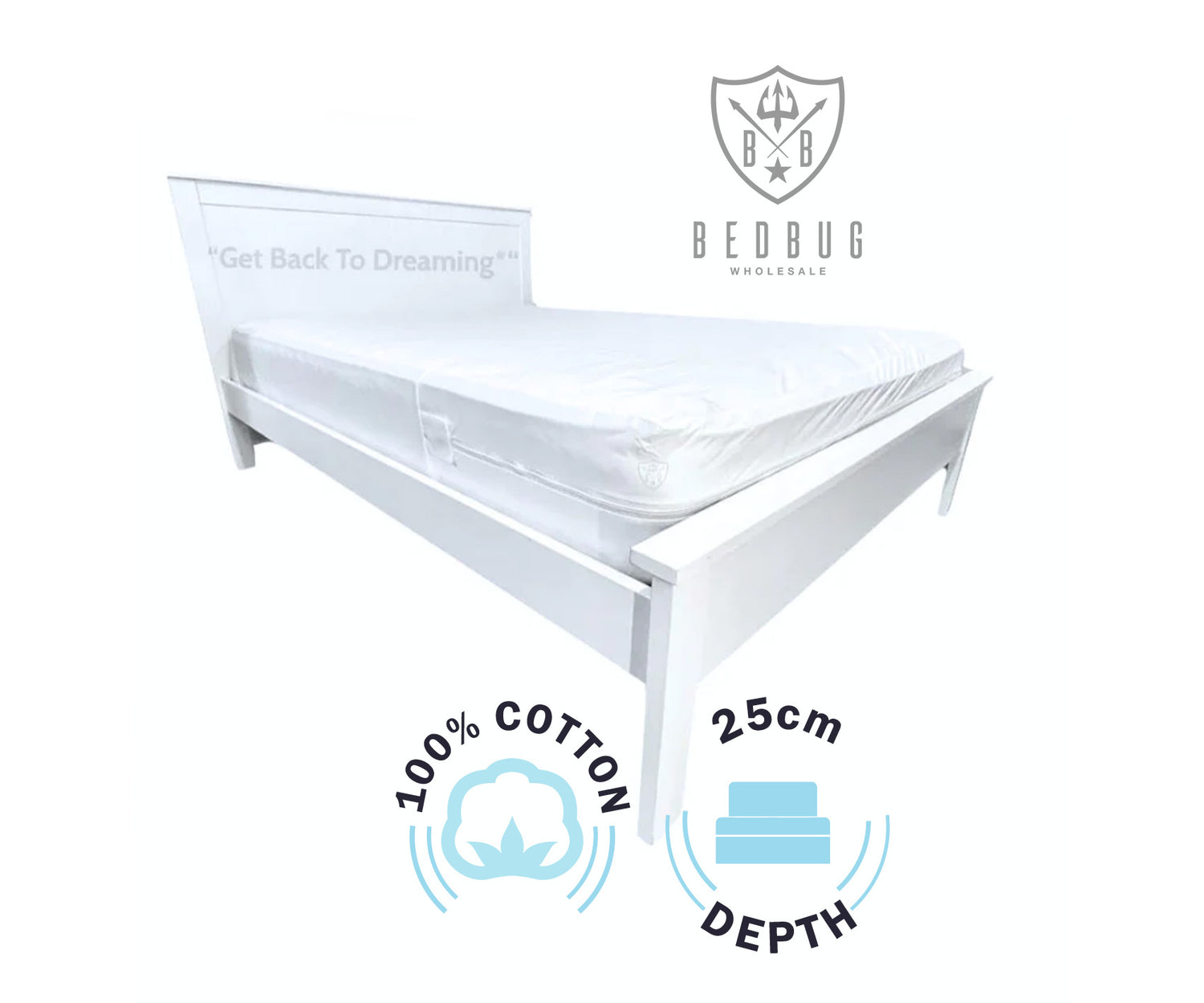
- Mattress, pillow, and quilt covers — a 2003 randomised controlled trial published in the Journal of Allergy and Clinical Immunology (Halken et al., 2003) found that mattress and pillow encasings were associated with significant long-term reductions in dust mite allergen concentrations over 12 months. Individual results will vary.
- Regular hot water washing of bedding — research by McDonald and Tovey (1992) found that water temperatures of 55°C or above are associated with reductions in dust mite populations in bedding, while even cold-cycle washing reduces allergen levels by more than 90%. Individual results will vary.
- Humidity control — keeping indoor humidity below 50% (research by Arlian et al., 2001 found that homes maintaining humidity below 51% over 17 months saw dust mite populations decline by approximately 98%). An air quality monitor or hygrometer lets you track levels in different rooms.
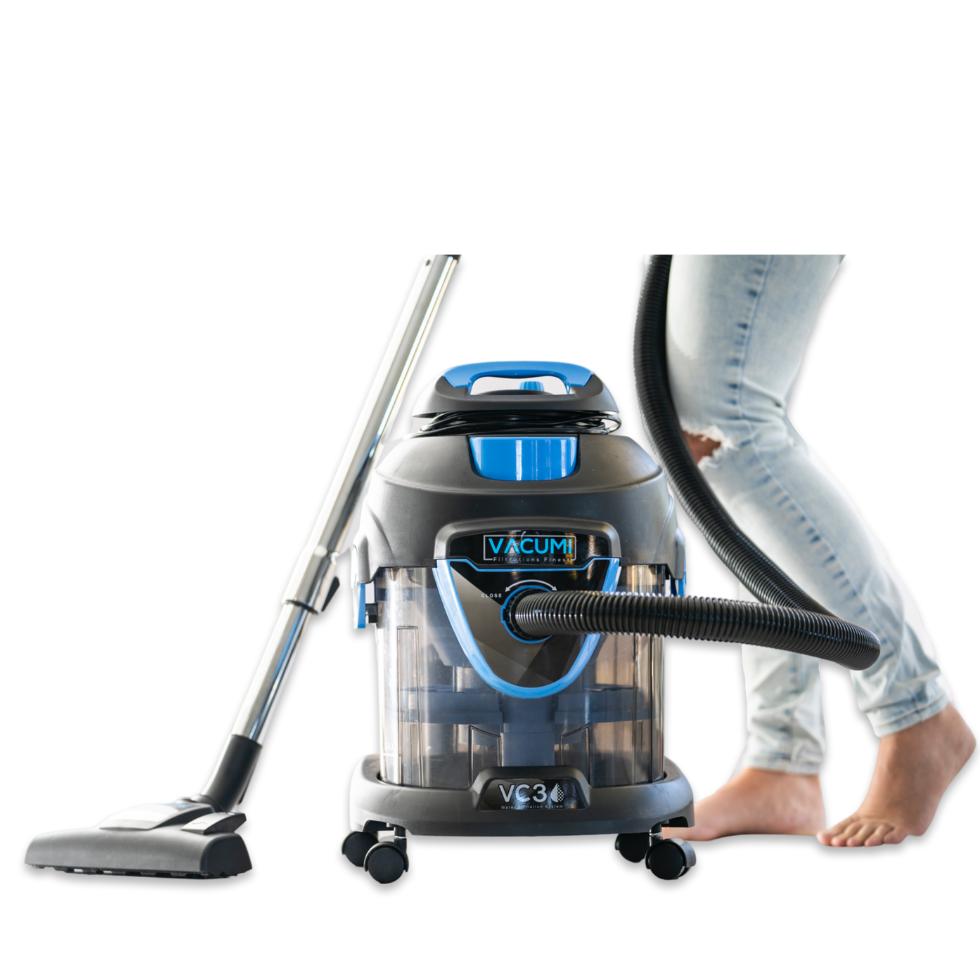
- Regular vacuuming with a HEPA-filtered vacuum — research published in the Journal of Asthma (Wu et al., 2012) found that daily mattress vacuuming over 8 weeks was associated with approximately 85% reductions in total dust mite allergens. Individual results will vary.
- For bedroom-wide strategies, see the low allergen bedroom guide.
Used together, these steps create a more complete approach to allergy-aware bedroom care.
What Is a HEPA Filter?
A HEPA filter (High-Efficiency Particulate Air filter) is designed to capture very fine particles from the air, including dust, pollen, mould spores, and some bacteria. True HEPA filters meet a defined international particle-capture standard.
Types of HEPA Filters
Not all filters labelled "HEPA" meet the same standard:
- True HEPA: Filters that meet the formal HEPA standard, designed for residential and many commercial uses.
- HEPA-type or HEPA-style: Filters using a similar design but not certified to the formal standard. Generally less efficient but more affordable.
- HEPA H13 / H14: Higher classifications used in medical, laboratory, and clean-room settings, offering more rigorous filtration than standard HEPA.
When selecting a HEPA filter, look at the specific certification on the product. "True HEPA" is the standard most often referenced for home use.
Maintenance and Operating Costs
When choosing an air purifier, factor in the ongoing costs:
- Filter replacement: How often does the unit need new filters, and what do replacement filters cost?
- Pre-filters: Some units include washable pre-filters that can extend the main filter's life and reduce maintenance costs.
- Energy use: Check the energy rating, particularly if you plan to run the unit continuously.
Air Purifier or Dehumidifier?
For allergy-aware households, air purifiers and dehumidifiers serve different purposes — and can complement each other.
An air purifier filters airborne particles passing through the unit. A dehumidifier reduces indoor humidity, making conditions less favourable for dust mite build-up in soft furnishings. Since dust mites need ambient humidity above approximately 65–70% to maintain water balance (Arlian, 1992), dehumidification directly affects the conditions mites need to live, while air filtration captures particles already airborne.
If your indoor space has humidity issues alongside particle concerns, using both devices together can offer broader coverage than either alone.

Other Steps for Allergy-Aware Homes
Air purifiers work best alongside other practical steps for managing dust mite build-up in your home. By choosing an appropriate purifier, maintaining it properly, and combining it with regular cleaning routines, you can support a cleaner indoor environment. For a full room-by-room walkthrough, see the deep cleaning for dust mite allergies guide.
Not sure which products suit your household?
Take the quick quiz to find the most suitable products for your household and allergy situation.
Take the quiz →Shop Air Purifiers
HEPA-filtered air purifiers for allergy-aware households — ozone-free, with CADR ratings suited to bedrooms and living areas.


References
- Arlian LG. (1992). "Water balance and humidity requirements of house dust mites." Experimental and Applied Acarology, 16(1-2):15-35. PubMed
- McDonald LG, Tovey E. (1992). "The role of water temperature and laundry procedures in reducing house dust mite populations and allergen content of bedding." Journal of Allergy and Clinical Immunology, 90(4 Pt 1):599-608. PubMed
- Arlian LG, Neal JS, Morgan MS, et al. (2001). "Reducing relative humidity is a practical way to control dust mites and their allergens in homes in temperate climates." Journal of Allergy and Clinical Immunology, 107(1):99-104. PubMed
- Halken S, Høst A, Niklassen U, et al. (2003). "Effect of mattress and pillow encasings on children with asthma and house dust mite allergy." Journal of Allergy and Clinical Immunology, 111(1):169-176. PubMed
- Sublett JL. (2011). "Effectiveness of air filters and air cleaners in allergic respiratory diseases: a review of the recent literature." Current Allergy and Asthma Reports, 11(5):395-402. PubMed
- Wu FF, Wu MW, Pierse N, Crane J, Siebers R. (2012). "Daily vacuuming of mattresses significantly reduces house dust mite allergens, bacterial endotoxin, and fungal β-glucan." Journal of Asthma, 49(2):139-143. PubMed
- Wilson JM, Platts-Mills TAE. (2018). "Home environmental interventions for house dust mite." Journal of Allergy and Clinical Immunology: In Practice, 6(1):1-7. PubMed
Related Guides
Humidity, Mould and Dust Mites
How humidity affects dust mite build-up and what to do about it.
How to Reduce Dust Mites in Your Bedroom
Whole-room strategies for a lower-allergen sleep environment.
How to Reduce Dust Mites in Your Mattress – Step-by-Step Guide
Vacuuming, encasements, washing, and more.
How Often to Wash Bedding to Reduce Dust Mites
Washing frequency, temperatures, and what the evidence says.
What are the Benefits of Mattress Protectors?
How allergy-aware protectors work and what the research shows.
Does Sun Kill Dust Mites?
What the research says about sunlight and dust mite management.
Air Quality Monitors for Allergy Households – 2026 Buyer's Guide
How to choose a hygrometer or air quality monitor for allergy management.
How to Reduce Dust Mites in Your Home – Comprehensive Guide
Room-by-room strategies for the whole household.