 Skip to content
-
100% Cotton Dust Mite Quilt Protector & Doona Encasement
Regular price From $105.00Regular priceUnit price per -
Waterproof Dust Mite Quilt & Doona Protector — Zippered, AU
Regular price From $88.00Regular priceUnit price per -
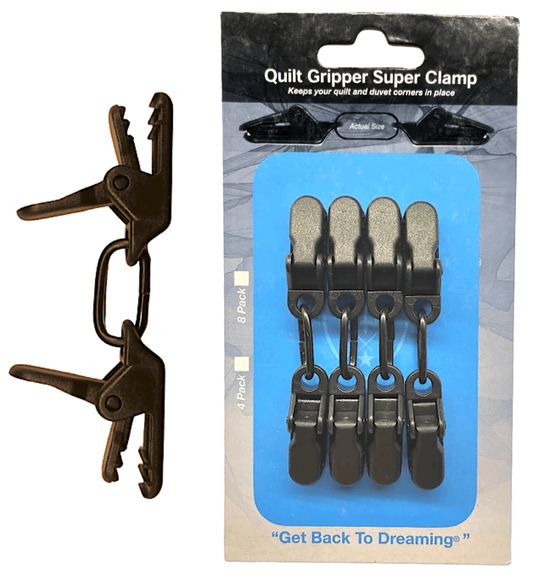
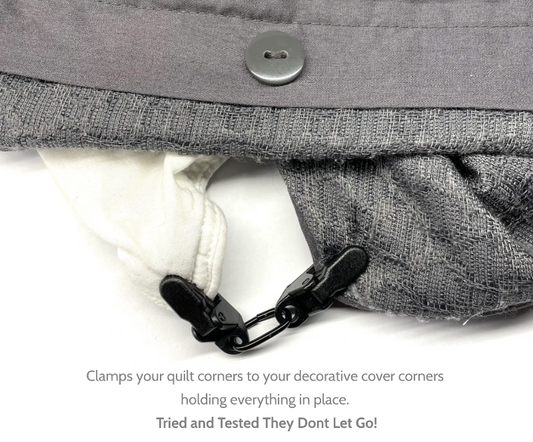
Quilt Grippers for Quilt Encasements I Set of 4
Regular price $24.00Regular priceUnit price per

Dust mite proof bedding for allergies
Frequently Asked Questions – Dust Mite Quilt Covers Australia
What is a dust mite quilt cover?
A dust mite quilt cover, also known as a dust mite proof quilt cover oranti-dust mite doona cover, is a specially designed bedding cover that prevents dust mites from entering your quilt or doona. These covers create a protective barrier, helping reduce allergy triggers and creating a healthier sleeping environment.
How does a dust mite quilt cover help with allergies?
Dust mite quilt covers at Dust Mite Allergy Solutions are hypoallergenic and OEKO-TEX certified, ensuring they are free from harmful chemicals.
They create a barrier to dust mites, a common cause of allergies and asthma, from settling in your bedding.
Using an anti-allergy quilt cover can greatly reduce sneezing, wheezing, and eczema flare-ups at night.
What sizes are your quilt protectors available in?
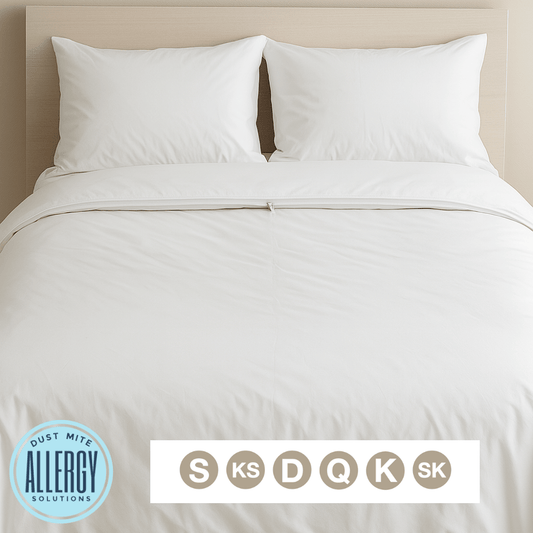
Our dust mite quilt protectors come in a wide range of Australian sizes available for fast shipping:
- Single quilt protector 140cm x 210cm
- Double quilt protector 180cm x 210cm
- Queen quilt protector 210cm x 210cm
- King quilt protector 245cm x 210cm
- Super King quilt protector 270cm x 240cm
Can I buy dust mite quilt covers online in Australia?
Yes, you can buy dust mite quilt covers online in Australia with fast delivery from Dust Mite Allergy Solutions.
We offer a range of anti-allergy quilt covers and waterproof quilt protectors to suit your allergy bedding needs.
What materials are used in your quilt protectors?
Our dust mite proof quilt covers use a combination of soft cotton, breathable fabrics, and micron pore technology. Some models also include aTPU-lined layer for added waterproofing, without compromising breathability or comfort.
Do dust mite quilt covers protect against other allergens?
Yes. Besides dust mites, our allergy quilt covers help protect against pet dander, mould spores, and pollen. They create a barrier to keep your bedding fresh and allergen-free.
How often should I wash a dust mite quilt cover?
We recommend washing your quilt protector every 4 to 6 weeks using hot water (above 60°C) to kill dust mites. All our dust mite bedding products are machine washable for your convenience.
Are there quilt covers specifically for children or babies?
Yes, we offer children's allergy quilt covers and eczema-friendly quilt covers designed for young skin and smaller beds. These options provide the same dust mite protection in sizes perfect for kids' bedding.
What’s the difference between a quilt protector and a doona cover?
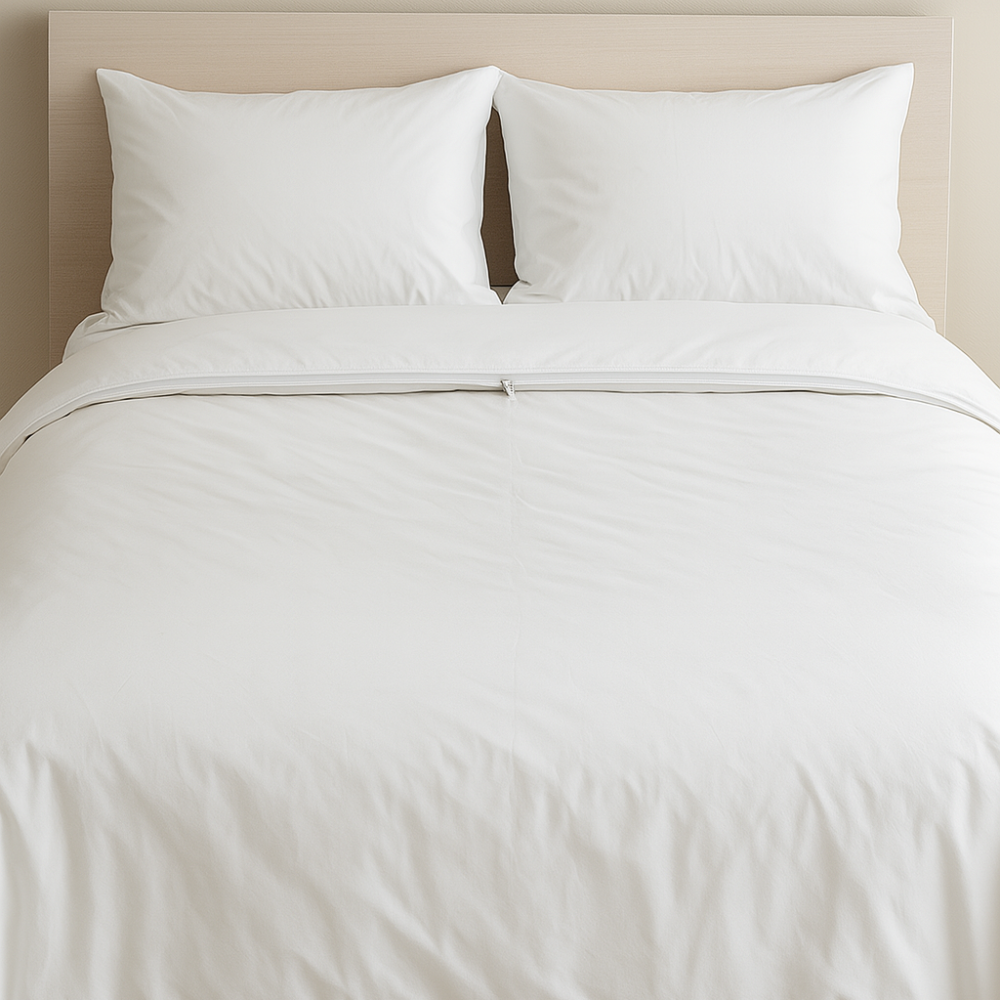
A quilt protector (or quilt cover protector) is a zipped cover that goes directly over your quilt to block dust mites, whereas a doona cover is a decorative layer that sits on top.
For best protection, use both: the quilt protector for health and the doona cover for style.
Bundle and save on complete dust mite allergen barrier bedding sets
-

Dust Mite Bedding Protection Bundle | Waterproof | 24-33cm Mattress
Waterproof Dust Mite Bed Protection Bundle — 5-Piece Set Protect the whole...
-

Dust Mite Bedding Protection Bundle | Waterproof | 18-24cm Mattress
Waterproof Dust Mite Bed Protection Bundle — 5-Piece Set Protect the whole...
-

Dust Mite Bedding Protection Bundle | 100% Cotton | 25cm Mattress
Cotton Dust Mite Bed Protection Bundle — 5-Piece Set Protect the whole...
-

Dust Mite Bedding Protection Bundle | 100% Cotton | 35cm Mattress
Cotton Dust Mite Bed Protection Bundle — 5-Piece Set Protect the whole...



The Ultimate Guide to Dust Mite Quilt Protectors in Australia
Learn about dust mite duvet cover benefits, sizes in Australia, and cleaning tips.
Dust Mite Covers for Bedding
-

Dust Mite Pillow Protectors
Could your pillow be triggering your allergy symptoms? Dust mites live deep...
-
Dust Mite Mattress Protectors
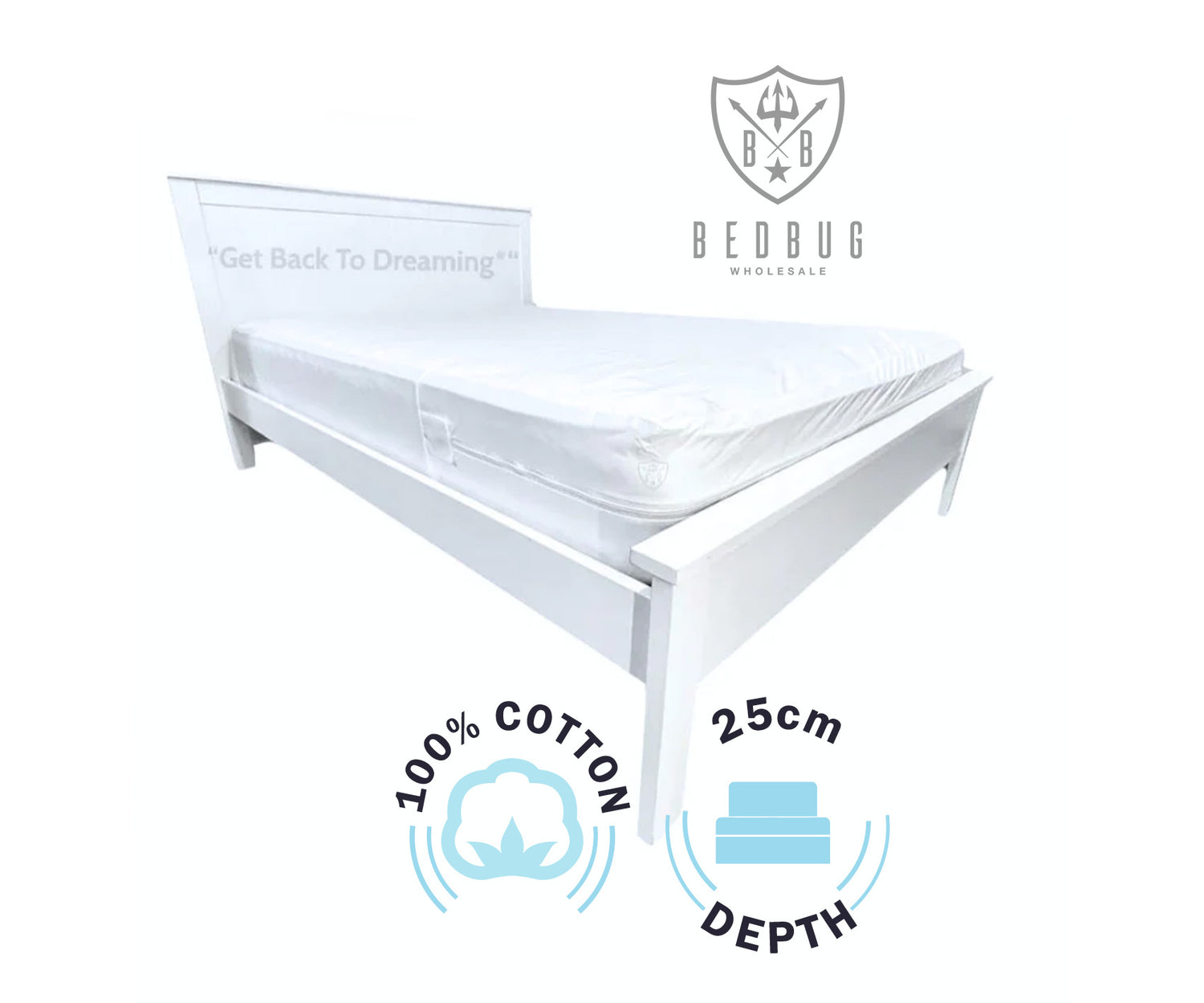
Dust Mite Mattress Protectors & Encasements — Cotton or Waterproof Zippered dust...


How to Protect Your Doona from Dust Mites
Your Simple Guide for Australian Homes.
Let customers speak for us
The product is great quality and was an easy order with very good communication. I have only had one night sleeping with it but was very pleasantly surprised . I must add , I think the cost is great value when compared to getting even a new doona that is adequate for the colder states in Australia . I had my down doona and pillows washed and commercially dried before putting them in the covers and the mattress is all encased now and it is a really big difference . 👍

Efficient postage, easy to put onto the mattress, duvet etc. Daughter finds it comfortable and soft.

We purchased mattress , pillow and duvet encasement for kids due to their dust mite allergy.
Quality is great and delivery was earlier than expected.

Shipping was fast and efficient. The quality of the pillow is so much better than the one we bought from kmart. However it's not for us as it's on the thick side and will cause back pain used for a long period

Great product that was delivered quickly. I really like how the SmartAir HEPA filters need replacing every 22 months instead of every six months like most air purifiers. Great value for money.

Comfy as I want it

I love my quilt cover and pillowcases!
Lovely quality and they’ve made all the difference to my allergies and therefore my sleep!
We ordered this mattress for my son who has a dust mite allergy - it arrived quickly (and in a box, which made it super easy to move to the room we needed it in) and it was easy to unpackage and get on the bed. So far he is finding it very comfortable to sleep on.

So far I’m really loving this doona cover. Very comfortable,

Great duvet! It's soft and keeps the dust away so I don't sneeze. It's just right for sleeping all year. I'm really happy with it!


The Complete Guide to Dust Mite Quilt Protectors
The quilt is a large fabric surface that sits close to the face and body during sleep and can accumulate dust mite allergen particles over time. This guide explains what dust mite quilt protectors are, how they work, and what to look for when choosing one.
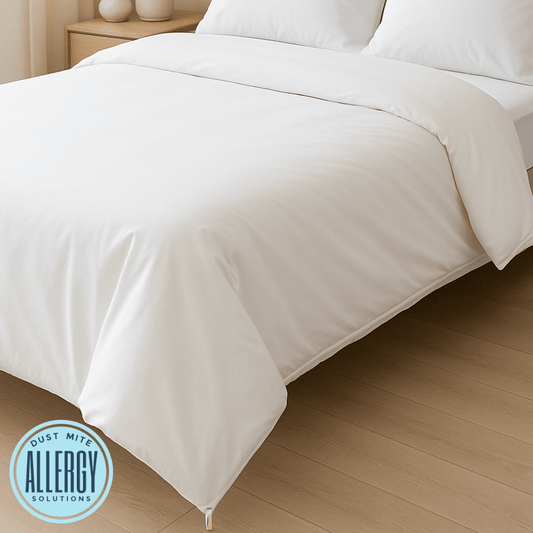
A dust mite quilt protector — also known as a doona encasement — is a specialised, zippered cover that fits directly over your quilt. Your decorative quilt cover then goes over the top of it.
Standard woven fabrics have gaps between threads that dust mite waste particles can pass through. A quality dust mite protector is woven tightly enough to create a physical barrier that helps reduce the passage of these particles, limiting allergen exposure in the sleeping environment.
Why the Material Matters
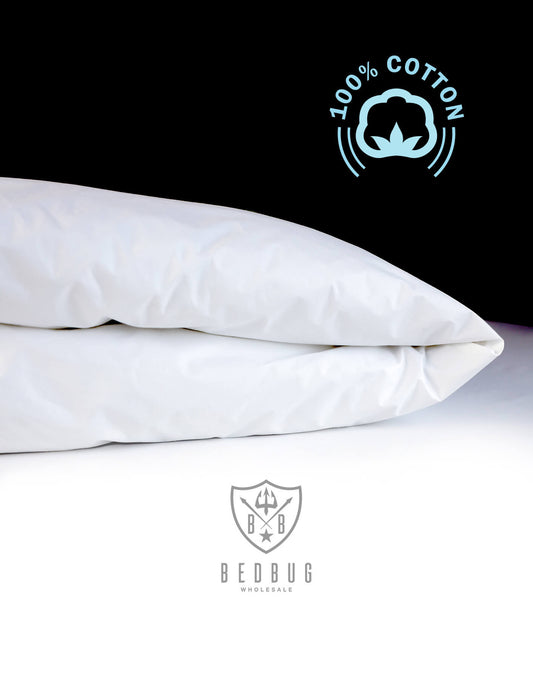
Most quality protectors are made from 100% cotton. Unlike synthetic materials or plastic-backed protectors, cotton is breathable — it allows air and moisture vapour to pass through, helping maintain a comfortable sleeping temperature while still providing a physical barrier. Cotton is also generally quieter than synthetic alternatives, which can produce noise when the sleeper moves.
Thread Count and What It Means
In allergen-barrier products, thread count serves a functional purpose. A higher thread count — such as around 1,600 — indicates a denser weave. This density contributes to the physical barrier against allergen particles and also generally indicates greater fabric durability over time and through repeated washing.
Dust mites produce waste that contains a protein called Der p 1, which is associated with allergic reactions in sensitive individuals. The American Academy of Allergy, Asthma & Immunology (AAAAI) notes that encasing bedding in allergen-barrier covers is a commonly recommended environmental management strategy for households managing dust mite sensitivities. This is general environmental management guidance — it is not an endorsement of any specific product.
A quilt protector works by creating a physical barrier that helps trap existing mite material inside the quilt and helps reduce the passage of new allergen particles to the sleeper's side. For some people sensitive to dust mite allergens, reducing exposure in the bedroom environment may support their overall allergen management approach.
Environmental outcomes that may be supported include:
- A reduction in the overall allergen load in the sleeping environment;
- Fewer allergen particles reaching the sleeper's breathing zone during sleep;
- A complementary measure alongside regular washing, vacuuming and humidity control.
Individual results vary significantly based on home environment, baseline allergen levels, product usage and other factors. Our products are not medical treatments. Always consult a qualified healthcare professional for personalised advice about managing asthma, eczema, rhinitis or any health condition.
The physical barrier created by a fully zippered encasement may also help reduce access for bed bugs and limit their ability to infest the quilt contents. This is a function of the encasement's weave and zipper quality rather than any chemical treatment.
A tight weave may also help reduce the passage of other fine particles and microscopic debris in some circumstances. However a quilt protector is not a guaranteed pest control solution and is not a substitute for professional pest management where an infestation exists.
If you have concerns about a pest infestation, consult a professional pest management service.
For households with sensitive skin or young children, the chemical composition of bedding fabric is a relevant consideration alongside physical barrier performance.
OEKO-TEX Standard 100 is an internationally recognised independent testing and certification standard for textile products. Products carrying this certification have been assessed against criteria relating to certain harmful substances including specified dyes, pesticides, heavy metals and formaldehyde.
When selecting a dust mite quilt protector, look for these specifications in the product description rather than relying on general marketing language alone.
Pore Size — The Most Important Specification
Pore size refers to the size of gaps between threads in the fabric weave, measured in microns. This is the key technical specification for allergen-barrier products.
| Particle type | Approximate size |
|---|---|
| Dust mite waste particles | As small as 10 microns |
| Cat dander | Around 6 microns |
| Quality protector pore size | As small as 2.8 microns |
A pore size of 2.8 microns or smaller means the fabric weave is tighter than the particles it is designed to block. The smaller the pore size, the more effective the physical barrier is likely to be against a wider range of fine allergen particles.
Pore size data is based on manufacturer specifications. Performance in real-world home environments may vary.
100% Cotton Construction
Opt for 100% cotton over synthetic alternatives where possible. Cotton offers breathability that synthetic or plastic-backed protectors typically do not — allowing air and moisture vapour to pass through while maintaining the physical barrier. Cotton is also quieter and generally more comfortable for sensitive skin.
High Thread Count
Look for a thread count of around 1,600 or higher. This density supports both barrier performance and fabric durability over time.
Full Zippered Encasement
The protector must fully encase the quilt with a high-quality zipper that closes completely with no gaps. Partial covers or fitted-sheet-style protectors leave gaps that reduce effectiveness as an allergen barrier.
Quilt Clamps or Ties
Some protectors include internal corner clamps or ties to prevent the quilt from bunching inside the cover. This improves comfort and helps ensure even coverage across the quilt surface.
Ensure you purchase the correct size for your quilt. A loose fit is uncomfortable; a tight fit can affect the quilt's loft and compress the filling.
| Size | Dimensions |
|---|---|
| Single | 140cm x 210cm |
| Double | 180cm x 210cm |
| Queen | 210cm x 210cm |
| King | 245cm x 210cm |
| Super King | 270cm x 240cm |
When in doubt, check the label on your existing quilt for its dimensions before ordering.
One practical benefit of using a quilt protector is that it reduces how often the quilt itself needs washing — the protector takes the brunt of exposure, keeping the quilt cleaner for longer.
Washing
Always follow the manufacturer's care instructions on the product label. As a general guide:
- Decorative quilt cover — wash regularly at the temperature recommended on its care label;
- The protector itself — generally every 4 to 6 weeks, or immediately after any spill or soiling.
Washing at excessively high temperatures or tumble drying on high heat can cause cotton to shrink, which may affect the fit and potentially alter the weave structure over time. Always follow the care label.
Storage Between Seasons
If storing the protector seasonally, wash it thoroughly and ensure it is completely dry before storage. Store in a cool, dry location in a breathable fabric bag rather than sealed plastic, which can trap moisture and encourage mould growth.
A quilt protector is one component of a broader allergen management approach — not a standalone solution. Research consistently shows that combined environmental management measures are more effective than any single intervention.
Complementary measures worth considering alongside bedding protection include:
- Regular vacuuming with a HEPA-filter vacuum;
- Maintaining indoor humidity below 50% where possible — dust mites thrive in humid conditions;
- Using mattress and pillow protectors alongside quilt protection for a more complete barrier system;
- Regular washing of all bedding layers;
- Consulting a healthcare professional for personalised allergen management advice.