Skip to content


Have You Heard of a Water Filter Vacuum?
After learning that one of my children has a dust mite sensitivity, I rethought our cleaning routine at home. Vacuuming stopped being just a household chore — it became part of how we manage indoor cleanliness in an allergy-aware home.
When we first started looking into dust mites, I did a lot of reading. How do you manage something microscopic that lives in soft furnishings throughout your home?
I started by setting up the bedroom — adding a dust mite mattress protector, then pillow and quilt covers. The next step was looking at vacuums and air purifiers designed for allergy-aware households.
Until then, I'd been using a standard cordless stick vacuum, which was fine for everyday tidying but wasn't specifically designed with allergens in mind.

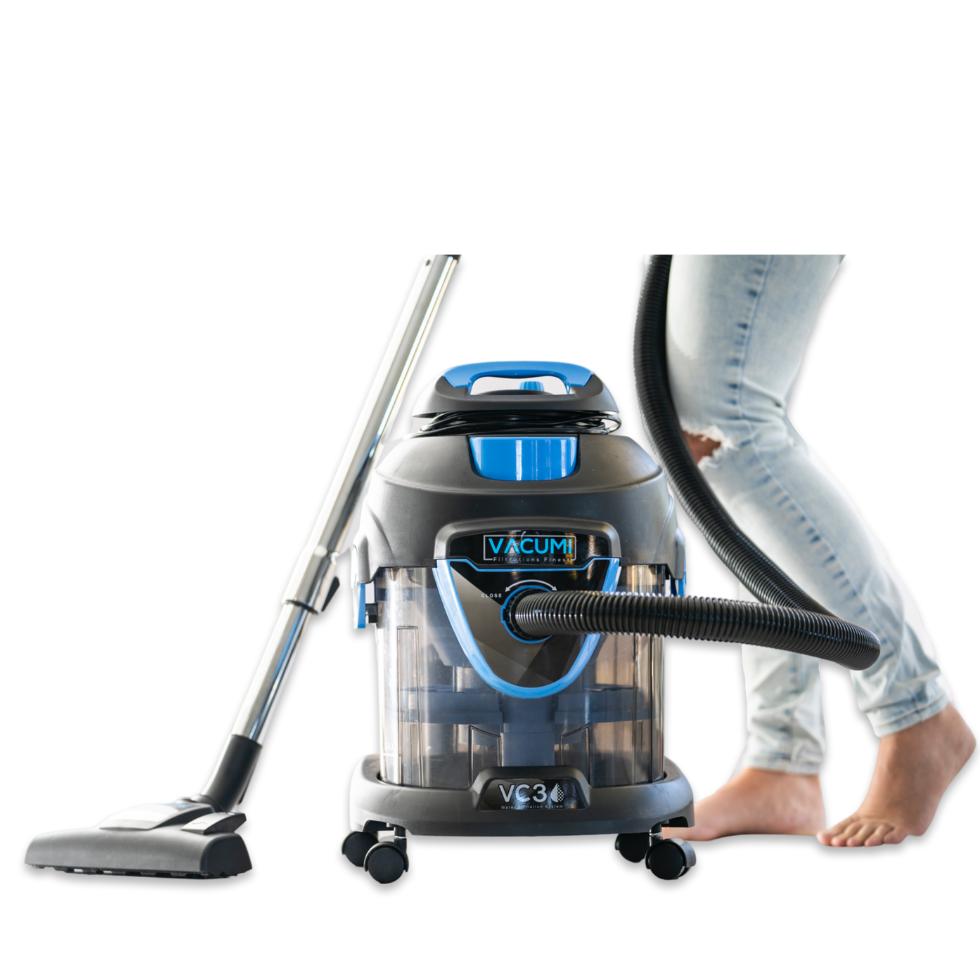
I'd never heard of a water filter vacuum before. Once I started researching them, the concept made a lot of sense — and the Vacumi VC3 has since become a regular part of our cleaning routine.
How I Chose a Vacuum for Our Allergy-Aware Home
When choosing a vacuum for an allergy-aware household, I looked at three things:
- It should have a HEPA filter to help capture fine particles.
- It should be designed to limit particles being released back into the air during use.
- It should have strong suction for thorough cleaning.
The Vacumi VC3 ticked these three boxes for our household.
How Do Water Filter Vacuum Cleaners Work?
A water filter vacuum uses water as part of its filtration system. As air passes through the vacuum, particles are drawn into a water basin where they're trapped, rather than passing through a dust bag.
For allergy-aware households, this is appealing because the design is intended to help limit particle release back into the air during use.
What Has My Experience Been?
The Vacumi VC3 has strong suction in our experience. It includes an adjustable suction control, which I find useful for switching between heavier carpet cleaning and gentler use on softer surfaces.

It comes with several attachments, though I'll admit I haven't used most of them. Unlike standard vacuums, the Vacumi VC3 can also handle minor liquid spills, which is useful for households with kids or pets.
You can also connect the hose to the back of the unit (exhaust port) and use it as a blower — handy for some outdoor uses.
How to Use the Vacumi VC3

- Fill the water tank: Start by filling the water tank between the Min and Max markers. The inlet should sit under the water level. The water acts as a trap for dust and other particles drawn in during vacuuming.
- Assemble it: Make sure the lid is properly clicked into place and sits securely. Double-check this — you don't want it shifting while you're vacuuming.
- Connect the hose: Plug in the vacuum hose securely.
- Start vacuuming: The Vacumi VC3 is now ready to use throughout your home.
How to Clean the Vacumi VC3

Cleaning the unit after each use is straightforward, though it's worth doing outside where possible.
- Open the unit: Lift out the blue plastic cylinder that holds the filters. I'd recommend doing this outside.
- Empty the water tank: Empty the tank immediately after each use — don't leave dirty water sitting in the unit.
- Rinse the tub: Rinse the tub thoroughly to remove any residue. A garden hose works well for this.
- Wash the foam filter: Rinse the foam filter under running water. Regular cleaning helps maintain suction.
- Rinse other dusty parts: Any other parts that have come into contact with dust should be rinsed clean. This helps keep the air output as clean as possible.
Tips: Clean the vacuum thoroughly after each use — don't leave dirt or water sitting in it. Cleaning outside with a hose is the easiest approach. Avoid spraying water on the top motor housing — just wipe it down with a damp cloth.
Make sure all parts are completely dry before reassembling and storing. Drying it in the sun for a while is an easy approach.
If you live in a household where someone has a dust mite sensitivity, it can be helpful to have someone else in the household handle the cleaning, since some dust may settle on the parts that need to be lifted out.
What Are the Downsides?
The Vacumi VC3 is larger and bulkier than a typical stick vacuum, but that's a function of its design — it's a different type of cleaning tool.
Cleaning it after each use is essential. From personal experience: I once got distracted partway through cleaning, stowed the vacuum away, and forgot about it for a week. The water sitting inside doesn't improve with time. Clean it right after use.
To empty the water, you need to remove the blue tub component, which can get a bit messy. I always do this outside.
Other Tips
One important tip: make sure the top is properly clicked into place before you start. Otherwise, you risk a small water feature in the middle of your floor. It hasn't happened to me, but it's a real possibility.
I also try to avoid dragging the vacuum around by the hose when moving between rooms. Moving the tub itself helps extend the life of the hose and reduces the risk of damage.
Why I Like the Vacumi VC3
In my view, the Vacumi VC3 is a strong choice for allergy-aware households at its price point. It includes water filtration, a HEPA filter, and a foam filter — a combination designed to help limit particles being released back into the air during vacuuming. It also has strong suction and is reasonably priced.
For our household, daily vacuuming with the water filter vacuum has noticeably changed how clean our home feels day to day.
Water Filter Vacuum vs Stick Vacuum
The Vacumi VC3 has strong suction and a triple-filter system designed to help capture fine particles. While it's heavier and needs cleaning after each use, it's designed for thorough, allergen-aware cleaning rather than quick tidies.
Stick vacuums are more portable — lightweight and often cordless, they're easy to use and good for quick clean-ups. They're also useful for reaching higher places. However, they may need more frequent recharging and outlet changes for larger areas.
The Vacumi VC3 is bulkier and uses a 10-metre cord. It's a different style of vacuum, designed for thorough cleaning with allergen capture as part of the design.
Water Filter Vacuum vs Bag Vacuum
Water filter vacuums (like the Vacumi VC3) and bag vacuums use different filtration approaches. Water filter vacuums trap particles in a water basin as air passes through. Bag vacuums collect particles in a disposable or reusable bag.
Water filter vacuums are designed to help limit particle release back into the air during use, which is why they're often chosen by allergy-aware households. Bag vacuums are typically lighter and easier to handle, but the level of particle containment depends on bag quality and filtration.
Where to Buy a Water Filter Vacuum in Australia
Dust Mite Allergy Solutions Australia stocks the Vacumi VC3 water filter vacuum in our online store.