Skip to content

If your sleep environment feels uncomfortable, dusty or difficult to keep fresh, your mattress is one of the main bedding items worth reviewing. Mattresses can collect dust, skin particles and other household matter over time, which is why many Australian households choose a full mattress encasement as part of a broader bedroom care routine.
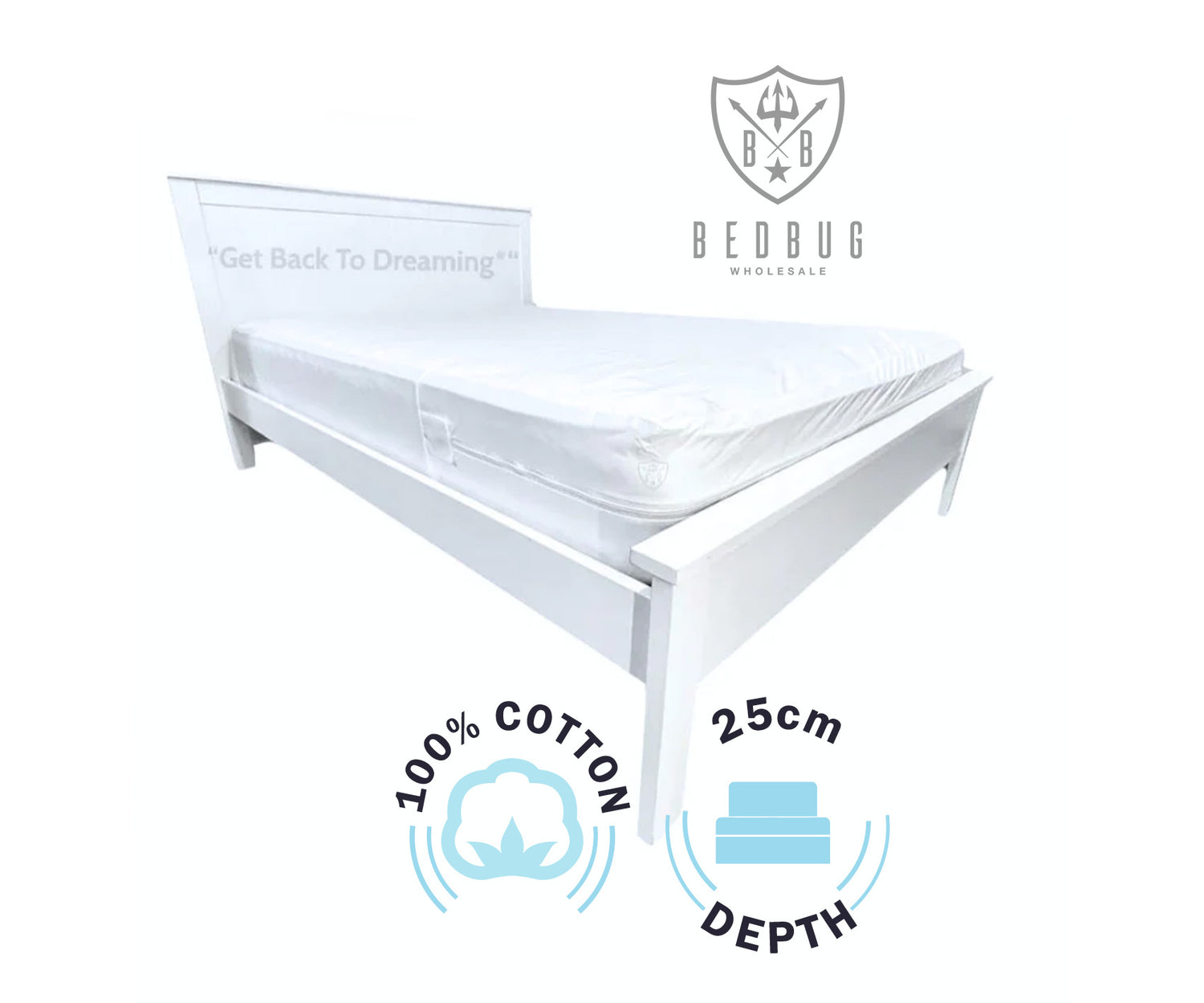
For many families, this starts with a high-quality mattress encasement. These covers are designed to fully enclose the mattress and create a physical barrier between you and the mattress surface.
When you browse for dust mite mattress protectors available in Australia, you usually face two main choices: 100% cotton or waterproof. Which one is right for your home?
We're here to break down the differences between the
- 100% Cotton Dust Mite, Allergy & Bed Bug Mattress Encasement and the
- Waterproof Dust Mite, Allergy & Bed Bug Mattress Protector.
By the end of this guide, you'll have a clearer idea of which option may suit your household needs.
Cotton vs Waterproof Mattress Encasements
Before we dive into the details, let's look at the basics of these two popular options.
1. The 100% Cotton Dust Mite Mattress Encasement
This is the premium, natural-fibre option. It is designed for breathability and comfort, using a specialised tight weave to help limit the movement of fine particles through the fabric.
2. The Waterproof Dust Mite Mattress Encasement
This is the practical, family-friendly option. It uses a polyester jersey knit with a specialised lining designed to provide a barrier against fluids as well as fine particles.

Why People Choose a Full Mattress Encasement
Before comparing cotton and waterproof options, it helps to understand why many households choose a full encasement rather than a standard fitted protector. Unlike a protector that sits mainly over the top of the bed like a fitted sheet, an encasement is designed to surround the mattress on the top, bottom and sides.
Mattresses can be a build-up point for dust mites because they combine warmth, moisture from sleep, and a steady supply of shed skin cells. Research by Arlian (1992) in Experimental and Applied Acarology established that dust mites need ambient humidity above approximately 65-70% to maintain their water balance, which helps explain why bedding tends to be one of the highest build-up points in most homes.
Encasements as a category are well-supported by research. A 2003 randomised controlled trial published in the Journal of Allergy and Clinical Immunology (Halken et al., 2003) found that mattress and pillow encasings produced a significant long-term reduction in dust mite allergen concentrations in mattresses over 12 months. The two products compared in this guide are designed to apply the same physical-barrier principle, with different material trade-offs.
Think of an encasement as a protective outer layer for your mattress. It is designed to do two practical things:
- Help contain what is already inside the mattress: A full encasement may help limit the movement of dust, dust mite debris and other fine particles from within the mattress into the sleep surface.
- Help reduce new build-up: A fitted encasement can help create a barrier between the mattress and the surrounding bedroom environment.
Both products compared in this guide feature a specialised zipper and closure system designed to reduce gaps when the encasement is correctly installed.
Option 1: The 100% Cotton Dust Mite Mattress Encasement

If you prefer natural fibres and prioritise airflow, this option is often a strong fit. The 100% Cotton Dust Mite, Allergy & Bed Bug Mattress Encasement is designed for households that value breathability, comfort and full mattress coverage.
The Natural-Fibre Choice
The standout feature is the material. It is made from tightly woven upland cotton and relies on the fabric weave rather than added chemical treatments. The fabric has a fine pore size of approximately 2.8 microns, which is designed to help limit the movement of dust mite debris and other fine particles while still allowing airflow.
Key Features
- Material: 100% natural cotton with OEKO-TEX® certification.
- Breathability: Designed to allow air and moisture vapour to pass through for sleep comfort.
- Barrier design: Designed to help limit the movement of dust mite debris, bed bugs and fine particles when correctly fitted.
- Material safety testing: OEKO-TEX® certification indicates the textile has been tested for a range of harmful substances.
Who is this for?
This may be a good choice if you want a breathable, natural-fibre mattress encasement and do not require waterproofing for spills, bed-wetting, pets or incontinence care. It may suit adults, teenagers or guest beds where airflow and fabric feel are priorities.
Option 2: The Waterproof Mattress Encasement
Sometimes, you need a mattress encasement that also helps protect against liquids. For households managing toilet training, spills, pets, guest beds or incontinence care, the Waterproof Dust Mite, Allergy & Bed Bug Mattress Protector may be the more practical option.
The Dual-Layer Design
This protector uses a combination of materials. The outer layer is a soft 90gsm polyester knitted jersey, while the inner lining is a 0.2mm TPU (thermoplastic polyurethane) waterproof membrane. This membrane is designed to provide a barrier against liquids and fine particles while still allowing some air and moisture vapour movement.
Key Features
- Material: Polyester knitted jersey with a TPU waterproof lining.
- Waterproofing: Designed to protect the mattress against spills, sweat and accidents.
- Barrier design: Designed to help limit the movement of dust mite debris, bed bugs, liquids and fine particles when correctly fitted.
- Surface: Soft knitted sleeping surface.
Who is this for?
This may be a practical choice for parents with young children, pet owners, guest beds or households needing extra protection against moisture. If there is a realistic risk of liquids reaching the mattress, a waterproof encasement may provide a more suitable barrier than cotton alone.
Dust Mite Protector Comparison
To make your decision easier, here are the key differences side by side.
1. Breathability and Comfort
- Cotton Encasement: A strong option for hot sleepers or households that prioritise natural fibres. Cotton allows airflow and moisture vapour movement and feels more like traditional bedding fabric.
- Waterproof Encasement: The jersey fabric is soft, and the TPU layer is more breathable than older-style plastic covers. However, any waterproof layer may feel warmer than a 100% cotton fabric.
2. Fluid Protection
- Cotton Encasement: Not designed for fluid protection. Liquids may pass through to the mattress.
- Waterproof Encasement: Designed to provide a waterproof barrier against spills, sweat and accidents, helping protect the mattress from moisture and stains.
3. Allergen and Particle Barrier Design
- Cotton Encasement: Approximate 2.8-micron pore size, designed to help limit the movement of dust mite debris, bed bugs and fine particles.
- Waterproof Encasement: Fine barrier design with a waterproof membrane, designed to help limit the movement of fine particles and liquids.
- Verdict: Both are designed to provide full mattress coverage. The better choice depends on whether you prioritise breathability or waterproofing.
4. Maintenance
Both covers are designed to be installed and left on for longer periods. We recommend using a standard slip-on mattress protector, such as the Mattress Mate™, over the top of these encasements. This allows you to wash the top layer regularly while only removing and washing the full encasement every 3 to 6 months, or according to product care instructions.
Which Dust Mite Encasement Should You Choose?
The decision usually comes down to your household's needs: moisture protection, temperature comfort, fabric preference and ease of care.
Choose the 100% Cotton Encasement if:
- You are a hot sleeper or live in a humid climate.
- You prefer natural fibres.
- Bed-wetting, spills or pets are not a major concern in your household.
- You want a breathable full mattress encasement available in Australia.
Choose the Waterproof Encasement if:
- You are protecting a child's bed during toilet training.
- You occasionally eat or drink in bed.
- You need added moisture protection.
- You want to help protect the mattress from sweat marks, spills or accidents over time.
Creating a More Controlled Sleep Environment

Both encasements are practical tools for households wanting to create a more controlled bedding environment. They are designed to provide full mattress coverage and can be used as part of a broader bedroom care routine that may include regular washing, pillow protection, quilt protection, vacuuming and humidity management.
Once installed correctly, the encasement creates a physical barrier between you and the mattress. For easy day-to-day care, many households add a washable fitted protector over the top.
Frequently Asked Questions
Can I machine wash these encasements?
Yes, both the cotton and waterproof encasements are machine washable. In most households, they only need to be washed every 3–6 months, or as needed. We recommend using a separate slip-on mattress protector over the top for more frequent washing. Avoid using bleach or washing in extremely hot water over 60°C, as this may cause shrinkage or damage to waterproof materials. Always follow the product care label.
Do these protectors completely stop bed bugs?
These encasements are designed to help reduce the risk of bed bugs entering or escaping the mattress when correctly fitted and fully zipped. Effectiveness depends on correct installation, careful use, mattress condition and the wider bedroom environment. If you suspect a bed bug issue, consider seeking advice from a qualified pest control professional.
Will the waterproof protector make me sweat?
The waterproof encasement uses a knitted jersey surface and a TPU membrane, which is designed to be more comfortable than older-style plastic covers. However, because it includes a waterproof barrier, it may feel less breathable than the 100% cotton version. If you sleep hot and do not require waterproofing, the cotton version may be the better fit.
Does the cotton encasement shrink?
Cotton is a natural fibre and may shrink if exposed to high heat. Follow the care instructions carefully and avoid hot tumble drying or washing in boiling water. The encasements are sized to allow for practical use, but correct care is important.
Are these products suitable for family homes?
Yes, both encasements are commonly chosen by families. The cotton version includes OEKO-TEX® Standard 100 certification, which means the textile has been tested for a range of harmful substances. Individual sensitivities vary, so always check materials, care instructions and product details before use.
Where to Buy Dust Mite Encasements in Australia
At Dust Mite Allergy Solutions, we specialise in allergy-aware bedding and encasements designed for Australian homes. You can purchase options online from Dust Mite Allergy Solutions, with dedicated ranges for:
- Mattress encasements (zippered, full coverage) – designed to fully enclose the mattress, including the top, sides and underside.
- Pillow protectors and encasements – useful for adding a washable barrier to bedding used close to the face and head.
- Quilt and doona covers – designed for full bedding coverage as part of a broader allergy-aware setup.
- Kids' and family-friendly options – practical when balancing breathability, spills and easy washing.
What to Look for Before You Buy
When comparing encasements, focus on these practical details rather than marketing claims:
- Full encasement with zipper — not just a fitted-sheet style protector.
- Secure zipper end or bug-lock flap to help minimise gaps.
-
Fabric choice that suits your home:
- Cotton: often chosen for breathability and sleeping comfort.
- Waterproof: useful for spills, toilet training, pets or sweat protection.
- Correct mattress depth — measure your mattress height to ensure a proper fit.
Related guides
- How to reduce dust mites in your home — comprehensive guide
- How to reduce dust mites in your mattress — step-by-step guide
- Dust mite life cycle explained
- Humidity, mould and dust mites
- Dust mites vs bed bugs
References
- Arlian LG. (1992). "Water balance and humidity requirements of house dust mites." Experimental and Applied Acarology, 16(1-2):15-35. PubMed
- Halken S, Høst A, Niklassen U, et al. (2003). "Effect of mattress and pillow encasings on children with asthma and house dust mite allergy." Journal of Allergy and Clinical Immunology, 111(1):169-176. PubMed