 Skip to content




Waterproof Cot Mattress Protector & Encasement | AU
Waterproof Cot Mattress Protector & Encasement | AU
Couldn't load pickup availability
Waterproof Cot Mattress Protector & Encasement — Standard AU & US Sizes
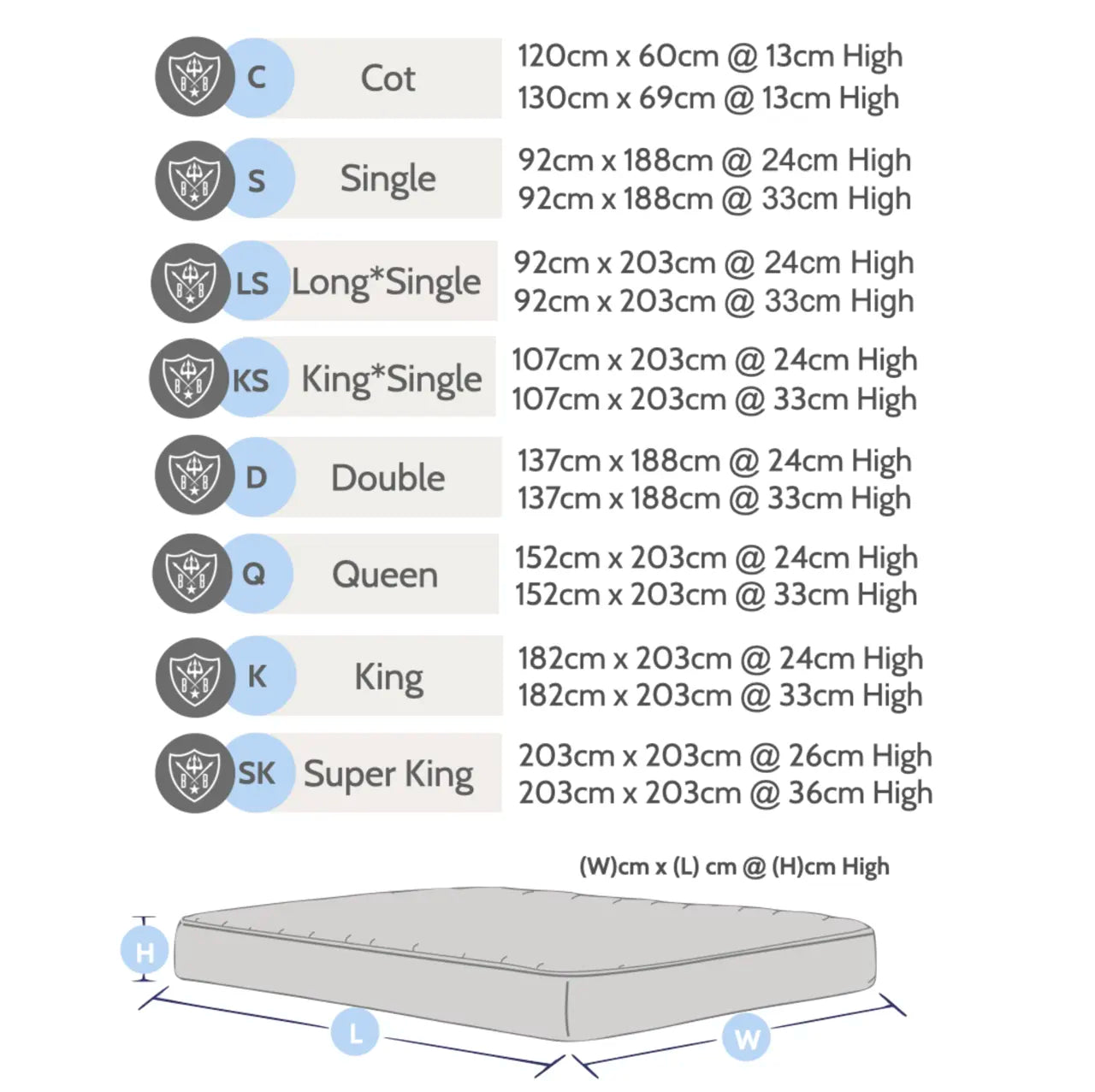
A waterproof cot mattress protector and encasement — stretch-knit polyester jersey with a microporous TPU waterproof lining. The full zippered closure encloses all six sides of the mattress, and the membrane's pore structure (approximately 0.16 microns at maximum distribution) means the fabric can be used as a barrier to dust mite particles in the 10–40 micron range as well as to liquids. Available in Standard Australian (130 × 69cm) and Standard US (120 × 60cm) sizes, both 13cm depth.
Safe sleep notice: This product is a cot mattress protector — it fits over the mattress underneath your child's fitted sheet. Always follow Red Nose Australia's safe sleeping guidance: place baby on their back to sleep, with their feet at the bottom of the cot, and keep the cot bare — no loose blankets, pillows, soft toys, or padded items inside the cot for infants under 12 months. This protector fits snugly under a tight-fitting cot sheet, with no loose fabric.
At a glance
- Fabric: 90gsm polyester knitted jersey outer with 0.2mm microporous TPU waterproof lining
- Pore size: Approximately 0.16 microns at maximum distribution (third-party capillary flow porometry, Galwick fluid)
- Surface: Soft, cool, and silent — no plastic crinkle
- Closure: Full zippered closure
- Coverage: Encloses all six sides of the cot mattress
- Cot mattress depth: Fits cot mattresses up to 13cm deep
- Sizes: Standard Australian (130 × 69cm) and Standard US (120 × 60cm), both 13cm depth
- Waterproof: Yes
- Care: Machine washable on warm/gentle cycle
- Quality: Manufacturer-backed against defects
What this product is
A full cot mattress protector and encasement that can be used in households where dust mite allergens are a concern. The TPU lining provides waterproof coverage for spills, drool, and accidents; the membrane's pore structure and full zippered closure mean the fabric can also be used as a barrier to dust mite particles.
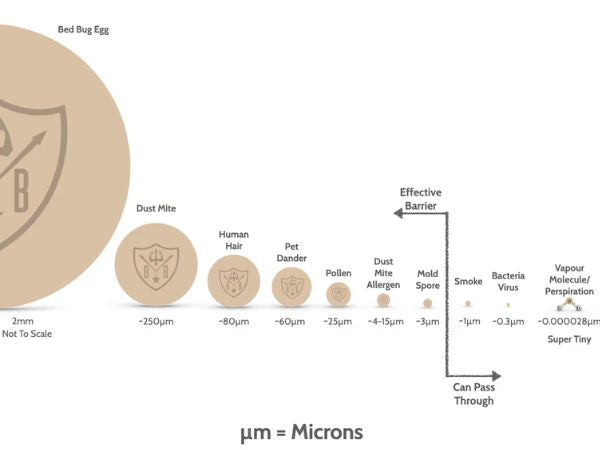
- How the fabric works as a particle barrier. Dust mite allergens are carried by fecal pellets and body fragments that typically measure 10 to 40 microns. The TPU membrane's pores — approximately 0.16 microns at maximum distribution — restrict these particles from passing through the fabric, and the full zippered closure encloses all six sides of the mattress.
- Spill and bedwetting coverage. The TPU membrane is waterproof.
- Used alongside other dust mite reduction measures. Encasement bedding is one piece of dust mite reduction in the nursery, alongside regular vacuuming, hard-floor surfaces where possible, and reduced soft furnishings. Discuss with your child's GP or paediatrician before making changes if your child has a diagnosed condition.
Who this is for
- Households setting up encasement bedding across the nursery
- Families who want a TPU-lined encasement rather than PVC or vinyl-backed alternatives
It's probably not the right fit if:
- You prefer 100% natural fibres and don't need waterproofing — see our cotton cot mattress protector instead (more breathable, OEKO-TEX certified, but not waterproof)
- Your cot mattress is significantly different from the listed sizes — measure first and contact us if unsure
- Your child has moved to a single bed — see our waterproof single mattress encasement
What the fabric does
Dust mite allergens are carried by fecal pellets and body fragments that typically measure 10 to 40 microns. This fabric's TPU membrane has pores measured at approximately 0.16 microns at maximum distribution (third-party capillary flow porometry, Galwick fluid), well below that, which is why the fabric can be used as a particle barrier in this size range.
- Microporous TPU membrane. The membrane has pores small enough to block liquid water and fine particles, but large enough to let water vapour through. Particles inside the cot mattress stay inside.
- Full zippered closure. The zipper closes to seal the mattress inside, fully encasing all six sides.
- Stretch fit. The knitted jersey outer has noticeable elasticity, accommodating slight variations in cot mattress dimensions.
- Soft and silent. The jersey outer feels like fabric, not plastic. No crinkle, no rustle when your child moves.
Sizing
| Size | Dimensions | Suits |
|---|---|---|
| Standard Australian | 130 × 69 × 13 cm | Most Australian standard cots |
| Standard US | 120 × 60 × 13 cm | US-imported cots and smaller cot mattresses |
Measure your cot mattress before ordering. The knitted jersey has stretch to accommodate small variations, but choose the size closest to your actual mattress. Contact us if your cot mattress is significantly different.
How to fit it safely
Fitting the protector correctly is important for both barrier integrity and safe sleep:
- Remove the cot mattress and any existing bedding.
- Unzip the protector fully and slide it over the mattress, making sure all six sides are covered.
- Close the zipper completely — there should be no gap.
- Smooth the fabric flat against the mattress so there is no loose, bunched, or excess fabric anywhere on the surface where your child sleeps.
- Place the cot mattress back in the cot.
- Fit a tight-fitting cot sheet over the top — the sheet should be snug with no loose fabric or wrinkles on the sleep surface.
- Follow Red Nose Australia safe sleeping guidance: keep the cot bare otherwise, with no pillows, blankets, soft toys, or padded items for infants under 12 months.
Care
- Before first use: Wash the protector before fitting. This is recommended by the manufacturer to remove any production residues.
- Wash: Machine wash on a warm or gentle cycle. Avoid hot water — high temperatures can damage the TPU membrane over time.
- Dry: Tumble dry on low/medium heat or air dry. Avoid hot dryers, which can break down the TPU lining.
- Frequency: Every 3–6 months is generally sufficient when a fitted cot sheet sits over the top. Wash sooner if there's been a spill, leak, or illness.
- Avoid: Bleach, fabric softeners, dry cleaning, ironing, oils, and strong detergents.
- Lifespan: Over 4–5 years, prolonged exposure to body oils can cause the TPU membrane to break down. Using a fitted cot sheet on top significantly extends the lifespan.
Materials and testing
- Fabric: 90gsm polyester knitted jersey outer with 0.2mm TPU (thermoplastic polyurethane) waterproof lining.
- Pore size: approximately 0.16 microns at maximum distribution (third-party capillary flow porometry, Galwick fluid).
We don't make claims that this product cures, treats, or prevents allergies, asthma, eczema, or any other condition. What we describe is the fabric's measurable physical properties as a barrier against fine particles and liquids. This product is not a medical device. Always follow Red Nose Australia safe sleeping guidance, and discuss bedding choices with your child's GP, paediatrician, or allergist if your child has a diagnosed condition.
Pairs well with
- Waterproof kids pillow protector — once your child is using a pillow (typically 12+ months, under family or paediatrician guidance)
- Waterproof quilt protector — once your child is using a quilt (typically toddler age, per safe sleep guidance)
- Cotton cot mattress protector — the natural-fibre alternative if waterproofing isn't needed
Frequently asked questions
Will it fit my cot mattress?
Standard Australian cot mattresses are 130 × 69cm. Smaller US-imported cot mattresses are typically 120 × 60cm. The knitted jersey has stretch to accommodate slight variations. Measure your mattress before ordering and contact us if unsure.
Should I discuss this with my GP or paediatrician first?
If your child has a diagnosed allergy, eczema, asthma, or any other medical condition, yes — your GP, paediatrician, or allergist is the right person to advise on whether barrier bedding suits your child's situation. Australian guidance from ASCIA (Australasian Society of Clinical Immunology and Allergy) recognises tightly-woven mattress encasements as part of broader dust mite reduction strategies, but specific advice should come from a clinician who knows your child.
Is this an alternative to following Red Nose Australia safe sleep guidelines?
No — it's a complementary product that fits within those guidelines, not a substitute. Red Nose Australia's bare-cot recommendation (no loose blankets, pillows, soft toys, or padded items for infants under 12 months) still applies. The protector is fitted under your child's tight-fitting cot sheet — not loose inside the cot.
Is this suitable for my child with eczema?
We can describe what the fabric does — polyester jersey outer with a TPU waterproof membrane — but we don't make claims about how this affects eczema or any other condition. If your child has eczema, please discuss bedding choices with your GP, paediatrician, or dermatologist.
How is this different from a regular waterproof cot mattress protector?
Most regular waterproof cot protectors are PVC-backed cotton or vinyl-laminated, which crinkle audibly when your child moves and trap heat. This is a TPU-lined polyester jersey — the TPU is microporous (breathes via water vapour), the outer is soft fabric, and the encasement covers all six sides of the mattress for full barrier coverage.
How often should I wash it?
Every 3–6 months is generally sufficient when a fitted cot sheet sits over the top. Wash sooner if there's been a spill, leak, or illness.


How do dust mite protectors work?
-
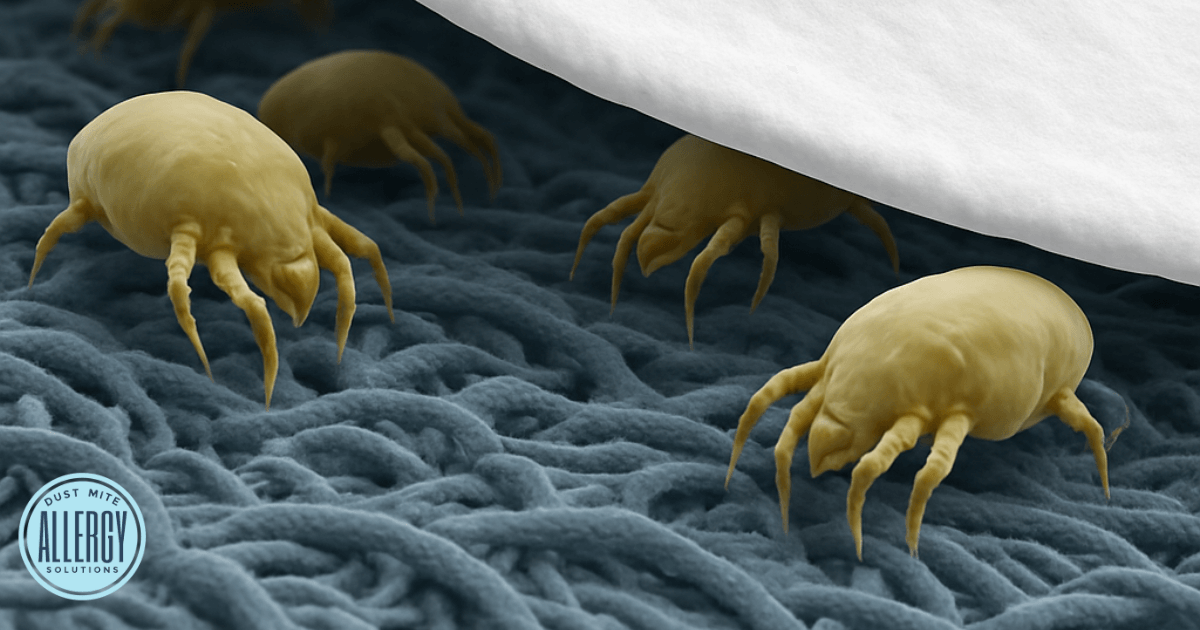
Designed to create a barrier
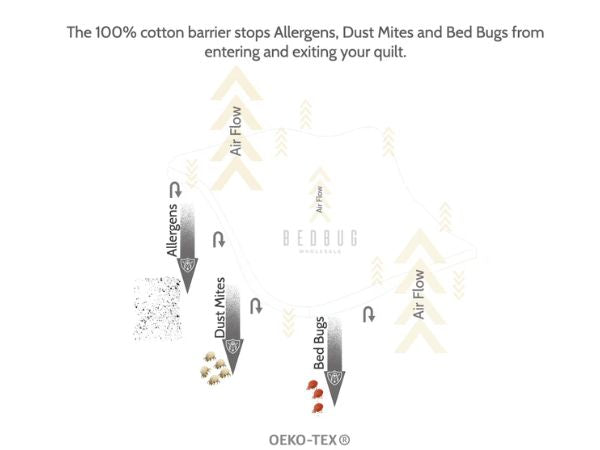
These protectors are designed to prevent dust mites and their allergens from passing through the fabric, seams or stitching.
-
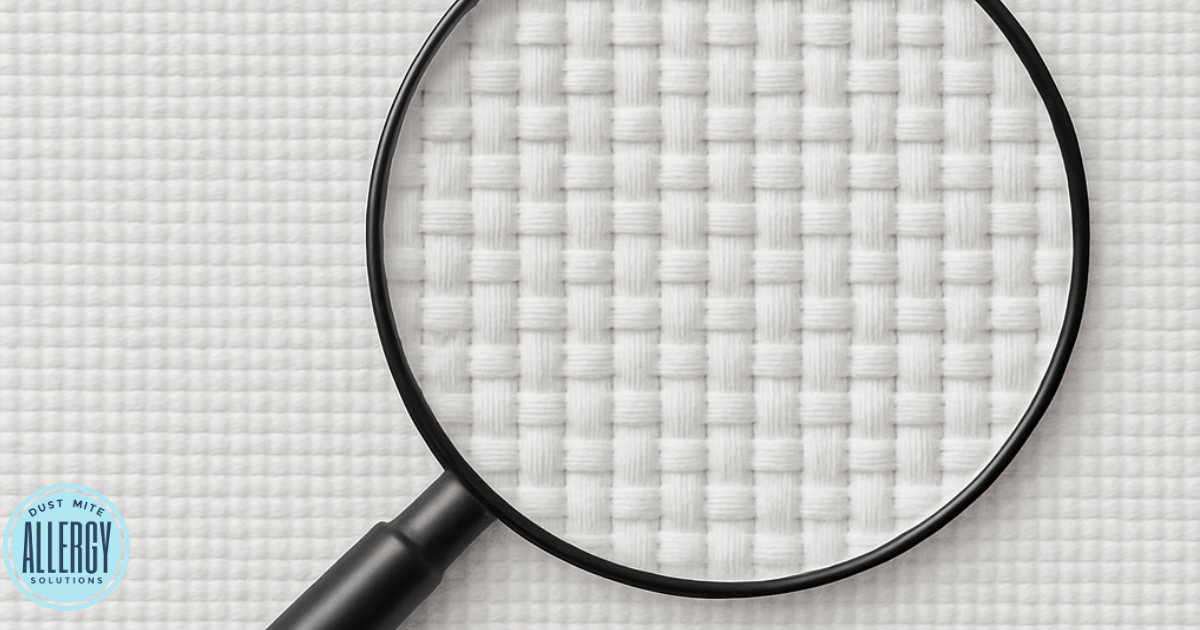
Exceptionally tight weave
These pillow, mattress and quilt protectors come in breathable cotton or waterproof options. Both use a fine, tightly woven fabric that helps stop dust mite allergens from passing through.
-

Zippered covers
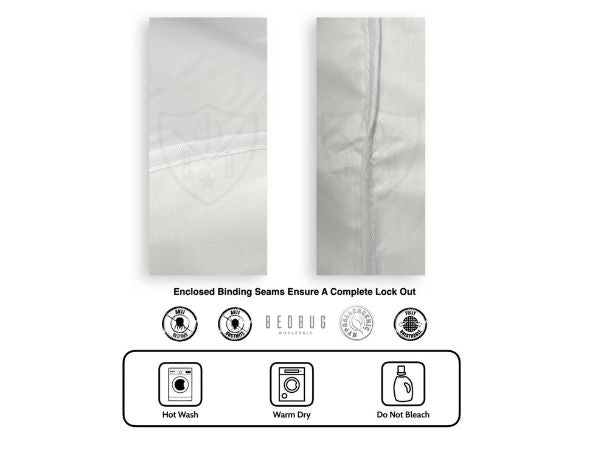
A zippered dust mite cover seals bedding to block allergens and dust mites, providing continuous protection and easy washing.


Frequently asked questions
How often should I wash my dust mite covers?
Dust mite covers for pillows and quilts should generally be washed every 2–4 weeks as part of your regular bedding routine.
Mattress encasements don’t need to be washed as often as regular mattress protectors because they fully seal the mattress and are not in direct contact with your body.
In most cases, washing a mattress encasement every 2–3 months is sufficient.
Washing helps remove allergen build-up on the surface of the protector and keeps the fabric fresh, while the tightly woven material continues to act as a physical barrier between you and dust mites inside the bedding.
Always follow the care instructions provided with your specific protector to maintain the integrity of the fabric barrier.
Is cotton or waterproof material more effective at creating allergen barrier?
Both cotton and waterproof dust mite protectors can be effective at creating an allergen barrier — the key difference is how tightly the fabric is constructed, not just the material itself.
Cotton protectors use a tightly woven fabric that allows air to pass through while helping block dust mite allergens. Waterproof protectors add an extra layer that creates an even tighter barrier, while also protecting against spills and moisture.
The best choice depends on your needs:
- Cotton: breathable and comfortable for everyday allergy management
- Waterproof: offers the highest level of containment and added moisture protection
Cotton vs. Waterproof: The Ultimate Dust Mite Protector Guide
What is OEKO TEX®?
OEKO-TEX® is an independent certification system for textiles, focusing on the safety and sustainability of textile products. It provides a standardized framework for evaluating and testing various aspects of textile materials, such as harmful substances, chemical usage, and environmental impact. OEKO-TEX® certification ensures that textile products meet stringent criteria and are free from harmful substances, making them safer and more environmentally friendly.
Are the waterproof covers noisy?
The waterproof lining in this product is devoid of the crinkling or crackling noise common in other waterproof fabrics or PVC alternatives. Its use is prevalent in medical and biomedical industries.
Let customers speak for us
Efficient postage, easy to put onto the mattress, duvet etc. Daughter finds it comfortable and soft.

We purchased mattress , pillow and duvet encasement for kids due to their dust mite allergy.
Quality is great and delivery was earlier than expected.

Shipping was fast and efficient. The quality of the pillow is so much better than the one we bought from kmart. However it's not for us as it's on the thick side and will cause back pain used for a long period

Great product that was delivered quickly. I really like how the SmartAir HEPA filters need replacing every 22 months instead of every six months like most air purifiers. Great value for money.

Comfy as I want it

I love my quilt cover and pillowcases!
Lovely quality and they’ve made all the difference to my allergies and therefore my sleep!
We ordered this mattress for my son who has a dust mite allergy - it arrived quickly (and in a box, which made it super easy to move to the room we needed it in) and it was easy to unpackage and get on the bed. So far he is finding it very comfortable to sleep on.

So far I’m really loving this doona cover. Very comfortable,

Great duvet! It's soft and keeps the dust away so I don't sneeze. It's just right for sleeping all year. I'm really happy with it!


Dust Mite Covers
Do dust mite covers really work? What are the best dust mite covers? What should I look for when purchasing dust mite encasements? All your questions answered in one place.