Skip to content


SmartAir Sqair Replacement Carbon Filter — VOC, 9–12 Month Life | AU
SmartAir Sqair Replacement Carbon Filter — VOC, 9–12 Month Life | AU
Couldn't load pickup availability
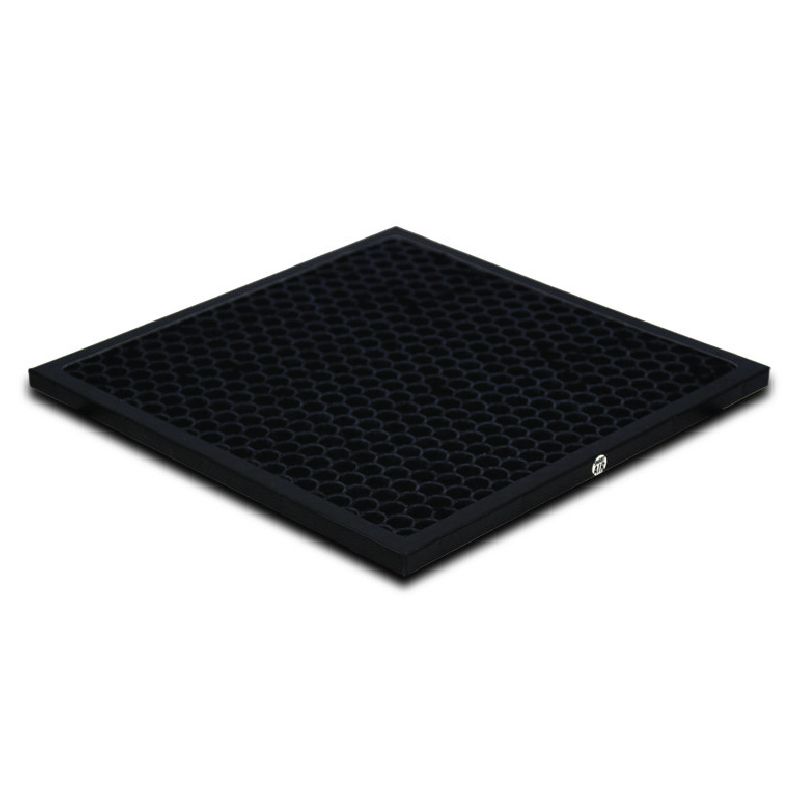
The replacement activated carbon filter for the SmartAir Sqair air purifier — designed to adsorb VOCs, smoke, and odours that pass through the HEPA filter. Optional add-on; not all households need it. Sqair compatibility only.
Who it's for
Existing Sqair owners who want to add VOC and odour adsorption to the unit's HEPA filtration. The carbon filter is optional — Smart Air's own marketing is explicit that many households don't need it. Worth adding if your space has any of these:
- Smokers (cigarette, vape, or wood-burning)
- Recent renovations (new paint, new carpet, new furniture, glue/varnish off-gassing)
- Cooking with strong odours (curry, fried foods, fish)
- Pet odours
- Cleaning products with strong fragrance or solvents
- Proximity to road traffic or industrial activity
- Bushfire-affected regions during smoke events
For a clean modern home with no specific VOC concerns, the HEPA filter alone is usually sufficient.
Key features and specifications
- Filter type: activated charcoal pellets suspended in a honeycomb mesh structure
- Surface area: activated carbon provides 500–1500 m² of adsorption surface per gram
- Captures: VOCs (formaldehyde, benzene), smoke, cigarette smoke, cooking odours, pet odours, paint and solvent off-gassing, and other gas-phase pollutants
- Independent testing: Smart Air has tested this filter using an Industrial Scientific MX6 iBrid gas detector and demonstrated measurable VOC reduction in cigarette-smoke environments
- Lifespan: approximately 9–12 months under typical use (variable based on local VOC load)
- Compatible with: SmartAir Sqair air purifier (not compatible with QT3, SA-600, Blast, or Blast Mini)
- Dual function: acts as a pre-filter for the HEPA stage — captures larger lint and dust before they reach the HEPA filter, extending HEPA filter life
- Position: sits below the HEPA filter inside the Sqair housing
How activated carbon works
Activated carbon is charcoal that's been treated to develop an enormous network of internal pores. The result is a single gram of activated carbon with up to 1,500 m² of internal surface area — the equivalent of a small football pitch packed into a teaspoon of carbon granules. As air passes through the filter, gas-phase molecules (VOCs, odour compounds, smoke residues) are pulled into these pores by van der Waals attraction and held there until the filter is saturated.
This is adsorption, not absorption — the gas molecules stick to the carbon's surface rather than being absorbed into it. And it's not a chemical reaction either — the molecules remain chemically intact, just trapped on the carbon. When the carbon's surface area is fully occupied, the filter stops adsorbing new molecules and needs replacing. There's no way to "regenerate" the filter at home (industrial regeneration uses high-temperature kilns).
What it doesn't do
This is an air purifier filter, not a medical device. We don't make claims about treating any health condition.
FAQs
Do I need the carbon filter? Not necessarily. Smart Air explicitly markets the carbon filter as optional — many households with no specific VOC or odour concerns are fine with HEPA alone. Add it if your space has cigarette smoke, recent renovation off-gassing, persistent cooking odours, pet odours, or you live near road traffic or industrial activity. For a typical clean modern home, HEPA is usually sufficient.
Does it remove formaldehyde and benzene? The activated carbon adsorbs both — they're standard VOCs that carbon filters target. Smart Air's testing with an industrial-grade gas detector showed measurable reduction in VOC concentration in cigarette-smoke environments. The magnitude of effect depends on the carbon load, the airflow rate, and the VOC concentration in the room.
Does it remove smoke smell? Yes — that's the most common reason people buy it. Activated carbon adsorbs the gas-phase compounds that carry odour (which is why used carbon eventually loses its odour-removing capability — the surface area gets fully occupied).
How long does it last? Approximately 9–12 months under typical use. Carbon filter lifespan is much more variable than HEPA filter lifespan because saturation depends on local VOC concentration. A filter in a smoker's home will saturate in 3–6 months; the same filter in a clean rural home may last 18+ months. Visual inspection isn't useful — a saturated carbon filter looks identical to a fresh one. Replace when you notice odours returning.
Can I wash or regenerate it? No — washing has no effect on a saturated carbon filter, and home heating doesn't reach the temperatures needed for industrial regeneration. Replace rather than attempt to clean.
How is it different from the HEPA filter? HEPA filters capture particles (dust, pollen, pet dander, smoke particles, virus-laden aerosols). Carbon filters capture gases (VOCs, odour molecules, smoke residues that have evaporated to gas phase). They do completely different things — they don't replace each other, they complement each other.
Will it fit other Smart Air models? No — this filter is sized specifically for the Sqair housing. The QT3, SA-600, Blast Mini, and Blast all have different carbon filter geometries. Check our filter range for the model you own.
Does it extend the HEPA filter's life? Yes — because the carbon filter sits below the HEPA in the airflow path, larger lint and dust particles get caught at the carbon stage before reaching the HEPA. This extends the HEPA filter's effective life by reducing its particulate load. For households running both filters together, plan to replace the carbon roughly twice as often as the HEPA (since carbon saturates faster on VOCs than HEPA does on particulates).
Care notes
Don't wash. Don't try to regenerate at home. Replace approximately every 9–12 months under typical use, or sooner if you notice odours returning. Dispose of used filter in general waste — there are no hazardous components.
Features
Features
What's included
What's included
Sizes
Sizes