Skip to content


General information only — not medical advice. Dust mites are a normal part of most homes and can't be fully removed; the goal is reducing build-up. If symptoms are ongoing or severe, see your GP or allergist. Full disclaimer
Short answer: A dust mite mattress protector (also called an allergy mattress cover) is a tightly-woven, fully-zippered encasement that forms a physical barrier between you and the fine particles that build up inside a mattress over time.
A 2003 randomised controlled trial in the Journal of Allergy and Clinical Immunology found mattress and pillow encasings significantly reduced dust mite allergen levels over 12 months. To choose a good one, look for four things: tightly-woven fabric, a full six-side encasement with a zipper, the right size and depth for your mattress, and easy washing.
Editor's picks
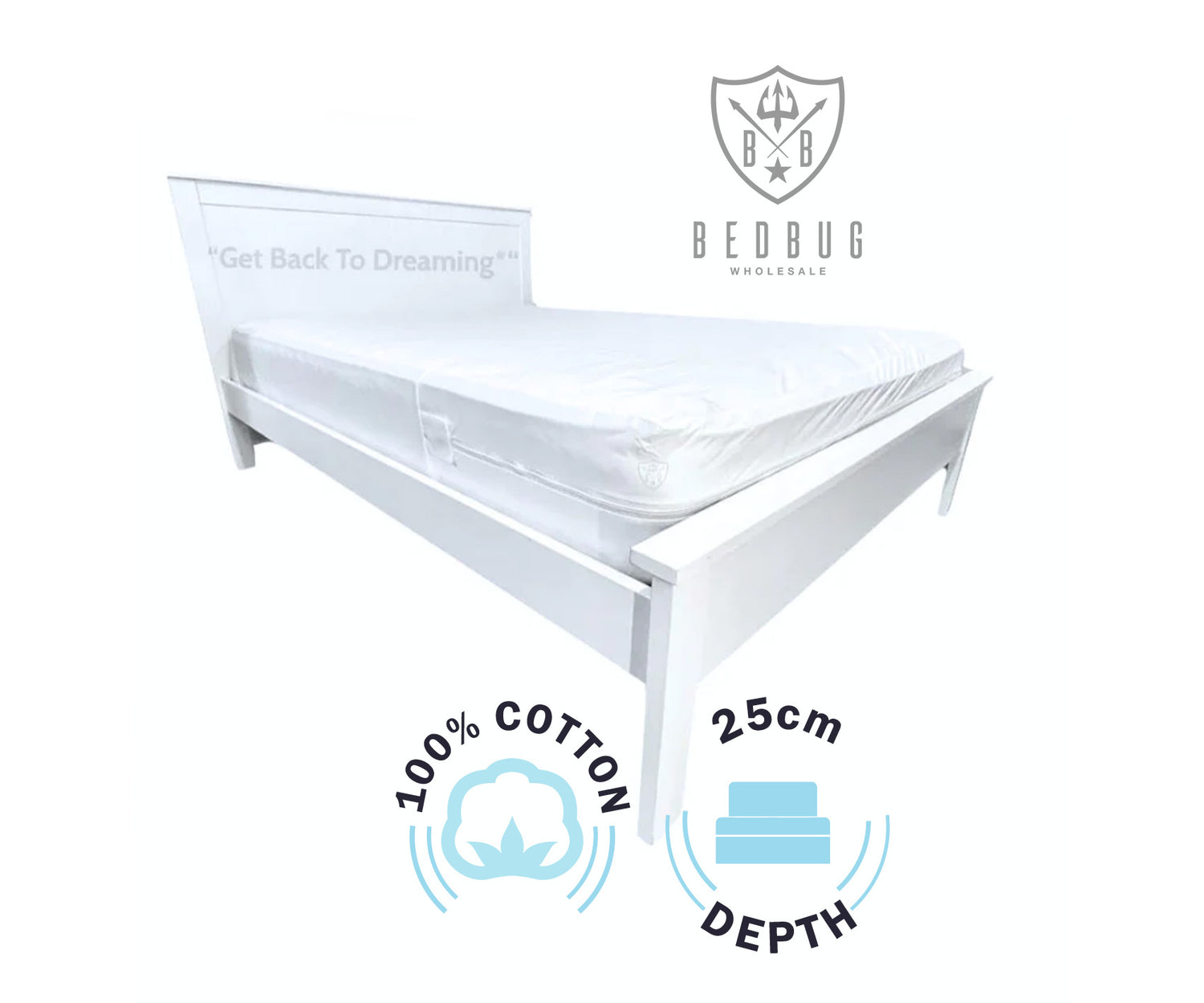
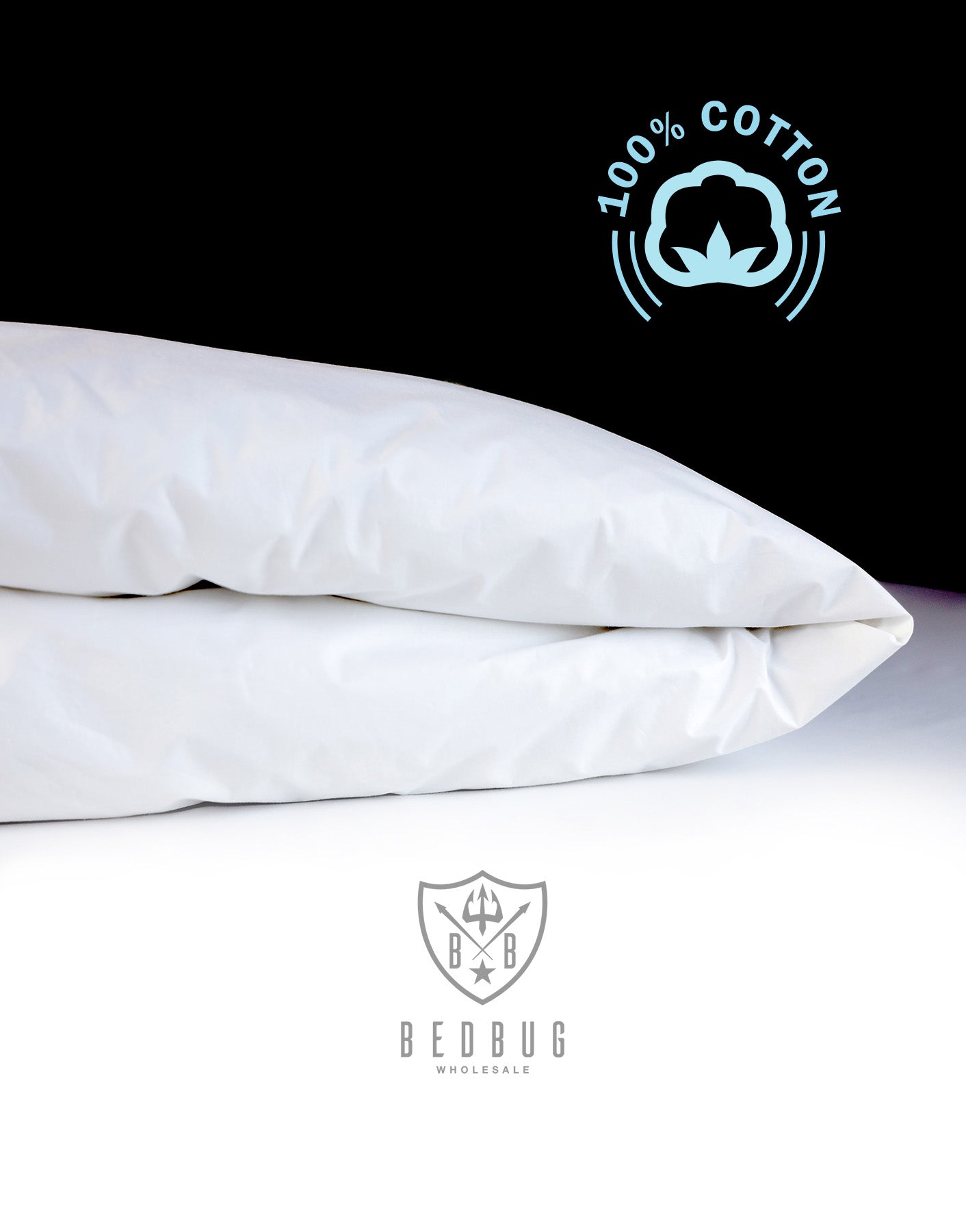
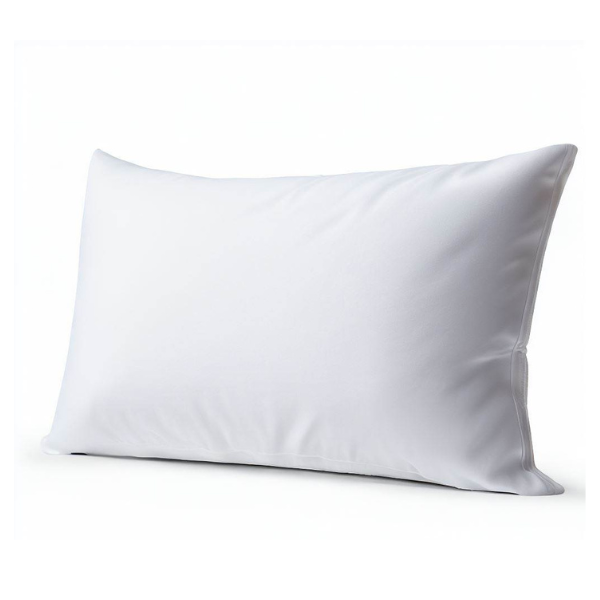
From our own range, these are the two protectors we recommend — and the choice usually comes down to one thing: breathable cotton or waterproof. Both are fully-zippered, pore-tested encasements available in every Australian size, with free AU shipping over $150.


Not sure which? Browse the full range of dust mite mattress protectors, or read on for how to choose.
On this page
Bedrooms are one of the highest concentration points for fine particles linked to indoor sensitivities. Warmth, overnight moisture, and shed skin cells create ideal conditions for dust mites to build up — especially in mattresses, pillows, and quilts.
An allergy mattress cover is one of the most well-supported practical steps for an allergy-aware bedroom. This guide walks through how they work, what the research shows, and how to choose the right one.
Common particles in the bedroom
Bedrooms host a range of fine particles that affect air quality and your sleep environment:
- Dust mite particles. Dust mites thrive in the warm, humid environment of mattresses and pillows. Research by Arlian (1992) established they need humidity above roughly 65–70% to survive, with bedding supplying both moisture and a food source of shed skin cells.
- Pet dander. Settles on bedding fabrics, particularly when pets share the bed or room.
- Pollen. Carried indoors on clothing or through open windows, then settles into bedroom fabrics.
- Mould spores. Present in damp conditions — near windows, adjacent bathrooms, or uncleaned air conditioning.
- Other airborne particles. VOCs from cleaning products, paints, and furniture finishes.
Managing these involves regular cleaning, protective covers, low humidity, and good ventilation.
How allergy mattress covers work
A dust mite mattress protector wraps your mattress in tightly-woven fabric, creating a physical barrier between you and the particles that accumulate inside over time.
The strongest evidence comes from a 2003 randomised controlled trial (Halken et al.) which found mattress and pillow encasings produced a significant long-term reduction in dust mite allergen levels over 12 months.
A 2018 review by Wilson and Platts-Mills identified tightly-woven fabrics as effective barriers, noting that nonwoven materials let particles through and trap debris that's hard to remove.
A real-home study by Schei, Hessen and Lund (2002) found that adding covers to foam mattresses reduced the proportion with detectable dust mite particles from 40.5% to 26.3% — a meaningful real-world drop.
Most covers use a full zippered encasement to limit particle movement around all six sides, while quality fabrics still let air through so the mattress stays breathable.

Regular vs allergy mattress covers
A regular mattress cover mainly protects against spills, stains, and wear. It extends mattress life but isn't designed to filter fine particles like dust mite faecal matter (typically 10–40 microns).
A dust mite mattress protector is engineered with tightly-woven, small-pore fabric to limit those fine particles. The practical differences:
- Fabric: allergy covers use tightly-woven cotton or TPU; regular covers often use nonwoven or loose weaves.
- Pore size: allergy covers have pores small enough to restrict fine particles; regular covers don't.
- Coverage: allergy covers fully encase all six sides; many regular covers only cover the top and sides.
- Closure: allergy covers use full-length zippers with a flap; regular covers often use elastic edges.
For a deeper comparison, see dust mite mattress protectors vs regular mattress protectors.
What particles they help with
A tightly-woven cover helps limit the movement of several fine particles between the mattress and the sleep surface:
- Dust mite faecal particles (typically 10–40 microns)
- Pet dander (typically 5–10 microns and larger)
- Pollen grains (typically 10–100 microns)
- Mould spores (typically 2–100 microns)

Effectiveness depends on fabric construction — tightly-woven, small-pore fabrics restrict these particles; nonwoven covers offer less, regardless of marketing.
How to choose an allergy mattress cover
Check the fabric construction
Tightly-woven (not nonwoven) fabric is the most effective barrier, and smaller pores restrict finer particles. For reference, our cotton covers test at approximately 2.8 microns and our TPU-blend covers at approximately 0.16 microns — both well below the 10–40 micron size of dust mite faecal particles.
Choose a full encasement
A full encasement covers all six sides with a continuous zipper — the design used in most successful clinical trials. Fitted-sheet style covers protect only the top and sides and have a weaker evidence base.
Measure your mattress
Match the cover to your mattress size and depth. Standard Australian sizes:
- Single: 92 × 188 cm
- King Single: 107 × 203 cm
- Double: 138 × 188 cm
- Queen: 153 × 203 cm
- King: 183 × 203 cm
- Super King: 203 × 203 cm
Also check depth — modern Australian mattresses range from 20 cm to over 35 cm, and most covers are sized for specific depth ranges.
Look for a quality zipper
A continuous zipper that wraps three sides lets the cover open fully for installation, then seal completely. A covering flap or seal over the zipper end helps close that junction.
Check the seams
The seams are the weakest point of any encasement — if particles are going to slip through, the stitching is usually where it happens. Look for fully enclosed binding seams, where the seam edges are wrapped and bound rather than left as a single line of open stitching. This keeps the barrier continuous right to the edges, so coverage isn't compromised at the joins. Our covers use enclosed binding seams for exactly this reason.
Consider certifications
Certifications indicate fabric testing rather than medical efficacy:
- OEKO-TEX Standard 100 — tests fabric for over 100 substances of concern. Our cotton range carries this certification from the manufacturer.
- Independent pore testing — our fabrics are third-party pore-tested (capillary flow porometry) at the pore sizes quoted above.
If a specific certification matters to you, ask the retailer for documentation to confirm it.
Consider the material
- Tightly-woven cotton: natural, breathable, washable at high temperatures.
- TPU blends: add waterproofing alongside fine-particle filtration.
For comfort, breathable cotton is generally preferable, though weave density matters more than fibre type.
Ready to choose? Every protector in our range is a fully-zippered encasement in cotton (OEKO-TEX, ~2.8µm) or waterproof TPU (~0.16µm), in all Australian sizes.
Shop dust mite mattress protectors →Matching the cover to your needs
Different households have different priorities. We always recommend speaking with your GP or allergist about your situation.
- Dust mite particles: tightly-woven fabric, small pore size, full zippered encasement. The research base here is the strongest.
- Pet dander: larger than dust mite particles, so most allergy covers also limit it. Consider covers that resist hair clinging.
- Pollen: choose covers that wash easily and often, since pollen settles from clothes, hair, and air.
- Mould: waterproof (TPU) covers help prevent moisture build-up inside the mattress. See humidity, mould, and dust mites.
- Sensitive skin: tightly-woven cotton is breathable and gentle — keep it breathable to avoid overheating.
How to install an allergy mattress cover
Installation is straightforward, especially with two people:
- Remove all bedding and wash it in hot water (60°C where labels allow) before reuse.
- Vacuum the mattress thoroughly with a HEPA-filtered vacuum — research (Wu et al., 2012) found vacuuming significantly reduces dust mite particles.
- Unfold the cover with the opening at the foot of the bed.
- Slide it over the mattress like a fitted slipcover, working from the foot up.
- Settle it snugly around all corners with no loose folds.
- Zip closed and secure any flap or seal over the zipper end.
- Add your clean sheets and bedding.
How to care for your cover
- Follow care instructions — tailored to your fabric and any waterproof layer.
- Wash regularly — most households wash every 2–4 weeks, with mild detergent, no bleach or fabric softener.
- Use hot water where allowed — 55°C or above is effective (McDonald & Tovey, 1992), though even cold washing reduced allergen levels by over 90% in the same study.
- Dry properly — low/medium heat or thorough air drying; low heat for waterproof layers.
- Avoid harsh chemicals — bleach and softeners degrade fabric and waterproof layers over time.
- Inspect periodically — check for tears or zipper issues that reduce effectiveness.
Find your dust mite mattress protector. Full zippered encasement, OEKO-TEX cotton (~2.8µm) or waterproof TPU (~0.16µm), cot to super king. Free AU shipping over $150.
Shop the full range →References
- Arlian LG. (1992). Water balance and humidity requirements of house dust mites. Exp Appl Acarol, 16(1-2):15-35. PubMed
- McDonald LG, Tovey E. (1992). The role of water temperature and laundry procedures in reducing house dust mite populations and allergen content of bedding. J Allergy Clin Immunol, 90(4 Pt 1):599-608. PubMed
- Schei MA, Hessen JO, Lund E. (2002). House-dust mites and mattresses. Allergy, 57(6):538-542. PubMed
- Halken S, Høst A, Niklassen U, et al. (2003). Effect of mattress and pillow encasings on children with asthma and house dust mite allergy. J Allergy Clin Immunol, 111(1):169-176. PubMed
- Wu FF, et al. (2012). Daily vacuuming of mattresses significantly reduces house dust mite allergens, bacterial endotoxin, and fungal β-glucan. J Asthma, 49(2):139-143. PubMed
- Wilson JM, Platts-Mills TAE. (2018). Home Environmental Interventions For House Dust Mite. J Allergy Clin Immunol Pract, 6(1):1-7. PubMed
Disclaimer: This content is for general informational purposes only and does not replace professional medical advice. Products mentioned are not intended to diagnose, treat, cure, or prevent any condition. Always follow product labels and care instructions. Results and individual experiences may vary. If you have a diagnosed allergy, asthma, or other medical condition, please speak with your GP or allergist for personal guidance.