Skip to content


For households focused on bedroom cleanliness, a practical and budget-friendly cleaning routine can make a meaningful difference. Some research suggests that regular vacuuming of mattresses may help reduce levels of dust mite debris, endotoxins, and other fine particles in bedding (PubMed, 2012).
While findings vary across studies, vacuuming is widely cited as a useful part of bedroom care routines — particularly when paired with hot washing of bedding, humidity control, and protective covers.
Why Vacuum Your Mattress?
Mattresses can accumulate dust, debris, and other fine particles over time. According to the Institute for Respiratory Health, household particles in bedding are commonly associated with indoor sensitivities in some individuals.
Mattresses can become a build-up point for dust mites, microorganisms, and other particles, all of which are commonly discussed in the context of bedroom cleanliness and sleep environment.

Why Mattress Cleanliness Matters
Dust Mite Debris and Indoor Particles
One of the main reasons households focus on mattress cleanliness is the build-up of fine particles such as dust mite debris, pet dander, and pollen. According to the Asthma and Allergy Foundation of America, dust mites are among the most common indoor allergy triggers.
Dust mites are microscopic and tend to thrive in warm, humid environments such as bedding, where they feed on shed skin cells. Their waste particles are commonly associated with indoor sensitivities in some individuals.
Microbial Build-Up
Mattresses can also accumulate microorganisms over time, particularly in warm, humid conditions. One study published in 2005 found that pillows can host multiple species of fungi, suggesting similar build-up may occur in mattresses that aren't regularly cleaned.
Regular cleaning is one practical way to manage this build-up over time.
Skin-Friendly Sleep Environments
Sleeping on bedding that isn't regularly cleaned can be uncomfortable for some people, particularly those with sensitive skin. WebMD highlights the role of clean bedding in supporting a fresher sleep surface, particularly where skin sensitivity is a consideration.
Sleep Comfort
Beyond cleanliness, a fresh, well-maintained mattress can support more comfortable sleep. The build-up of particles and odours over time can affect how clean a sleep space feels.
Mattress Vacuum vs Regular Vacuum: Which Should You Choose?
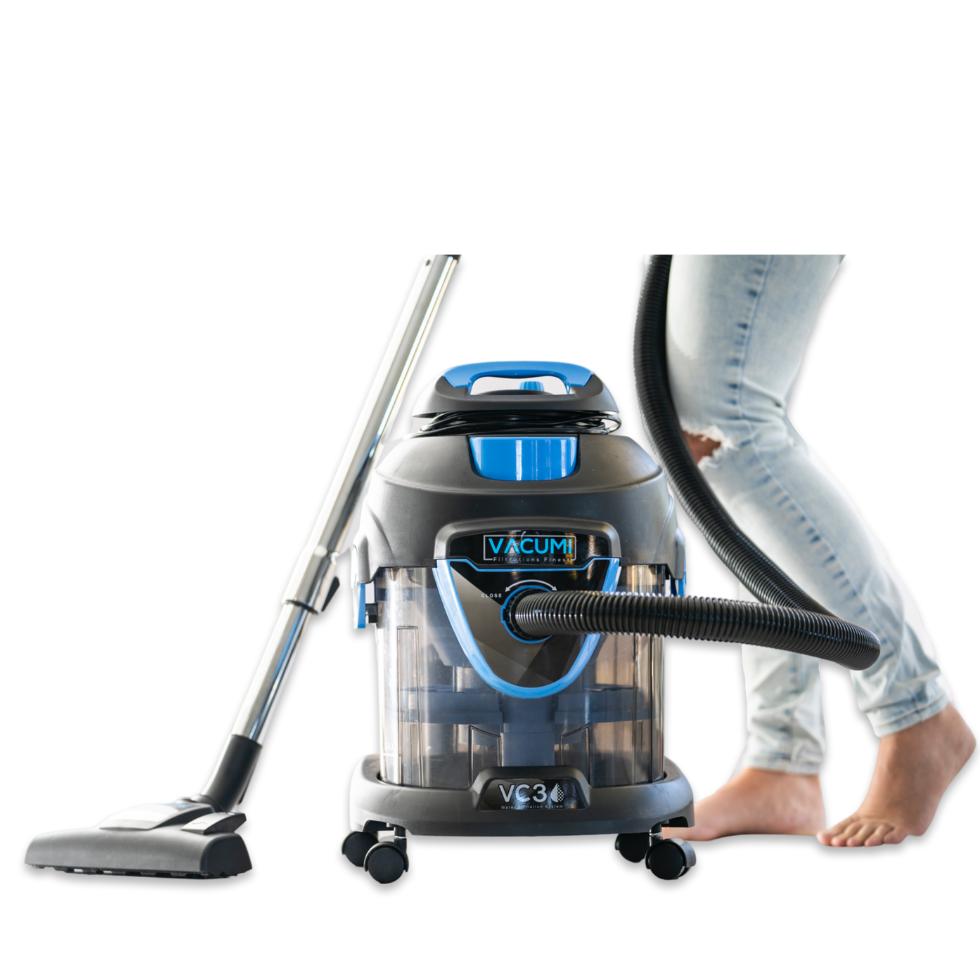
Choosing between a mattress vacuum and a regular vacuum depends on your specific cleaning needs.
If your household focuses on bedroom cleanliness — particularly for sensitive sleep environments — a mattress vacuum can be a useful addition to a regular cleaning routine. For general whole-home cleaning, a standard vacuum may be more practical.
Mattress Vacuums vs Regular Vacuums: Features, Benefits, and Considerations
Mattress Vacuums
Features
- HEPA filters: Designed to capture very fine particles, including dust mite debris and other allergens. True HEPA filters meet a defined particle-capture standard.
- UV light feature: Some mattress vacuums include a UV light, often marketed as part of the cleaning process. Real-world effectiveness depends on factors such as exposure time and distance to the surface.
- Vibration or rolling brushes: Designed to help loosen and lift fine particles from within mattress fibres.
- Compact design: Generally smaller and easier to handle on mattresses, sofas, and other upholstered surfaces.
Benefits
- Designed for soft surfaces: Built specifically for mattresses and upholstery, allowing more targeted cleaning than standard vacuums.
- Particle capture: HEPA-filtered models are designed to help reduce particle build-up in bedding.
- User-friendly: Lightweight and manoeuvrable on soft surfaces.
Pros
- Targeted particle removal: Designed to extract fine debris from mattress fabric, including dust mite waste particles.
- Surface cleaning: The UV feature is marketed as part of the cleaning process during use.
- Specialised attachments: Often includes tools designed for upholstery, supporting more thorough cleaning of soft surfaces.
Considerations
- Limited use: Designed mainly for mattresses and soft furnishings, not floors.
- Higher price point: Often pricier than standard vacuums due to specialised features.
- Smaller capacity: Typically have smaller dust compartments, requiring more frequent emptying.
Regular Vacuums
Features
- Versatile attachments: Includes tools such as crevice tools, dusting brushes, and extension wands.
- Adjustable settings: Features such as adjustable suction and brush controls accommodate various floor types.
- Larger capacity: Generally have bigger dust bins for thorough whole-home cleaning.
Benefits
- Flexibility: Capable of cleaning a range of surfaces, from floors and carpets to curtains and ceilings.
- Stronger suction: Generally more powerful, suitable for larger debris.
- Cost efficiency: Multi-functional, providing good value across general home cleaning needs.
Pros
- Comprehensive cleaning capability: Suitable for both light and heavy cleaning across the home.
- Practical choice: A single tool meets multiple cleaning needs, reducing the need for additional devices.
- Wide selection: Available across various models, requirements, and budgets.
Considerations
- Less specialised for mattresses: May not be as well-suited to mattress cleaning without specialised features.
- Bulkier build: Often heavier and harder to manoeuvre on soft surfaces.
- Filtration matters: Without HEPA filtration, standard vacuums may release fine particles back into the air, which is why HEPA filtration is often chosen for sensitive households.
Cleaning Approaches for Your Mattress
To help reduce dust mite debris and other particles in your mattress, a combined approach is generally more effective than relying on any single method:
- Vacuum Regularly: Use a HEPA-filtered vacuum to help capture fine particles from the mattress surface.
- Wash Bedding Hot: Where care labels allow, wash sheets and pillowcases at high temperatures to help reduce dust mite populations and remove particle residue.
- Use Dust Mite Mattress Protectors: Use mattress and pillow covers designed to create a physical barrier in allergy-aware bedding setups.
- Maintain Cleanliness: Keep the bedroom clutter-free and clean to reduce surfaces where dust can settle.
- Control Humidity: Aim to keep indoor humidity below 50% to make conditions less favourable for dust mite build-up.
For more detailed guidance, see our step-by-step guide to mattress care.
Where to Buy a Mattress Vacuum
To explore mattress vacuums designed for use in allergy-aware households, see our full vacuum collection at Dust Mite Allergy Solutions Australia.