Skip to content


Evidence review
Do Ultrasonic Devices Reduce Dust Mites?
Plug-in ultrasonic "mite repellers" are sold everywhere online. We went looking for the published research behind the claims — and for what the evidence says you should do instead.
Short answer: No. We could find no credible published evidence that ultrasonic plug-in devices reduce house dust mite numbers or dust mite allergen in a home. The only published experiment testing them directly against dust mites found no difference between treated and untreated carpet, and consumer regulators in both Australia and the United States have acted over unsubstantiated claims for this category of device.
What ultrasonic mite devices claim to do
Ultrasonic mite repellers plug into a power point and emit high-frequency sound, usually stated as somewhere between 20 kHz and 60 kHz — above the range of human hearing. The claim is that this sound irritates or disorients dust mites so they leave, or that it interferes with their feeding and breeding. Percentage reduction figures are common in the marketing, and these devices are often sold directly to people managing asthma, eczema and allergic rhinitis.
The one study that tested them on dust mites
In decades of house dust mite research, we could find only one published experiment that tested ultrasonic devices directly against dust mites.
Jeffrey Miller, of New York Medical College, seeded carpet sections with live Dermatophagoides pteronyssinus — the European house dust mite, and the dominant species in humid coastal Australia. Five sections were placed one metre from an operating ultrasonic device; five matched control sections sat in an identical environment with no device running. After three weeks, live mites were counted using an adhesive-sheet mobility test under magnification.
The reported result was no apparent difference between the treated and control carpet. Two different commercial devices, both operated according to their instructions, produced no detectable reduction in mite numbers.1
We should be straight about the limits of this. It was a conference abstract presented to the American Academy of Allergy, Asthma & Immunology rather than a full peer-reviewed paper, the sample was small, and the author has a commercial interest in allergen-barrier bedding — a competing product category. Taken alone it is modest evidence. It matters because it is the only direct evidence that exists, and because it points the same way as everything else.
Why it was never likely to work
Three things stand in the way, and any one of them would be enough on its own.
Dust mites have no ears
Unlike crickets or moths, mites have no tympanal organs — no structure for detecting airborne pressure waves. They sense their world chemically, and through direct contact and substrate vibration. There is no established mechanism by which airborne ultrasound would register on a dust mite as an unpleasant stimulus at all.
Ultrasound does not reach where mites live
High-frequency sound is absorbed rapidly by air, travels in a narrow beam, and is blocked or reflected by almost any solid object. Dust mites live buried inside mattress ticking, deep in carpet pile, inside pillows and lounge cushions. Sound that cannot pass through a curtain is not reaching the middle of your mattress.
Mites have nowhere to go
Repellency assumes a mobile animal that can walk away from a nuisance toward something better. Dust mites travel a few centimetres, live inside their own food supply — shed human skin scales — and cannot survive outside the warm, humid microclimate of your bedding. "Driving them out" is not a behaviour available to them.
What about the manufacturers' own testing?
Some brands in this category cite in-house or commissioned laboratory testing reporting large reductions in dust mite numbers. As far as we can establish, that testing has not been published in a peer-reviewed journal, is not indexed in PubMed or other biomedical databases, and does not publish its methodology or sample sizes — so it cannot be independently checked or replicated.
It is also worth reading reference lists carefully. Some "scientific evidence" pages for these devices list studies that concern rodents, cats or birds rather than dust mites at all. Unpublished, unreplicated and unverifiable testing is not a sound basis for a purchase decision, whichever product it supports.
What the ACCC and FTC found
In March 2004 the Australian Competition and Consumer Commission accepted court-enforceable undertakings from Danoz Direct and related companies over electronic and ultrasonic pest devices sold in Australia. The ACCC found the companies' representations "overstated what Danoz was able to substantiate" and that there was "little evidence to demonstrate that the devices worked to the extent that Danoz stated or implied". The outcome included corrective advertising and refunds to affected customers.6
Three years earlier, in May 2001, the United States Federal Trade Commission wrote to more than 60 manufacturers and retailers of ultrasonic pest-control devices about unsubstantiated efficacy claims. Drawing on its own enforcement actions between 1985 and 1997, the FTC noted that its previous complaints had alleged that ultrasound devices do not control insects.7
Neither regulator was addressing dust mites specifically. Both were addressing the same underlying technology and the same style of claim.
What actually reduces dust mites
The good news is that this problem has real solutions. They are less exciting than a glowing plug-in, and they come down to heat, water, humidity and physical barriers.
The good news is that this problem has real solutions. They are less exciting than a glowing plug-in, and they come down to heat, water, humidity and physical barriers. Here they are ranked by how strong the published evidence is.
| Measure | Evidence | What it actually does |
|---|---|---|
| Mite-proof encasings | Strong | Seals mites and allergen inside the mattress, pillow and quilt |
| Weekly hot wash | Strong | Kills mites in bedding at 53–60 °C and washes allergen away |
| Steam cleaning | Strong | Kills mites in carpet and mattresses and denatures allergen |
| Humidity below 50% | Good basis | Removes the water mites need to survive and breed |
| HEPA vacuum, hard floors | Partly effective | Removes settled allergen; supporting measure only |
| Air purifiers, sprays | Limited | Little effect on dust mites specifically — see why |
Mite-proof mattress, pillow and quilt encasings
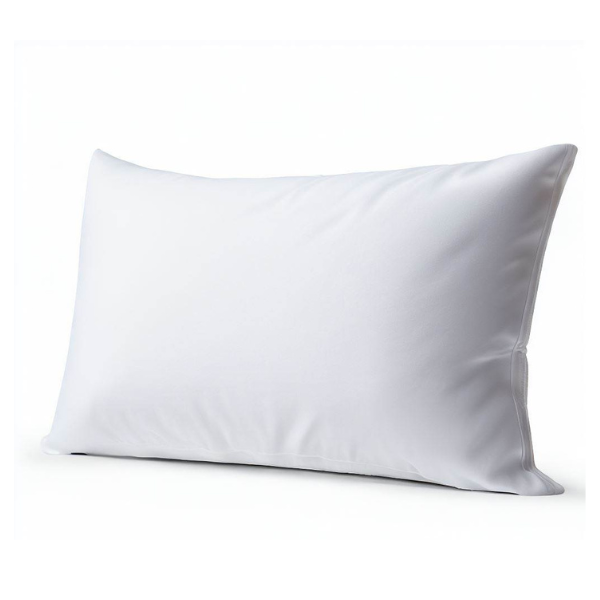
Sealing the mattress, pillow and quilt inside a tightly woven or membrane barrier puts a physical wall between you and the mite population living in the bed.
In a 12-month randomised controlled trial of 284 mite-sensitised children aged 3–17, those given mite-impermeable encasings had a 45% lower risk of attending hospital with an asthma exacerbation than those given placebo covers (hazard ratio 0.55, 95% CI 0.36–0.85).8
Encasings do not kill mites — they contain them and block allergen transfer. That is why all three items matter, not just the mattress.
Read the studyMurray CS, Foden P, Sumner H, Shepley E, Custovic A, Simpson A. Preventing severe asthma exacerbations in children: a randomized trial of mite-impermeable bedcovers. American Journal of Respiratory and Critical Care Medicine, 2017. Full text (doi:10.1164/rccm.201609-1966OC) · PubMed abstract
Wash bedding weekly at a high temperature
Temperature matters far more than detergent. Laboratory testing across three mite species found:
- Dermatophagoides farinae — killed by 10 minutes at 50 °C
- D. pteronyssinus, the species that dominates in Australia — needed 53 °C for 12 minutes9
ASCIA recommends washing bedding weekly above 60 °C.13 A cold wash removes some allergen but leaves live mites, so pair a cold cycle with encasings rather than relying on it alone.
Read the studyVyszenski-Moher DL, Arlian LG, Neal JS. Effects of laundry detergents on Dermatophagoides farinae, Dermatophagoides pteronyssinus and Euroglyphus maynei. Annals of Allergy, Asthma & Immunology, 2002. Full text · PubMed abstract · ASCIA guidance
Steam clean carpets, mattresses and upholstery
In a Glasgow study, steam-treated carpet squares contained no live mites across four months, while untreated control squares climbed to a mean of 185 mites. Treated floor areas showed an 86.7% reduction in Der p 1 allergen.10
A later laboratory comparison of vacuuming, steam vapour, neem oil and a quaternary ammonium disinfectant found steam produced the greatest dust mite reduction of the four methods tested.11
Read the studiesColloff MJ, Taylor C, Merrett TG. The use of domestic steam cleaning for the control of house dust mites. Clinical & Experimental Allergy, 1995. Full text · PubMed abstractOng KH, Lewis RD, Dixit A, MacDonald M, Yang M, Qian Z. Inactivation of dust mites, dust mite allergen, and mold from carpet. Journal of Occupational and Environmental Hygiene, 2014. Full text · PubMed abstract
Keep indoor humidity below about 50%
Dust mites have no way to drink. They absorb water vapour directly from the air, and populations struggle once relative humidity sits below roughly 50%.
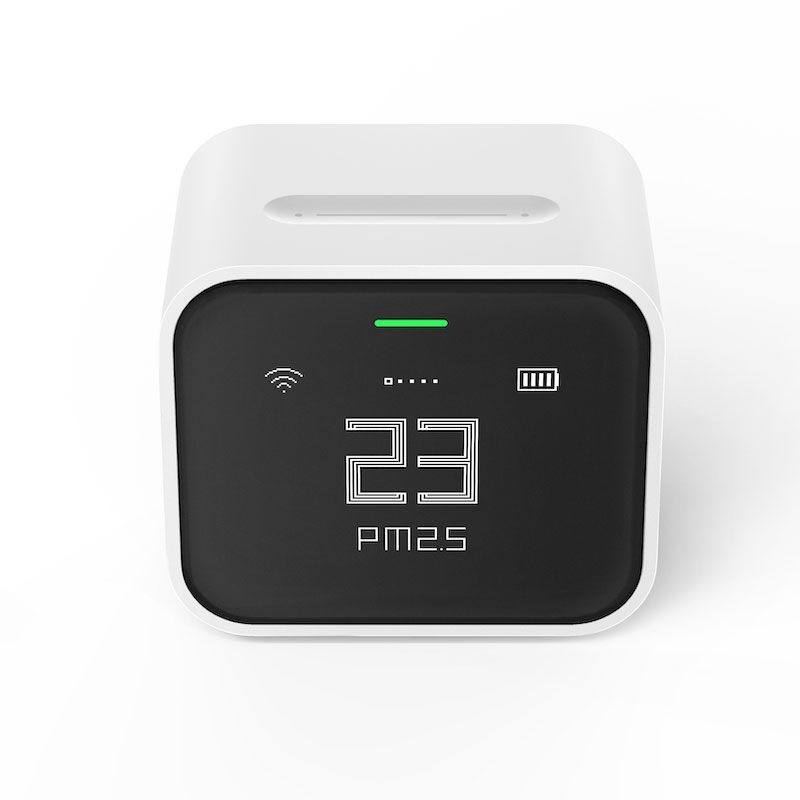
In subtropical and coastal Australia this is both the hardest and the most valuable thing to change. You cannot manage what you do not measure, so a hygrometer is a sensible first step before buying a dehumidifier.
Why we say thisThis rests on established mite biology and clinical guidance rather than a single trial — controlled home-dehumidification trials are few and their results mixed, largely because bedroom humidity is hard to hold down consistently. ASCIA lists maintaining a dry, well-ventilated home among its effective measures. ASCIA — Allergen minimisation
Vacuuming, flooring and cleaning
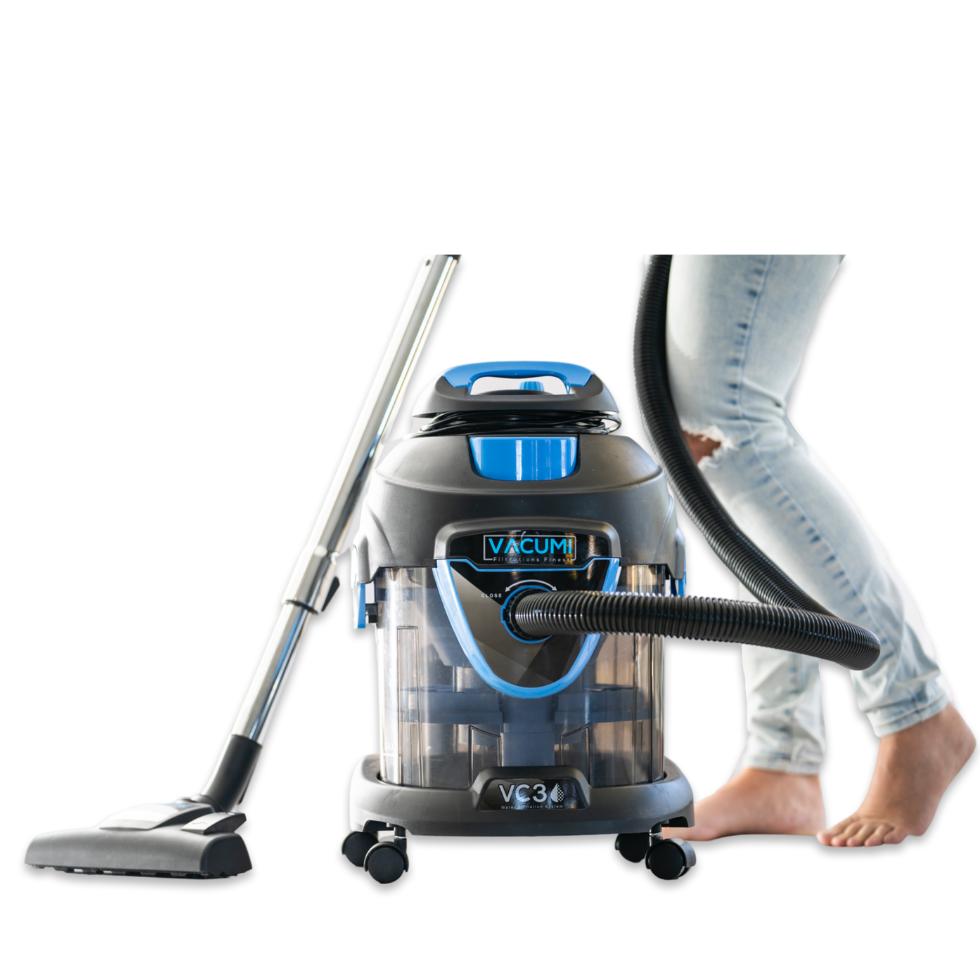
ASCIA rates HEPA vacuuming as partly effective. A sealed high-filtration vacuum removes more allergen than a standard one, but all vacuuming temporarily raises airborne allergen — so the allergic person should not be the one doing it.13
These all help at the margins:
- Replace bedroom carpet with hard flooring
- Remove wool underlays and sheepskins
- Damp dust weekly with an electrostatic cloth
- Freeze soft toys overnight, then wash them
Read the sourcesASCIA classifies these as partly effective rather than primary measures. In the 2014 carpet study above, the two physical methods tested — vacuuming and steam vapour — showed no statistically significant effect on dust mite allergen (p = 0.084), as distinct from killing live mites. ASCIA — Allergen minimisation · Ong et al. 2014
Air purifiers and acaricide sprays
We sell both, and we would rather be accurate than sell you the wrong thing.
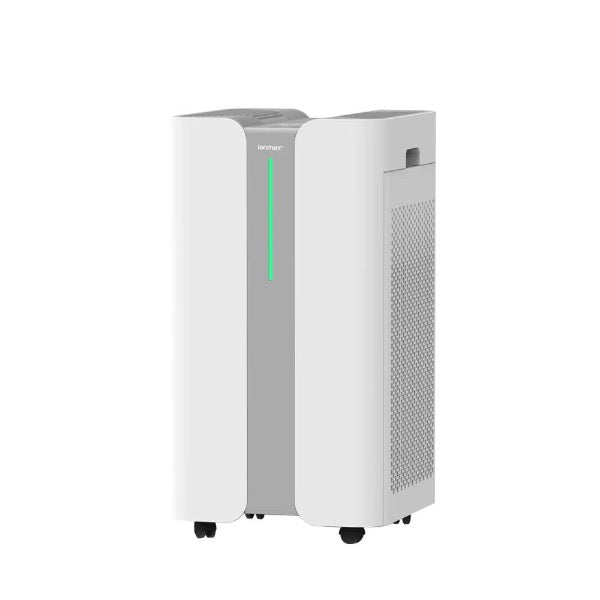
Air purifiers have only limited evidence for dust mite allergen specifically. Mite allergen travels on relatively heavy particles that settle out of the air within minutes of being disturbed, so most of it is never airborne long enough to be filtered. HEPA purifiers have a much better evidence base for lighter, persistently airborne allergens such as cat dander, and for smoke and fine particulates. If dust mites are your only trigger, spend on encasings and humidity control first.
Acaricide sprays can reduce allergen in carpets, but published studies show the effect is modest and not maintained for long without repeated application, and the large Cochrane review found chemical methods did not improve asthma outcomes.12 Treat sprays as an occasional adjunct, not a foundation.
Read the studiesGøtzsche PC, Johansen HK. House dust mite control measures for asthma. Cochrane Database of Systematic Reviews, 2008 — 54 trials, 3,002 patients. Full review · PubMed abstractWoodfolk JA, Hayden ML, Couture N, Platts-Mills TAE. Chemical treatment of carpets to reduce allergen. Journal of Allergy and Clinical Immunology, 1995 — carpet treatments reduce mite allergen, but "the effects do not appear to be maintained for long periods".14 Full text · PubMed abstract
Not sure where to start? Our most effective, most-bought dust mite solutions are grouped in one place.
Best solutions for dust mite allergy Shop the full dust allergy range
Two honest caveats
First, even measures that genuinely reduce mites have a mixed record on symptoms. A Cochrane review of 54 trials involving 3,002 patients found that mite-avoidance measures did not produce a measurable improvement in asthma outcomes overall, and concluded they could not be recommended on that evidence.12 Cochrane now flags that this review predates its current standards and should not be used for clinical decision-making, so we cite it as the largest synthesis to date rather than as current guidance. The more recent encasings trial suggests that well-targeted intervention in genuinely mite-sensitised patients can help,8 but nobody should expect a mattress cover to replace prescribed treatment. Allergen reduction is an adjunct. Talk to your GP or an allergy specialist about the medical side.
Second, do not confuse an ultrasonic repeller with an ultrasonic humidifier. They are unrelated devices, and a humidifier can make a dust mite problem meaningfully worse by lifting bedroom humidity into the range mites thrive in.
Frequently asked questions
Do ultrasonic devices reduce dust mites?
No. There is no credible published evidence that ultrasonic plug-in devices reduce house dust mite numbers or dust mite allergen. The only published experiment to test them directly on dust mites found no difference between treated and untreated carpet.
Can dust mites hear ultrasound?
Dust mites have no tympanal organs — the structures insects such as crickets and moths use to detect airborne sound. They sense their environment chemically and through contact and substrate vibration, so there is no established mechanism for airborne ultrasound to act as a repellent.
What temperature kills dust mites in the wash?
Laboratory testing found D. farinae was killed by 10 minutes at 50 °C, while D. pteronyssinus needed roughly 53 °C for 12 minutes.9 ASCIA recommends washing bedding weekly above 60 °C.13
What humidity level stops dust mites?
Dust mites absorb water vapour from the air rather than drinking, and populations struggle below roughly 50% relative humidity. Keeping bedrooms dry and well ventilated is the single highest-value measure in humid Australian climates.
Do air purifiers reduce dust mites?
Only to a limited extent. Dust mite allergen is carried on relatively heavy particles that settle quickly, so it is not airborne long enough for most of it to be filtered. Air purifiers have stronger evidence for cat dander and fine particulates.
If I already own an ultrasonic mite device, should I throw it out?
It is not doing you any harm. The practical point is not to count it as part of your allergy management, and not to let it displace a measure that has evidence behind it.
The bottom line
On the published evidence available today, ultrasonic devices are not a dust mite control measure. If you are deciding where to spend $40, the research points toward a hot-wash cycle, a proper set of encasings, and getting the humidity out of the bedroom.
Disclosure and corrections. Dust Mite Allergy Solutions sells dust mite allergy products, including several of the categories recommended above. We do not sell ultrasonic mite devices. This article reflects the published evidence we were able to locate as at 16 August 2026 and states where that evidence is limited.
If you are a manufacturer or distributor of an ultrasonic dust mite device and can provide peer-reviewed or independently verifiable evidence of efficacy, we will review it and update this article. Please contact us at info@dustmiteallergysolutions.com.au.
This article is general information, not medical advice. If you or your child has asthma, eczema or allergic rhinitis, discuss management with your GP or an allergy specialist before changing anything.
References
- Miller JD. Ultrasonic "mite killers" fail to decrease mites in carpeting. J Allergy Clin Immunol. 2021;147(2 Suppl):AB80. doi:10.1016/j.jaci.2020.12.308
- Yturralde KM, Hofstetter RW. Efficacy of commercially available ultrasonic pest repellent devices to affect behavior of bed bugs (Hemiptera: Cimicidae). J Econ Entomol. 2012;105(6):2107–14. doi:10.1603/ec12166
- Panthawong A, Doggett SL, Chareonviriyaphap T. The efficacy of ultrasonic pest repellent devices against the Australian paralysis tick, Ixodes holocyclus (Acari: Ixodidae). Insects. 2021;12(5):400. doi:10.3390/insects12050400
- Enayati AA, Hemingway J, Garner P. Electronic mosquito repellents for preventing mosquito bites and malaria infection. Cochrane Database Syst Rev. 2007;(2):CD005434. doi:10.1002/14651858.CD005434.pub2
- Sylla el-HK, Lell B, Kremsner PG. A blinded, controlled trial of an ultrasound device as mosquito repellent. Wien Klin Wochenschr. 2000;112(10):448–50. (Note: the marketed "ultrasound" device tested emitted 3–11 kHz, below the ultrasonic threshold.) PubMed 10890136
- Australian Competition and Consumer Commission. Danoz refund offer to buyers of electronic pest repellents. 11 March 2004.
- United States Federal Trade Commission. FTC warns manufacturers and retailers of ultrasonic pest-control devices. 3 May 2001.
- Murray CS, Foden P, Sumner H, Shepley E, Custovic A, Simpson A. Preventing severe asthma exacerbations in children: a randomized trial of mite-impermeable bedcovers. Am J Respir Crit Care Med. 2017;196(2):150–8. doi:10.1164/rccm.201609-1966OC
- Vyszenski-Moher DL, Arlian LG, Neal JS. Effects of laundry detergents on Dermatophagoides farinae, Dermatophagoides pteronyssinus and Euroglyphus maynei. Ann Allergy Asthma Immunol. 2002;88(6):578–83. doi:10.1016/S1081-1206(10)61889-3
- Colloff MJ, Taylor C, Merrett TG. The use of domestic steam cleaning for the control of house dust mites. Clin Exp Allergy. 1995;25(11):1061–6. doi:10.1111/j.1365-2222.1995.tb03252.x
- Ong KH, Lewis RD, Dixit A, MacDonald M, Yang M, Qian Z. Inactivation of dust mites, dust mite allergen, and mold from carpet. J Occup Environ Hyg. 2014;11(8):519–27. doi:10.1080/15459624.2014.880787
- Gøtzsche PC, Johansen HK. House dust mite control measures for asthma. Cochrane Database Syst Rev. 2008;(2):CD001187. doi:10.1002/14651858.CD001187.pub3
- Australasian Society of Clinical Immunology and Allergy (ASCIA). Allergen minimisation.
- Woodfolk JA, Hayden ML, Couture N, Platts-Mills TAE. Chemical treatment of carpets to reduce allergen: comparison of the effects of tannic acid and other treatments on proteins derived from dust mites and cats. J Allergy Clin Immunol. 1995;96(3):325–33. doi:10.1016/s0091-6749(95)70051-x
Peer-reviewed sources were identified through PubMed.