Skip to content


This article provides general product information only and is not medical advice. If you have a diagnosed allergy or asthma, please speak with your GP or allergist for personal guidance.
What is an Allergy Mattress Cover?
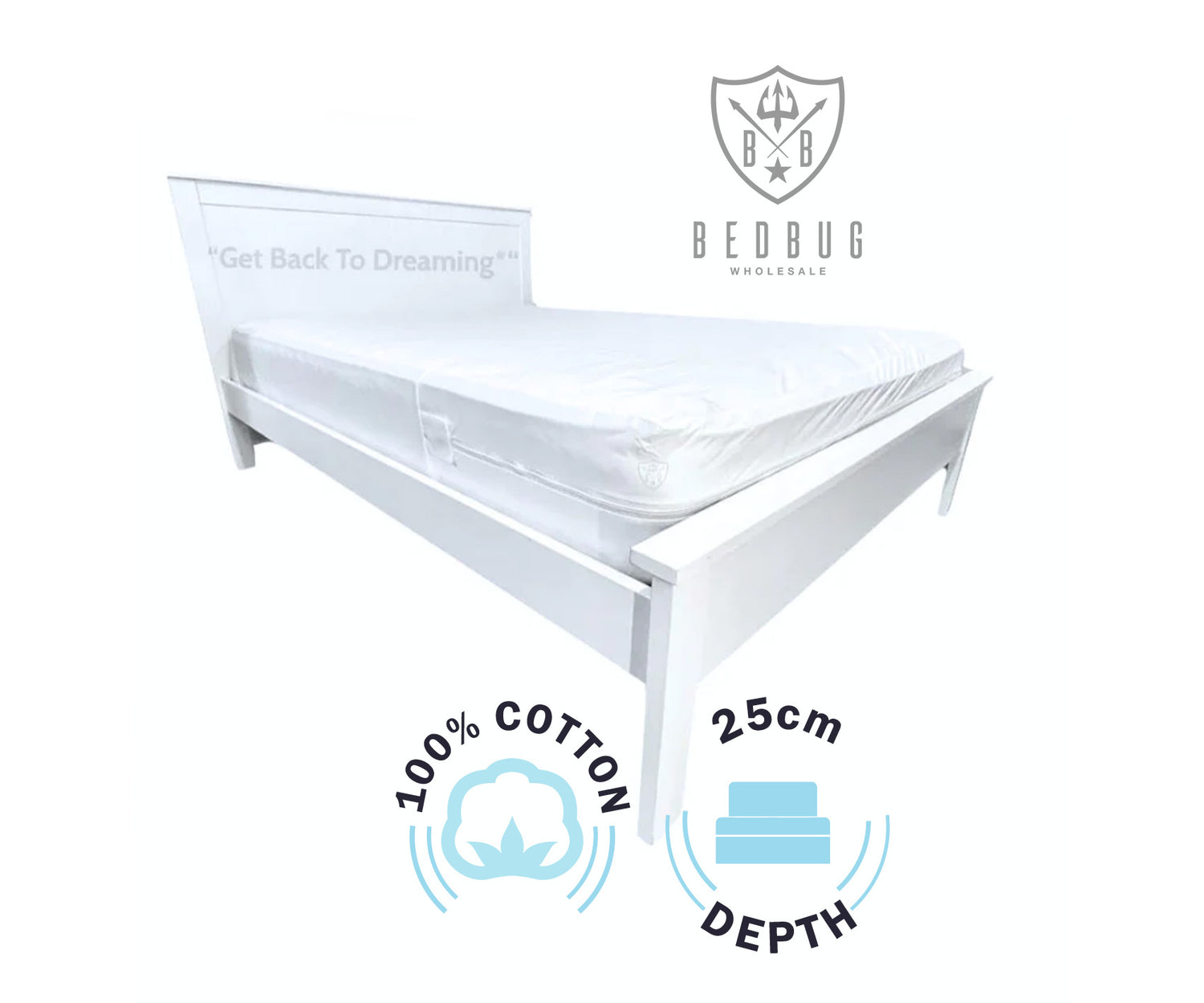
An allergy mattress cover is a protective layer that encases your mattress to help limit the buildup of household particles such as dust mite debris, pollen, and pet dander.
These covers create a physical barrier between the sleeper and the mattress interior, supporting a cleaner, fresher sleep environment.
Do Mattress Covers Help Create a Cleaner Sleep Environment?
Yes, mattress covers designed with allergy-aware materials can be effective at:
- Sealing the mattress with a full physical barrier.
- Limiting the movement of fine particles in and out of the mattress.
- Adding a washable layer between the sleeper and the mattress surface.
A dust mite-proof mattress cover with tightly woven fabric helps reduce the passage of dust mite debris and other fine particles between the mattress and the sleep surface.
How Do Anti-Allergy Mattress Protectors Work?
Anti-allergy mattress protectors are designed to create a physical barrier and limit particle movement between the sleeper and the mattress. These protectors are typically made using:
- Tightly woven fabrics that limit the passage of microscopic particles.
- Durable construction designed to act as a long-lasting barrier layer.
- Hypoallergenic materials chosen for use in sensitive sleep environments.
How Do They Work?
Anti-allergy mattress protectors work by encasing your mattress, creating a physical barrier that helps limit the buildup and movement of fine particles. Regular washing helps maintain the cover by removing surface dust and debris.
Can You Be Allergic to Bed Covers?
It is possible to react to certain bed covers, especially if they are made from materials that trigger sensitivities. Some covers contain synthetic fabrics or chemical treatments that may cause irritation. To reduce the chance of this, many people choose hypoallergenic covers made from natural, breathable fabrics like cotton or bamboo.
Can You Wash an Allergy Mattress Cover?
Yes. Washing your allergy mattress cover regularly is important to keep it clean and maintain its condition. Most covers are machine washable, but always check the care label for specific instructions. Hot water washing (at least 55°C) is widely cited as effective for thorough cleaning of bedding fabrics.
Mattress Covers Designed for Dust Mite Particles
Dust mite debris is a common household particle found in most homes. A dust mite-proof mattress cover typically uses very tightly woven fabric (often with a pore size of less than 10 microns) to limit the movement of fine particles. Many of these covers also feature a zippered design for full encasement coverage.
Allergy Mattress Cover Features to Look For
When choosing an allergy mattress cover, consider these key features:
-
Material: Look for hypoallergenic fabrics like cotton, bamboo, or microfibre.
-
Tight Weave: A small pore size helps limit the passage of fine particles.
-
Breathability: Choose a breathable fabric to support comfort and airflow.
-
Waterproofing: Some covers offer waterproof protection, useful for guarding against spills and stains.
-
Ease of Cleaning: Machine-washable covers are the most convenient for regular care.
-
Zippered Enclosure: A full encasement design provides more complete coverage than a fitted-style cover.
Allergy Mattress Cover Options
There are several allergy mattress cover options available, including:
-
Encasement Covers: Fully zip around the mattress for more complete coverage.
-
Fitted Sheet-Style Covers: Easier to put on and remove, with coverage on the top and sides.
-
Waterproof Covers: Add protection against liquid spills and stains.
-
Organic Covers: Made from natural materials, often chosen for sensitive sleep environments.
Practical Benefits of Allergy Mattress Covers
Using an allergy mattress cover can support your bedroom care routine by:
-
Helping to limit the buildup of dust, debris, and household particles inside your mattress.
-
Supporting a cleaner, fresher sleep environment.
-
Protecting your mattress from moisture, spills, and general wear.
-
Creating a washable barrier that's easier to maintain than the mattress itself.
Choosing the right allergy mattress cover can make a meaningful difference to how clean and comfortable your sleep space feels. Look for a well-constructed, tightly woven cover that suits your needs and lifestyle. With the right cover in place, you can enjoy a cleaner, more comfortable sleep environment.
This article is general information only. If you have a diagnosed allergy or asthma, please speak with your GP or allergist for personal guidance.