Skip to content


Short answer: Peer-reviewed research shows mattress material can affect how quickly dust mite particles build up, with some materials accumulating allergens faster than others. However, all mattresses eventually accumulate allergens above clinically meaningful levels with use.
The strongest evidence supports a practical approach: keep your existing mattress, use a tightly-woven mattress cover, wash bedding weekly in hot water, and maintain bedroom humidity below 50%. Mattress replacement alone is not justified by the evidence — but choosing a lower-accumulation material when buying new can be helpful.
Choosing a mattress is a significant decision, and for households managing dust mite sensitivities, mattress type often comes up as a question. Is latex better than foam? Are spring mattresses worse? Should you replace your existing mattress?
This guide walks through what the peer-reviewed research actually shows. The findings may differ from some common marketing claims — but the honest, evidence-based picture is more useful for making practical decisions.
What the Research Shows About Mattress Type
Three peer-reviewed studies have specifically tested whether mattress type affects dust mite build-up. The findings have been mixed, but the most rigorous study provides the clearest picture.
Visitsunthorn et al. (2010) — the most rigorous study
A 2010 prospective study published in the Asian Pacific Journal of Allergy and Immunology (Visitsunthorn et al.) tracked dust mite allergen accumulation in 60 new mattresses across four materials over 12 months in Thailand. Conditions during the study (29°C average temperature, 60.6% average humidity) are reasonably comparable to subtropical Australian conditions.
The study found two clear statistical groupings:
- Higher accumulation rate: kapok and synthetic fibre mattresses
- Lower accumulation rate: coconut fibre and sponge-like polyurethane mattresses
Specific allergen levels at 12 months (combined Der p1 + Der f1):
- Coconut fibre: 20.2 μg/g dust
- Sponge-like polyurethane: 22.4 μg/g dust
- Synthetic fibre: 28.9 μg/g dust
- Kapok: 32.2 μg/g dust
Schei et al. (2002) — foam vs spring mattresses
An earlier study published in Allergy (Schei, Hessen and Lund, 2002) compared foam and spring mattresses across 116 homes in Northern Norway. The study found that the risk of detecting dust mite particles was approximately four times higher in foam mattresses than in spring mattresses. Adding covers to foam mattresses reduced the proportion with detectable mite particles from 40.5% to 26.3%.
Mosbech et al. (1991) — the dissenting view
An earlier Danish study (Mosbech, Jensen, Heinig and Schou, 1991) compared water, spring, and foam mattresses and found minimal difference between types. However, this study used a less sensitive presence/absence test on already-used mattresses (8-25 months old), which may have missed early-stage differences.
The honest synthesis
Mattress material does appear to affect how quickly allergens accumulate, particularly during the first year of use. Modern foam-type materials (such as sponge-like polyurethane) appear to perform reasonably well in the most recent and rigorous study, which differs from older findings about traditional foam mattresses. The differences between materials are real but not dramatic — and they don't replace the need for covers and washing routines.
Why Mattresses Accumulate Dust Mite Particles
Understanding why mattresses become a build-up point helps explain why all mattress types eventually accumulate allergens.
Research by Arlian (1992) in Experimental and Applied Acarology established that dust mites need three things to thrive: warmth, humidity above approximately 65-70% (which they need to maintain water balance), and a food source — primarily shed human and pet skin cells. Mattresses provide all three:
- Warmth: Body heat from sleepers maintains a warm microenvironment within the mattress
- Humidity: Sleepers release moisture overnight through perspiration and breathing, much of which is absorbed into the mattress
- Food: Adults shed roughly 0.5-1 gram of skin cells daily, much of which ends up in bedding and mattresses
This is why bedding tends to be one of the highest dust mite build-up points in most homes, regardless of mattress material.
All Mattresses Eventually Accumulate Allergens
This is the most important finding from the Visitsunthorn et al. (2010) study, and it's worth understanding clearly.
The study used two clinically meaningful thresholds from established dust mite research:
- Above 2 μg/g dust: sensitisation level (the level associated with developing dust mite sensitivity)
- Above 10 μg/g dust: symptom-inducing level (the level associated with allergic symptoms in sensitive individuals)
Time for each mattress type to exceed the symptom threshold:
- Synthetic fibre: 2 months
- Kapok: 4 months
- Coconut fibre: 5 months
- Sponge-like polyurethane: 9 months
By 12 months, all four mattress types had reached allergen levels above 20 μg/g dust — well above the symptom threshold. The lesson is clear: even a well-chosen mattress will accumulate clinically meaningful allergen levels within the first year of use without protective measures.
This is why the practical approach centres on covers and washing routines rather than mattress choice alone.
Latex Mattresses: What's Known and What Isn't
Latex mattresses are often marketed as suitable for allergy-aware households. There are some genuine reasons this may be the case, but the evidence isn't as strong or specific as marketing claims sometimes suggest.
What's reasonable to say about latex:
- Natural latex is generally durable and dense, which may slow particle penetration into the mattress
- Latex doesn't easily harbour moisture in the same way some other materials do
- Many latex mattresses come with washable covers, which helps with regular maintenance
What requires honesty about latex:
- None of the three peer-reviewed mattress-type studies (Mosbech 1991, Schei 2002, Visitsunthorn 2010) specifically tested latex
- The closest material studied was sponge-like polyurethane, which performed well in Visitsunthorn 2010 — but polyurethane and latex are different materials
- "Hypoallergenic" is a marketing term, not a regulated certification
- "Antimicrobial" claims about specific latex products would need product-specific testing
- Some people are allergic to natural latex itself, which is an important consideration if you have a known latex sensitivity
The honest position: latex may be a reasonable choice for allergy-aware households, but there isn't direct peer-reviewed evidence specifically comparing latex to other materials for dust mite accumulation. If you're choosing latex, the practical reasons (durability, density, washable covers) are more defensible than therapeutic-style claims.
Types of Latex and How They Differ
If you're considering a latex mattress, it helps to understand the different types available.
Natural latex
Natural latex is derived from the sap of rubber trees. It's generally more breathable than synthetic alternatives and is usually free of synthetic chemicals. Natural latex mattresses tend to be more expensive due to the cost of raw materials and the production process. Important consideration: people with diagnosed latex allergies should avoid natural latex products entirely.
Synthetic latex
Synthetic latex is made from petrochemicals and mimics the properties of natural latex at a lower cost. Quality varies between manufacturers, and some products may have a "new mattress" smell when first unpacked. This typically dissipates within a few days of airing.
Blended latex
Blended latex combines natural and synthetic latex. Most blended products use a higher proportion of synthetic latex, with natural latex providing some of the qualities of natural rubber at a more accessible price point.
Latex Manufacturing Processes
Two main manufacturing processes are used for latex mattresses:
Dunlop process
The older of the two methods, the Dunlop process produces a denser, heavier latex. Dunlop mattresses tend to be firmer and more durable, making them suitable for sleepers who prefer a supportive feel.
Talalay process
The Talalay process includes additional steps such as vacuum sealing and freezing, resulting in a lighter, more consistent, and softer latex. Talalay mattresses are often preferred for plushness and pressure relief, but they can be more expensive than Dunlop mattresses.
Latex Mattress Construction
Beyond the type and manufacturing process, the construction of a latex mattress affects both feel and practical maintenance.
Single-layer vs multi-layer
Latex mattresses can be made from a single type of latex or feature multiple layers of different densities. Multi-layer designs allow for varied firmness and support across different parts of the mattress.
All-latex vs hybrid
Some mattresses combine latex with innerspring coils as a base layer, creating a hybrid design that offers the bounce and support of springs with the comfort of latex on top. Hybrid mattresses may share some of the characteristics of spring mattresses identified in the Schei (2002) study, though no peer-reviewed research has specifically tested latex-spring hybrids.
Cover materials
The cover material of a latex mattress can also vary — common options include organic cotton, wool, or synthetic blends. From a dust mite perspective, the cover material is less important than whether you use a separate, washable mattress protector over the top.
Do You Need to Replace Your Mattress?
This is one of the most common questions, and the peer-reviewed research provides a clear answer.
The Visitsunthorn et al. (2010) study explicitly addressed this question. The authors concluded:
"There appears to be little justification for advising mite sensitive patients to replace their mattresses as a part of avoidance regime."
The reasoning: even new mattresses accumulate clinically meaningful allergen levels within months. Replacing an existing mattress doesn't solve the underlying issue — it just resets the accumulation clock for a few months.
The authors instead recommended a multi-component approach:
"A combination of the following: choosing new sponge-like polyurethane or coconut fiber mattresses with mite-impermeable covers and washing sheets, pillowcases, blankets, and mattresses pad at least weekly in hot water should be the best method of prevention in HDM allergen sensitive allergic patients."
This is consistent with the broader review by Wilson and Platts-Mills (2018), which synthesised the evidence on dust mite avoidance and concluded that successful interventions require a multi-faceted approach combining covers, humidity control, and regular cleaning.
The Evidence-Based Practical Approach
Based on the peer-reviewed evidence, here's the practical approach for allergy-aware households:
1. Use a tightly-woven mattress cover
This is the single most-supported intervention. A 2003 randomised controlled trial published in the Journal of Allergy and Clinical Immunology (Halken et al., 2003) found that mattress and pillow encasings produced a significant long-term reduction in dust mite allergen concentrations over 12 months.
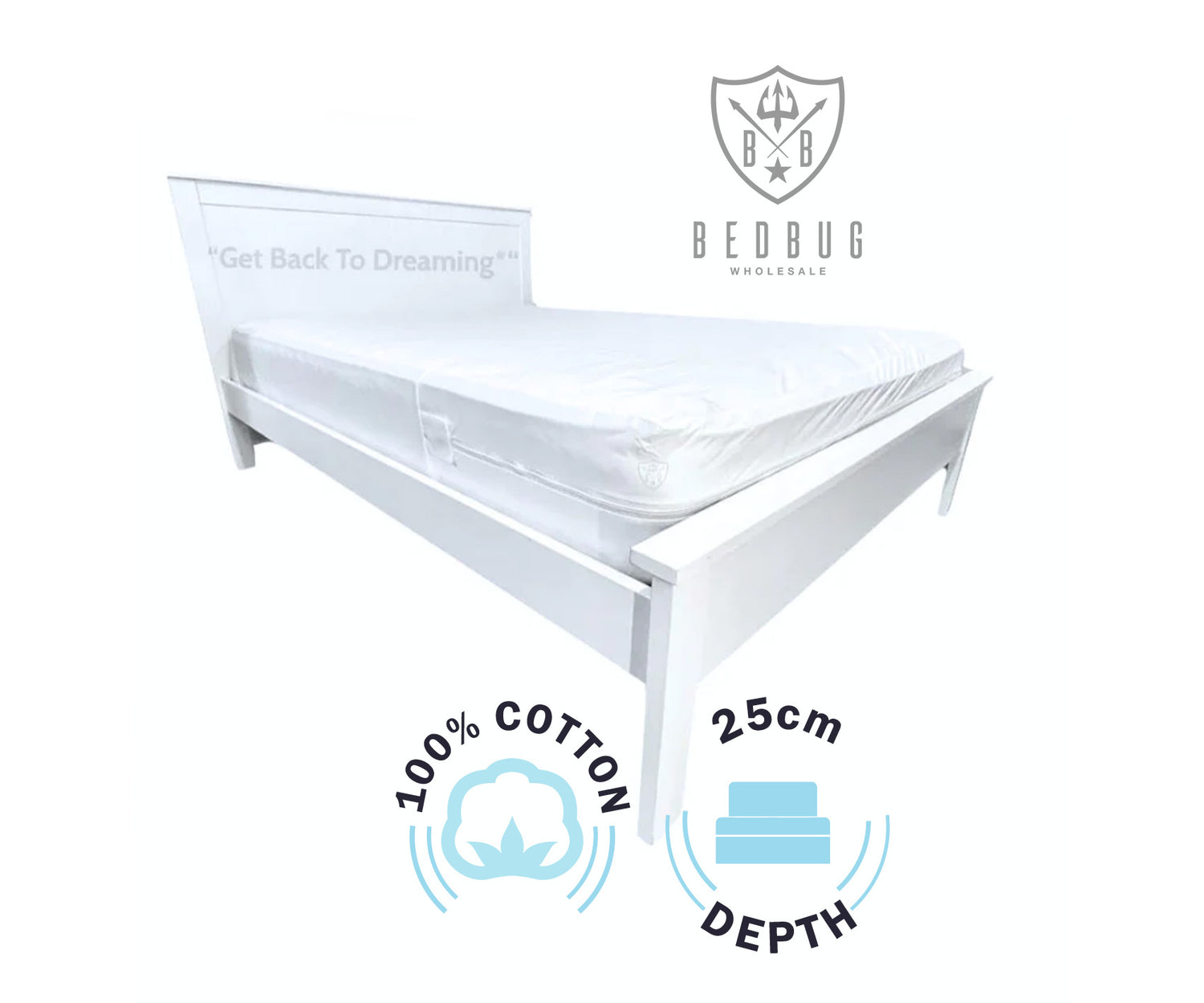
The Wilson and Platts-Mills (2018) review specifically noted that tightly-woven fabrics are the appropriate material for dust mite covers, as nonwoven materials allow mite passage while woven materials form an effective barrier. Our mattress protectors are made from tightly-woven cotton and TPU fabrics specifically tested for fine particle filtration.
2. Wash bedding regularly in hot water
Research by McDonald and Tovey (1992) in the Journal of Allergy and Clinical Immunology found that water temperatures of 55°C or above are effective for reducing dust mite populations in bedding. Most Australian guidance — including from ASCIA — recommends washing at 60°C, which provides a margin above this threshold.
Useful nuance: even cold-cycle washing reduced allergen levels by more than 90% in the same study, even without killing mites. So washing has practical value at any temperature your fabric care label allows.
3. Manage bedroom humidity
Research by Arlian and colleagues (2001) found that maintaining indoor humidity below 51% over 17 months produced approximately 98% reduction in dust mite populations in real homes. A dehumidifier, air conditioner, or improved ventilation can help maintain this. A small hygrometer is useful for tracking levels.
4. Vacuum the mattress regularly
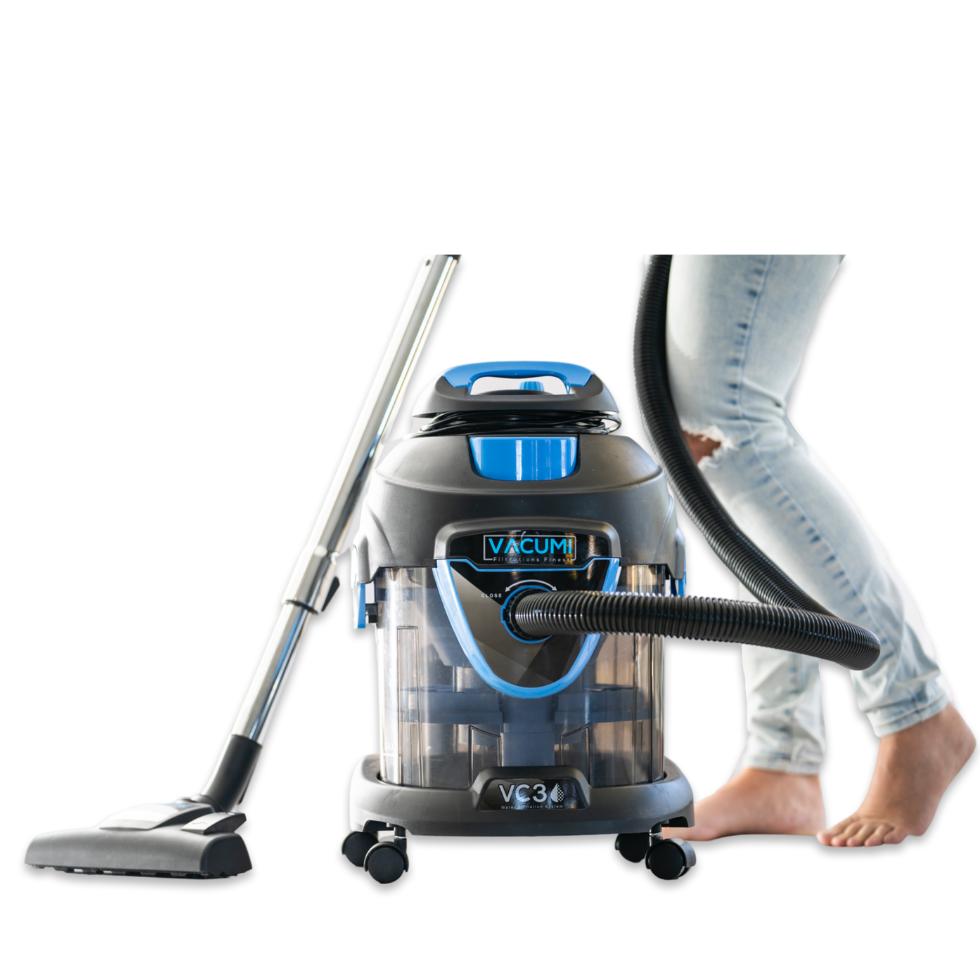
Research published in the Journal of Asthma (Wu et al., 2012) found that daily mattress vacuuming over 8 weeks reduced total dust mite allergens by approximately 85%. While daily vacuuming may not be practical for everyone, weekly mattress vacuuming with a HEPA-filtered vacuum is a meaningful practical step.
5. Consider mattress material when buying new
If you're in the market for a new mattress, the Visitsunthorn et al. (2010) findings suggest sponge-like polyurethane (modern foam) and coconut fibre accumulate allergens more slowly than kapok or synthetic fibre. Modern Australian foam, latex, and pocket-spring mattresses generally fall into materials that perform reasonably well — though no mattress stays particle-free without protective measures.
Cleaning an Existing Mattress
If you're keeping your existing mattress (which the evidence supports), here's how to address build-up:
- Vacuum thoroughly with a HEPA-filtered vacuum, paying attention to seams and crevices
- Strip and wash all bedding in hot water (60°C where care labels allow)
- Air the mattress in direct sunlight if practical — research by Tovey and Woolcock (1994) found that direct sun exposure can reduce dust mite populations through heat and reduced humidity
- Steam clean if appropriate — research published in Clinical and Experimental Allergy (Colloff, Taylor and Merrett, 1995) found that steam cleaning reduced dust mite allergen concentrations by approximately 87% in real-home testing
- Fit a tightly-woven mattress protector over the cleaned mattress
- Maintain the routine — weekly washing of bedding, regular vacuuming, and humidity control
For more detail on this process, see our step-by-step guide to reducing dust mites in your mattress.
Frequently Asked Questions
What is the best mattress for dust mite allergies?
Peer-reviewed research suggests that mattress material can affect how quickly allergens accumulate, but no mattress stays particle-free over time. The most rigorous study (Visitsunthorn et al., 2010) found that sponge-like polyurethane and coconut fibre mattresses accumulated allergens more slowly than kapok or synthetic fibre. Modern Australian foam, latex, and pocket-spring mattresses generally fall into materials that perform reasonably well. However, the strongest evidence for managing dust mites in any mattress is the use of a tightly-woven mattress cover combined with regular bedding washing and humidity control.
Are latex mattresses really better for dust mite allergies?
Latex mattresses have some practical advantages — they're generally durable, dense, and don't easily harbour moisture. However, none of the major peer-reviewed mattress-type studies have specifically tested latex against other materials. Claims that latex is "naturally hypoallergenic" or "antimicrobial" go beyond what direct evidence supports. Latex may be a reasonable choice, but the practical advantages are more defensible than therapeutic-style claims. Note that people with diagnosed latex allergies should avoid natural latex products.
Should I replace my mattress to reduce dust mites?
The peer-reviewed research suggests replacement isn't necessary. The Visitsunthorn et al. (2010) study explicitly concluded there is "little justification" for advising mattress replacement as part of dust mite reduction. Even new mattresses accumulate clinically meaningful allergen levels within months. Using a mattress cover and following a regular cleaning routine is more practical and equally effective.
How quickly does a new mattress accumulate dust mite allergens?
According to Visitsunthorn et al. (2010), allergen accumulation begins within the first month of use, with most mattress types reaching the symptom-inducing threshold (>10 μg/g dust) between 2-9 months depending on material. By 12 months, all tested mattress types reached allergen levels above 20 μg/g dust. This is why protective covers are recommended from the start with any new mattress.
Are foam mattresses bad for dust mite allergies?
The research is mixed. The Schei et al. (2002) study found older foam mattresses had higher mite presence than spring mattresses. However, the more recent and rigorous Visitsunthorn et al. (2010) study found that modern sponge-like polyurethane (a foam material) actually performed among the best of the four materials tested. The difference may relate to changes in foam manufacturing over time. In any case, using a cover is more important than the mattress material itself.
Do mattress covers really work?
Yes, peer-reviewed research supports mattress covers. The Halken et al. (2003) randomised controlled trial found that mattress and pillow encasings produced significant long-term reductions in dust mite allergen concentrations over 12 months. The Wilson and Platts-Mills (2018) review specifically identified tightly-woven fabrics as effective barriers, while noting that nonwoven materials are less effective. The Schei et al. (2002) study found that adding covers to foam mattresses reduced the proportion with detectable mite particles from 40.5% to 26.3%.
How often should I wash my mattress protector?
Most allergy-aware households wash mattress protectors every 2-4 weeks, alongside weekly washing of sheets and pillowcases. The protector takes the wear of nightly use, so washing it regularly extends the time between deeper mattress cleans. Wash at 60°C where care labels allow.
Can I use a memory foam mattress if I have dust mite allergies?
Memory foam is similar in some ways to the sponge-like polyurethane tested by Visitsunthorn et al. (2010), which actually performed reasonably well in their study. Memory foam doesn't appear to be inherently problematic for dust mite-aware households, particularly when paired with a tightly-woven mattress protector. As with any mattress, the cover and washing routine matter more than the mattress material.
References
This article draws on the following peer-reviewed research:
- Mosbech H, Jensen A, Heinig JH, Schou C. (1991). "House dust mite allergens on different types of mattresses." Clinical and Experimental Allergy, 21(3):351-355. PubMed
- Arlian LG. (1992). "Water balance and humidity requirements of house dust mites." Experimental and Applied Acarology, 16(1-2):15-35. PubMed
- McDonald LG, Tovey E. (1992). "The role of water temperature and laundry procedures in reducing house dust mite populations and allergen content of bedding." Journal of Allergy and Clinical Immunology, 90(4 Pt 1):599-608. PubMed
- Tovey ER, Woolcock AJ. (1994). "Direct exposure of carpets to sunlight can kill all mites." Journal of Allergy and Clinical Immunology, 93(6):1072-1074. PubMed
- Colloff MJ, Taylor C, Merrett TG. (1995). "The use of domestic steam cleaning for the control of house dust mites." Clinical and Experimental Allergy, 25(11):1061-1066. PubMed
- Arlian LG, Neal JS, Morgan MS, et al. (2001). "Reducing relative humidity is a practical way to control dust mites and their allergens in homes in temperate climates." Journal of Allergy and Clinical Immunology, 107(1):99-104. PubMed
- Schei MA, Hessen JO, Lund E. (2002). "House-dust mites and mattresses." Allergy, 57(6):538-542. PubMed
- Halken S, Høst A, Niklassen U, et al. (2003). "Effect of mattress and pillow encasings on children with asthma and house dust mite allergy." Journal of Allergy and Clinical Immunology, 111(1):169-176. PubMed
- Visitsunthorn N, Chirdjirapong V, Pootong V, et al. (2010). "The accumulation of dust mite allergens on mattresses made of different kinds of materials." Asian Pacific Journal of Allergy and Immunology, 28:155-161.
- Wu FF, Wu MW, Pierse N, Crane J, Siebers R. (2012). "Daily vacuuming of mattresses significantly reduces house dust mite allergens, bacterial endotoxin, and fungal β-glucan." Journal of Asthma, 49(2):139-143. PubMed
- Wilson JM, Platts-Mills TAE. (2018). "Home Environmental Interventions For House Dust Mite." Journal of Allergy and Clinical Immunology: In Practice, 6(1):1-7. PubMed