Skip to content


Short answer: Regular mattress protectors mainly protect mattresses from spills, stains, and wear.
Dust mite mattress protectors are designed with tightly-woven fabric and full zippered encasement to also limit the movement of fine particles like dust mite faecal matter, pet dander, and pollen between the mattress and sleep surface.
The peer-reviewed evidence base is much stronger for dust mite encasements — a 2003 randomised controlled trial published in the Journal of Allergy and Clinical Immunology found significant long-term reductions in dust mite particles over 12 months.
If you've been comparing dust mite mattress protectors with regular mattress protectors, the differences aren't always obvious from product descriptions alone. This guide walks through what each type actually does, what the peer-reviewed research shows, and how to choose the right one for your situation.
Do I Really Need a Mattress Protector?
Mattress protectors serve several practical purposes in any household, and they're particularly useful for allergy-aware homes.
- Protection against spills and stains: Waterproof protectors prevent spills from soaking into your mattress, helping prevent moisture-related issues including mould growth.
- Allergy-aware bedroom care: Tightly-woven protectors create a physical barrier that limits the movement of fine particles like dust mite faecal matter, pet dander, and pollen between the mattress and your sleep surface.
- Extending mattress life: By limiting how much sweat, body oils, and shed skin cells reach the mattress itself, protectors help maintain the mattress and extend its useful life.
- Limiting fine particle build-up: Dust mite protectors with full zippered encasements limit particle movement around all six sides of the mattress, which can also help reduce conditions favourable to other pests.
- Warranty preservation: Many mattress warranties become void if the mattress is stained or damaged. A protector helps maintain warranty-compliant condition.
How to Choose the Right Size Mattress Protector
Measure your mattress's length, width, and depth carefully. The depth measurement is particularly important — modern Australian mattresses can range from 20 cm to over 35 cm deep, and most protectors are sized for specific depth ranges. A protector that's too shallow won't fit properly; one that's too deep may sit loosely.

Standard Mattress Sizes in Australia
Australian standard mattress sizes differ slightly from those in other countries. Here are the standard dimensions:
| Size | Dimensions (cm) | Dimensions (inches) |
|---|---|---|
| Single | 92 x 188 cm | ~36 x 74 in |
| King Single | 107 x 203 cm | ~42 x 80 in |
| Double | 138 x 188 cm | ~54 x 74 in |
| Queen | 153 x 203 cm | ~60 x 80 in |
| King | 183 x 203 cm | ~72 x 80 in |
| Super King | 203 x 203 cm | ~80 x 80 in |
Dust Mite vs Regular Mattress Protectors
Dust mite mattress protectors and regular mattress protectors share the basic function of protecting your mattress, but they're designed for different specific purposes.
Similarities
- Mattress protection: Both types help shield the mattress from spills, stains, and general wear.
- Installation: Both fit over or encase mattresses with elastic edges or zippers, ensuring a secure fit.
- Maintenance: Both are generally machine washable, though dust mite protectors typically have more specific care requirements.
Differences
- Fabric construction: Dust mite protectors use tightly-woven fabrics specifically designed to limit fine particle movement. Regular protectors may use nonwoven, loosely-woven, or vinyl materials that don't provide this filtration. The Wilson and Platts-Mills (2018) review specifically identified woven fabrics as effective barriers, while noting that nonwoven materials allow particle passage.
- Encasement design: Dust mite protectors typically use full zippered encasements covering all six sides of the mattress. Regular protectors often only cover the top and sides like a fitted sheet.
- Pore size: Dust mite protectors have small pores designed to limit movement of dust mite faecal particles (typically 10-40 microns). Regular protectors typically don't specify pore size because it isn't relevant to their primary purpose.
- Particle reduction: Dust mite protectors are specifically engineered to limit movement of fine particles. The Halken et al. (2003) randomised controlled trial found that mattress and pillow encasings produced significant long-term reductions in dust mite allergen concentrations over 12 months — this is the strongest evidence available for any single dust mite reduction intervention.
- Comfort and breathability: Despite their tighter weave, well-designed dust mite protectors maintain breathability through fabric structure rather than pore size. Quality cotton dust mite protectors are generally as breathable as regular cotton sheets.

Types of Mattress Protectors
Waterproof protectors
What they do: Provide the strongest protection against spills and accidents — particularly useful for households with kids, pets, or sleepers prone to spills.
Considerations: Some waterproof protectors are less breathable than other options. Look for waterproof protectors using TPU (thermoplastic polyurethane) film, which generally maintains better breathability than older PVC-based waterproof layers.
Water-resistant protectors
What they do: Repel liquid and sweat to a degree, providing more protection than standard sheets but less than full waterproof protectors.
Advantages: Generally more breathable than fully waterproof options, balancing protection with comfort.
Slip-on (fitted-sheet style) covers
What they do: Resemble fitted sheets, fitting over the top and sides of the mattress for easy installation and removal.
Considerations: Offer protection on the sleep surface but leave the underside of the mattress unprotected. Less effective for fine particle filtration than full encasements.
Encasement protectors
What they do: Surround the mattress on all six sides with a continuous zippered closure, offering comprehensive coverage.
Advantages: The peer-reviewed evidence base is strongest for full encasements — this is the design used in most successful clinical trials of dust mite reduction. Many include zipper flaps or velcro seals for additional barrier integrity.
Anchor-style protectors
What they do: Sit on top of the mattress, secured with elastic straps around the corners.
Considerations: Convenient but offer minimal protection compared to other types and may shift during use. Not generally suitable for allergy-aware households.
Mattress Protector vs Mattress Encasement
The terms "protector" and "encasement" are sometimes used interchangeably, but they have specific meanings worth understanding.
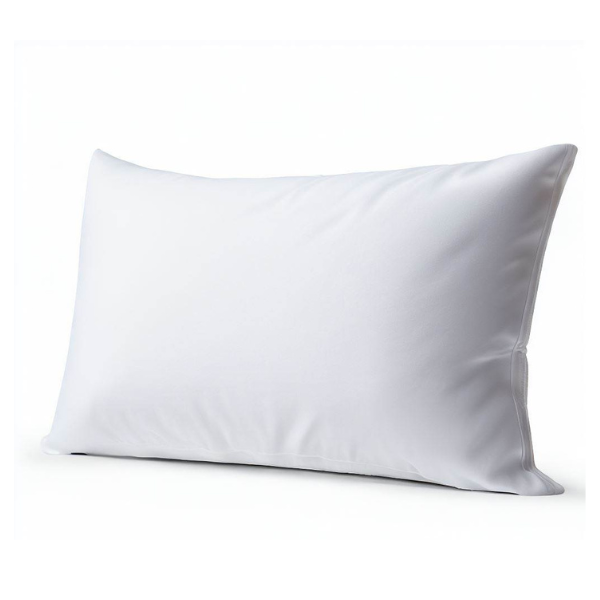
A mattress protector typically covers the top and sides of a mattress, similar to a fitted sheet. The primary purpose is to protect against spills, stains, and surface wear. It's easy to remove and clean, and provides some particle protection on the sleep surface — but doesn't seal the mattress completely.
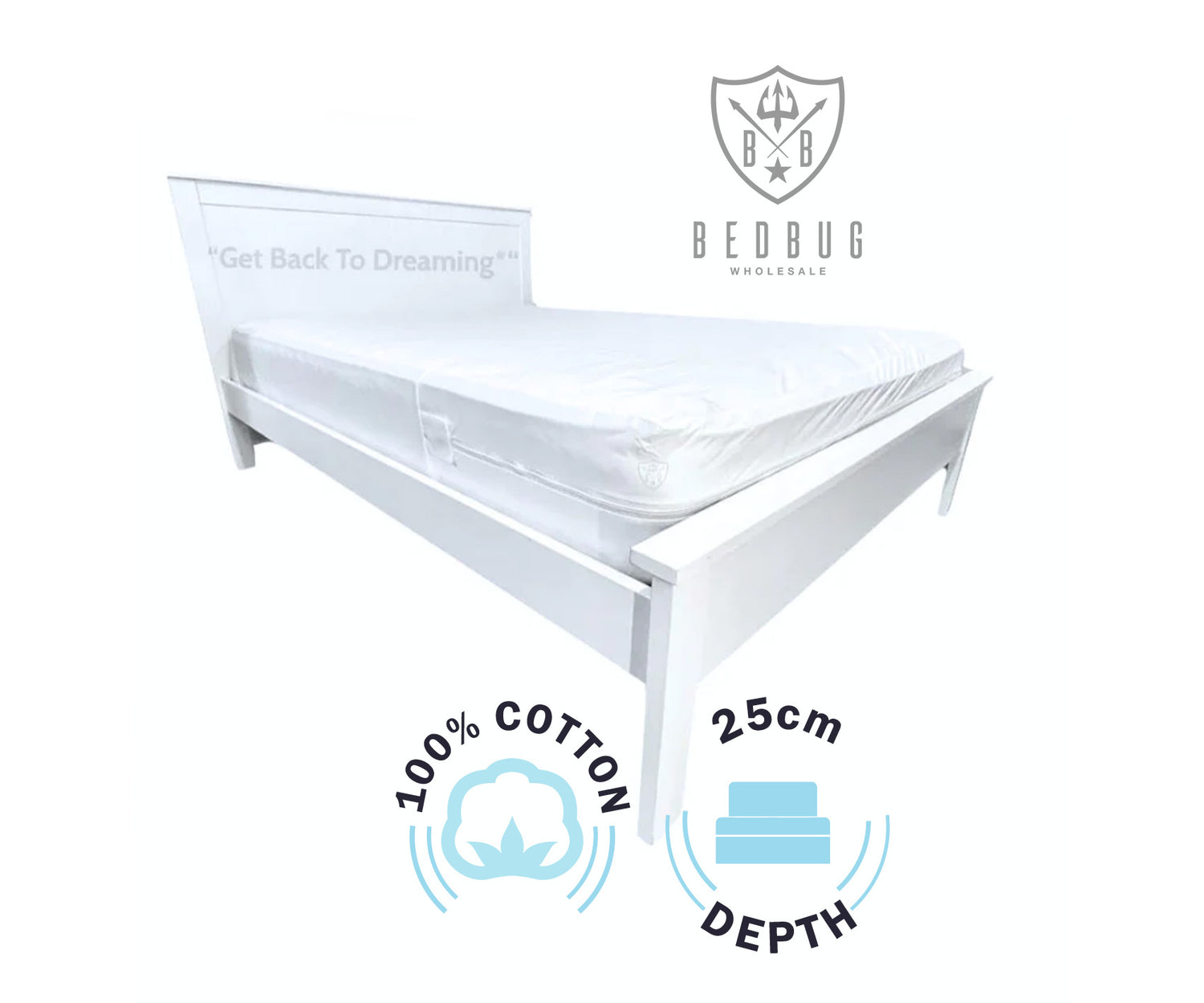
A dust mite mattress encasement completely surrounds the mattress on all six sides with a zippered closure. The full coverage limits particle movement around the entire mattress and creates a continuous barrier between sleepers and the mattress interior.
For allergy-aware households, the peer-reviewed evidence supports encasements over partial protectors. The successful clinical trials cited in the Wilson and Platts-Mills (2018) review consistently used full encasements rather than fitted-sheet style protectors. While encasements take slightly more effort to install, they provide more comprehensive coverage.
Will a Mattress Protector Stop Dust Mites?
The answer depends on the protector. A regular mattress protector designed for spill protection is unlikely to meaningfully limit dust mite particle movement. A dust mite mattress protector specifically designed for this purpose can substantially help, particularly when it uses tightly-woven fabric and full zippered encasement.
The strongest evidence comes from a 2003 randomised controlled trial published in the Journal of Allergy and Clinical Immunology (Halken et al., 2003). The study found that mattress and pillow encasings produced a significant long-term reduction in dust mite allergen concentrations in mattresses over 12 months.
A real-home study by Schei, Hessen and Lund (2002) in Allergy found that adding covers to foam mattresses reduced the proportion with detectable dust mite particles from 40.5% to 26.3% — a meaningful real-world reduction.
Effectiveness depends on three factors:
- Fabric construction: Tightly-woven fabrics work; nonwoven materials don't provide the same barrier
- Encasement design: Full encasements perform better than fitted-sheet style
- Regular washing: Particles accumulate on the protector's outer surface and need to be removed through regular washing
Will a Mattress Protector Make Me Hot?
This depends on the fabric construction. Older waterproof protectors using PVC or vinyl can reduce breathability significantly. Modern protectors using TPU film or breathable cotton blends generally don't cause noticeable heat retention.
Look for:
- Cotton-based fabrics — naturally breathable
- TPU waterproof layers — significantly more breathable than older PVC options
- Tightly-woven (not laminated) construction — maintains airflow while still limiting particle movement
Our 100% cotton dust mite mattress protector uses tightly-woven cotton specifically designed to maintain breathability while providing fine particle filtration. If heat is a particular concern, cotton-based protectors are generally a good choice.
How Long Do Mattress Protectors Last?
The lifespan depends on quality, frequency of use, and care. General expectations:
- Standard quality: 1-2 years with regular use and proper care
- Higher quality: 3-5 years or more with proper care
- Care matters: Following manufacturer washing instructions significantly affects longevity
Signs your mattress protector needs replacing:
- Visible tears or holes in the fabric
- Zipper damage or failure (for encasements)
- Loss of waterproof function (for waterproof protectors)
- Persistent stains or odours that don't respond to washing
- Fabric thinning or wear that compromises the barrier
Regular washing every 2-4 weeks is generally recommended. Avoid bleach and fabric softeners, which can degrade the fabric and any waterproof layer over time.
Can a Mattress Protector Stop Bed Bugs?
Specifically-designed bed bug encasements can help limit bed bug movement into and out of mattresses, which can reduce the risk of an infestation establishing in mattress materials. However, mattress protection is only one element of bed bug management — bed bug infestations typically require professional pest control treatment of the broader environment, not just the mattress.
Bed bugs are very different from dust mites. If you're trying to identify what you're dealing with, see our guide to dust mite bites vs bed bug bites. If you suspect an active bed bug infestation, contact a licensed pest control professional.
Frequently Asked Questions
What's the difference between a dust mite protector and a regular mattress protector?
Regular mattress protectors mainly protect against spills, stains, and wear. Dust mite mattress protectors are designed with tightly-woven fabric and full zippered encasement to also limit the movement of fine particles like dust mite faecal matter, pet dander, and pollen. The peer-reviewed evidence base is much stronger for dust mite encasements — multiple randomised controlled trials have shown significant long-term reductions in dust mite particles.
Do I need a dust mite protector if I don't have allergies?
For households without allergy concerns, a regular mattress protector is generally sufficient — its main purpose is protecting your mattress investment from spills and wear. For households with diagnosed sensitivities or those wanting allergy-aware bedroom care, dust mite protectors provide additional fine particle filtration that regular protectors don't.
How often should I wash my mattress protector?
Most allergy-aware households wash mattress protectors every 2-4 weeks, alongside weekly washing of sheets. Use mild detergent without bleach or fabric softeners. Where care labels allow, hot water washing (60°C) is most effective for reducing dust mite particles, based on McDonald and Tovey (1992) research.
Will a mattress protector make my bed feel different?
Quality mattress protectors are designed to be unobtrusive — once a sheet is on top, you typically can't feel the protector. Cotton-based protectors generally feel similar to regular bedding. Older or lower-quality waterproof protectors with PVC layers may feel plasticky, but modern TPU-based options largely avoid this.
How do I know if a mattress protector is dust-mite-effective?
Look for these features: tightly-woven (not nonwoven) fabric, small pore size (typically under 10 microns), full zippered encasement covering all six sides of the mattress, and ability to wash at hot temperatures regularly. The Wilson and Platts-Mills (2018) review specifically identified woven fabrics as effective barriers, while noting that nonwoven materials are not.
Are waterproof and dust mite protectors the same thing?
Not necessarily. Many dust mite protectors include waterproof TPU layers, but waterproofing alone doesn't make a protector dust-mite-effective. The key feature for dust mite protection is tightly-woven fabric with small pores and full encasement. Many quality protectors combine both functions in one product.
Can I use a regular mattress protector with a dust mite encasement?
Yes — many households use a dust mite encasement directly on the mattress, then add a regular protector on top for additional spill protection on the sleep surface. The encasement does the fine particle filtration; the regular protector takes the wear of nightly use and is washed more frequently.
How long does it take to see results from using a dust mite protector?
The Halken et al. (2003) study measured outcomes over 12 months. In real-home use, most allergy-aware households start noticing differences within a few weeks of consistent use combined with other measures (regular washing, vacuuming, humidity control). Consistency matters more than speed — dust mite particles accumulate over time, so the benefits build gradually.
Ready to choose? Browse our range of dust mite mattress protectors in cotton and waterproof options, all with full zippered encasement and 2.8 µm pore size.
References
This article draws on the following peer-reviewed research:
- McDonald LG, Tovey E. (1992). "The role of water temperature and laundry procedures in reducing house dust mite populations and allergen content of bedding." Journal of Allergy and Clinical Immunology, 90(4 Pt 1):599-608. PubMed
- Schei MA, Hessen JO, Lund E. (2002). "House-dust mites and mattresses." Allergy, 57(6):538-542. PubMed
- Halken S, Høst A, Niklassen U, et al. (2003). "Effect of mattress and pillow encasings on children with asthma and house dust mite allergy." Journal of Allergy and Clinical Immunology, 111(1):169-176. PubMed
- Wilson JM, Platts-Mills TAE. (2018). "Home Environmental Interventions For House Dust Mite." Journal of Allergy and Clinical Immunology: In Practice, 6(1):1-7. PubMed